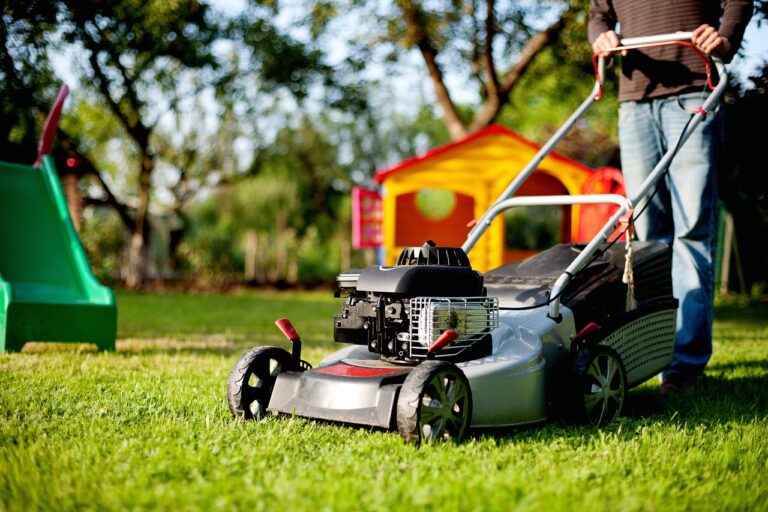
Change a Lawn Mower Pull String in 7 Easy Steps
You’ll know it’s time to change your lawn mower pull string if it snaps, frays, or won’t rewind properly. Replacing a lawn mower pull cord is a simple maintenance task that can save you time and money.
First, gather needed tools like a replacement nylon string, screwdriver, pliers, scissors, and a lighter.
Next, remove the starter cover and take out the old string.
Measure and cut the new one to size carefully to ensure a perfect fit.
Thread and tie it securely on the pulley to prevent any slipping during use.
Finally, reassemble everything and test the pull string for smooth function.
Keep going to uncover detailed tips and troubleshooting tricks to make this repair even easier.
Key Takeaways
- Remove the starter cover by unscrewing and access the old pull string inside the housing.
- Untie or release the old string from the pulley and carefully remove it.
- Measure, cut, and prepare a new nylon pull string, tying a secure knot at one end.
- Thread and wind the new string tightly around the pulley, secure the knot, and reassemble the starter.
- Test the pull string by pulling slowly to ensure smooth extension and rewind before fully reattaching the cover.
Know When to Replace Your Lawn Mower Pull String
Before you start replacing the pull string, you need to know when it’s time to do so. If you notice the string snapping frequently or fraying along its length, that’s a clear sign it’s wearing out. Also, if the string won’t rewind properly or gets stuck, it’s time to check it.
Sometimes, the pull may feel unusually stiff or loose, indicating the string is damaged or tangled inside the recoil mechanism. If you have to pull extra hard to start the mower or it won’t start at all, the string might be slipping or broken. Catching these signs early helps you avoid getting stuck mid-task.
When you spot any of these issues, it’s best to replace the pull string to keep your mower running smoothly.
Get Your Tools and Materials Ready
Once you’ve identified that your pull string needs replacing, gathering the right tools and materials will make the process smoother. You’ll want to have everything on hand before you start to avoid interruptions. Typically, you’ll need a replacement pull cord, a screwdriver, and a pair of pliers.
Having these ready means you can focus on the repair without scrambling for tools.
Here’s a quick list to help you get organized:
| Item | Purpose | Tip |
|---|---|---|
| Replacement pull string | New cord for your mower | Match the thickness and length |
| Screwdriver | Open the starter housing | Phillips or flathead |
| Pliers | Grip and pull the cord | Needle-nose works best |
| Scissors/Knife | Cut the new string to length | Sharp to avoid frayed ends |
| Lighter | Seal string ends | Prevents unraveling |
Remove the Old Pull String From the Starter
First, find the starter housing on your lawn mower. Then, carefully remove any retaining components holding the pull string in place.
Once those are detached, you can pull out the old string from the starter.
Locate Starter Housing
To get started, find the starter housing on your lawn mower—it’s typically located near the engine and houses the pull string mechanism. Look for a round or square cover, often made of plastic or metal, with ventilation slots or holes. This cover protects the internal components and the pull string spool.
You might see the pull handle attached to it or nearby. Make sure the mower is off and cool before you proceed. If you’re unsure, consult your mower’s manual for the exact location.
Once you’ve identified the starter housing, you’re ready to move forward with removing the old pull string. This step is vital because accessing the starter housing lets you reach the internal parts where the string is wound, preparing you for the next steps in the repair.
Detach Retaining Components
Before you can replace the pull string, you’ll need to detach the retaining components that hold it in place within the starter housing. Start by removing any screws or bolts securing the starter cover, then carefully lift it off to expose the internal parts.
Locate the pulley where the pull string is wound. You’ll usually find a small knot or a clip securing the string to the pulley. Gently untie the knot or release the clip, making sure not to damage the pulley.
If there’s a spring or any other retaining mechanism, note how it’s positioned before loosening it. Taking a photo can help you remember the setup. Once these components are free, you’ll be ready to remove the old pull string from the starter.
Extract Old String
Once you’ve detached the retaining components, you can carefully pull the old string out of the starter pulley. Here’s how to do it efficiently:
- Hold the starter housing steady to prevent it from spinning.
- Slowly unwind the remaining pull string from the pulley, keeping tension to avoid tangles.
- Inspect the pulley for any debris or damage once the string is fully removed.
- Dispose of the old string properly and prepare the pulley for the new string installation.
Taking your time during this step helps prevent damage to the pulley or starter mechanism. If the string is stuck, gently wiggle it free instead of forcing it.
Now that the old string’s out, you’re ready to move on to threading the new one.
Measure and Cut a New Pull String
Now that the old string is out, you need to figure out the right length for your new pull string. Make certain to pick a durable material that can handle the wear and tear.
Once you have the right type and length, cut the string carefully to ensure a perfect fit.
Determine Required String Length
Since the pull string needs to fit perfectly, you’ll want to measure the old string or the space in the recoil starter to determine the correct length. Here’s how to get it right:
- Remove the old string and stretch it out straight.
- Measure its entire length with a tape measure.
- If the old string’s missing or damaged, measure the circumference of the recoil starter pulley and multiply by three for a rough estimate.
- Add a few extra inches (about 6-8) to allow for knots and handle attachment.
Accurate measurement guarantees smooth starting and prevents the string from being too short or excessively long. Taking the time to do this step carefully will save you frustration later on.
Choose Suitable String Material
Before you cut your new pull string, it’s important to pick the right material to guarantee durability and smooth operation. Nylon is the most common choice because it’s strong, flexible, and resists abrasion well. You’ll want a string that’s thick enough to withstand repeated pulling but thin enough to fit your mower’s recoil system.
Typically, a diameter between 0.095 and 0.120 inches works for most lawn mowers. Avoid using cheap or generic strings, as they tend to fray quickly and break, causing frustration. Also, consider weather-resistant options if you often mow in wet conditions.
Choosing the right string material ensures your mower starts easily and lasts longer, saving you time and effort in the long run. Now you’re ready to prepare your new pull string.
Cut String Precisely
How long should your new pull string be? Ideally, it should match the length recommended in your lawn mower’s manual. Cutting it too short will make starting tough, while too long may cause tangling.
To cut the string precisely, follow these steps:
- Measure the old string or refer to the manual for the exact length.
- Use a tape measure to mark the new string carefully.
- Cut the string straight with sharp scissors or a utility knife.
- Double-check the length before installing to avoid errors.
Taking these simple steps ensures your lawn mower’s pull string fits perfectly, making your next start smooth and hassle-free.
Thread the New String Through the Starter
Once you have the new string cut to the right length, you’ll need to carefully thread it through the starter mechanism. First, locate the hole or eyelet in the starter pulley where the string should pass through. Insert one end of the string into this hole, pushing it through until there’s an equal length on both sides or as specified by your mower’s design.
Next, wrap the string around the pulley in the direction indicated by the arrows or in the opposite direction the pulley spins when starting. Make sure the string lays flat without twists or overlaps. Keep tension on the string as you wind it to prevent tangling.
This guarantees smooth operation when you pull the handle next.
Tie the String and Reassemble the Starter
After threading the new string through the starter pulley and winding it properly, you’ll need to secure the ends with a tight knot. This keeps the string from unraveling and ensures smooth operation.
Follow these steps to tie the string and reassemble the starter:
Follow these simple steps to tie the pull string and reassemble your starter for smooth operation.
- Tie a firm knot at the end of the pull string, making sure it’s large enough to catch inside the pulley.
- Insert the knotted end into the hole on the pulley, pulling it tight.
- Place the pulley back into the starter housing, aligning it correctly with the spring mechanism.
- Secure the starter cover by tightening the screws or clips you removed earlier.
Now, your pull string is tied and the starter is back together, ready for the final test.
Test Your Lawn Mower Pull String for Proper Function
Although you’ve just reassembled the starter, you’ll want to make sure the pull string functions smoothly before using your lawn mower. Start by pulling the string slowly and steadily. It should extend fully without sticking or feeling rough.
If it retracts smoothly back into the housing, that means the recoil spring is working properly. If the string doesn’t pull out easily or doesn’t rewind, you may need to check the spring tension or re-tie the knot. Also, listen for any unusual noises like grinding or snapping, which could indicate internal issues.
Test the pull string several times to guarantee consistent operation. Once it moves freely and rewinds correctly, you’re ready to fire up your mower and get to work.
Frequently Asked Questions
What Type of Pull String Is Best for My Lawn Mower?
You’ll want a durable, nylon pull string that’s about 1/8 inch thick for most lawn mowers. It’s strong, resists fraying, and works well with the recoil mechanism.
Make sure it fits your mower’s specs!
How Often Should I Lubricate the Starter Mechanism?
You should lubricate the starter mechanism every 25 hours of use to keep it running smoothly. Studies show regular maintenance can extend your mower’s lifespan by up to 30%, saving you time and money in repairs.
Can I Prevent the Pull String From Breaking Prematurely?
You can prevent the pull string from breaking prematurely by avoiding sudden, hard pulls and ensuring it retracts properly. Regularly check for fraying, keep it clean, and lubricate the starter mechanism to reduce friction and wear.
What Safety Precautions Should I Take When Replacing the String?
Did you know over 60,000 lawn mower injuries occur yearly? You should always disconnect the spark plug, wear gloves, and work in a well-lit area to avoid cuts or accidental starts while replacing the pull string.
These precautions help ensure your safety during the process. Always handle the string carefully to prevent snapping.
Keep your workspace clear of distractions and other people. Double-check that the mower is off and cannot start unexpectedly.
How Do I Dispose of the Old Pull String Properly?
You should cut the old pull string into small pieces before disposing of it in your regular trash to prevent wildlife from getting tangled.
Avoid burning it, as synthetic materials can release harmful fumes.
Conclusion
Changing your lawn mower pull string might seem tricky at first, but with these simple steps, it’s easier than you think. While the old, frayed string might have made starting your mower a frustrating chore, the new one will have you up and running smoothly in no time.
Don’t let a small problem slow you down—embrace the quick fix and get back to enjoying your perfectly mowed lawn without the hassle. By following these easy instructions, you can confidently replace the pull string and maintain your lawn mower’s performance.
Remember, changing a lawn mower pull string is a simple repair that saves you time and money while keeping your mower in top shape.