How Does a Self-Propelled Mower Work Step by Step
A self-propelled mower works by using its engine to power both the blade and the wheels, making lawn care more efficient and less physically demanding. The engine’s piston compresses and ignites fuel to create movement, which turns the crankshaft.
This mechanical energy is then transferred through a transmission system that uses gears or belts.
The transmission engages a clutch that drives the wheels forward, allowing the mower to move on its own. You control the speed and steering with a lever that adjusts power delivery to the wheels. This feature makes mowing easier without the need to push the mower manually.
As the mower moves, the blade continues to cut the grass evenly. Keep going to uncover more about how each part keeps your mower moving smoothly. Understanding these components helps you maintain and operate your mower effectively.
Key Takeaways
- The engine ignites fuel-air mixture, powering the piston and turning the crankshaft for mechanical energy.
- Crankshaft connects to the drive system, splitting power to both the blade and the wheels.
- A clutch or centrifugal mechanism engages to transfer engine power smoothly to the transmission and wheels.
- The transmission converts high-speed rotation into slower, torque-rich motion that propels the mower forward.
- Drive control lever adjusts cable tension to regulate speed and steering for precise maneuverability.
What Is a Self-Propelled Mower?
Although you might be familiar with traditional push mowers, a self-propelled mower takes much of the effort out of mowing by moving forward on its own. Instead of pushing the mower the entire time, you just guide it while it powers itself ahead, making the task less tiring and more efficient. These mowers come with a drive system that propels the wheels, so you don’t have to rely solely on your strength.
You’ll find models that allow you to control the speed, helping you match the pace to your comfort level. This feature is especially helpful on larger lawns or uneven terrain, where pushing a mower would be more demanding. Overall, a self-propelled mower simplifies lawn care by combining ease of use with effective cutting.
How the Self-Propelled Mower’s Engine Works
To understand how your self-propelled mower moves, you’ll first need to know about its engine components. These parts work together to generate power and control the mower’s movement.
Next, we’ll look at how that power is transmitted to the wheels to keep you rolling smoothly.
Engine Components Overview
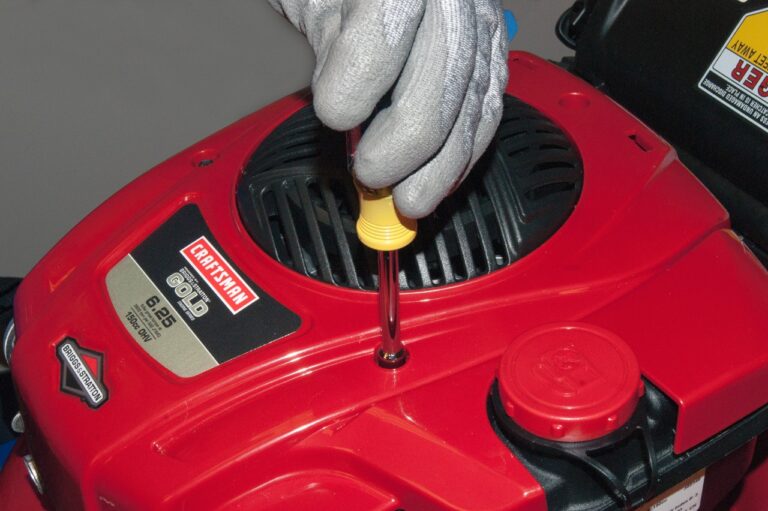
When you start your self-propelled mower, its engine comes to life through several key components working together seamlessly. The engine’s cylinder houses the piston, which moves up and down, compressing the fuel-air mixture. The spark plug ignites this mixture, causing combustion that powers the piston’s motion.
Fuel is delivered by the carburetor or fuel injection system, ensuring the right blend for efficient burning. The crankshaft converts the piston’s movement into rotational energy, driving the mower’s blade and wheels. The air filter keeps debris out, protecting the engine, while the muffler reduces noise.
Each component plays an essential role in maintaining smooth operation, delivering the power you need for effortless mowing without you having to manage the engine’s inner workings directly.
Power Transmission Process
Because the engine generates power, that energy needs to be efficiently transferred to both the mower’s blade and its wheels to keep you moving and cutting smoothly. The engine’s crankshaft connects to a drive system, often involving a belt or a series of gears. This system splits power, sending some to spin the cutting blade and some to the transmission that drives the wheels.
When you engage the self-propel feature, a clutch or a centrifugal mechanism activates, linking the engine’s power to the wheels, allowing the mower to move forward without you pushing. This synchronization assures the blade keeps rotating at the right speed while the mower propels itself, making your mowing experience easier and more efficient.
How the Transmission Moves the Wheels
How exactly does the transmission get the wheels turning on a self-propelled mower? Inside the transmission, the engine’s power is transferred to a set of gears or a belt system that controls wheel rotation. When you engage the drive, the transmission connects the engine’s output shaft to the drive axle.
This connection allows the engine’s power to spin the wheels. Depending on the mower’s design, this might involve a centrifugal clutch that engages automatically or a gear mechanism that ensures smooth power flow. The transmission effectively converts the engine’s high-speed, low-torque rotation into a slower, more powerful motion suitable for moving the mower forward.
This is how the mower propels itself without you needing to push it manually.
How the Drive Control Adjusts Speed and Steering
You control the mower’s speed and direction using the drive control mechanism, which connects directly to the transmission. By adjusting this control, you can smoothly change how fast the mower moves and steer it easily around obstacles.
Understanding how these controls work helps you maneuver the mower with precision and confidence.
Drive Control Mechanism
Ever wondered what lets you control the speed and direction of a self-propelled mower so smoothly? The drive control mechanism is the key. It connects your hand movements directly to the mower’s wheels, adjusting power and steering seamlessly.
When you engage the drive control lever, it activates the transmission, which then modulates the power sent to the wheels. This system guarantees you can accelerate, decelerate, or turn effortlessly without needing to push hard.
Key parts of the drive control mechanism include:
- Drive control lever or handle
- Transmission system (often hydrostatic or gear-driven)
- Clutch or engagement mechanism
- Linkage connecting lever to transmission
- Control cables or rods
Together, these components provide responsive handling and smooth operation during mowing.
Speed Adjustment Process
Although the drive control lever might seem simple, it plays a crucial role in adjusting both your mower’s speed and steering with precision. When you push or pull this lever, it changes the tension on a cable connected to the transmission, which controls how fast the mower moves. The further you push the lever forward, the faster the mower goes; pulling it back slows you down.
This smooth adjustment lets you match your mowing speed to your comfort and grass conditions. At the same time, slight movements of the lever help guide the mower’s direction by varying power to the wheels, allowing subtle speed changes on each side. This integrated control ensures you maintain steady movement and effective cutting without constantly shifting gears.
Steering and Maneuverability
Since precise steering is key to efficient mowing, the drive control lever doesn’t just regulate speed—it also manages how your mower turns. When you push or pull the lever, it adjusts the power sent to the wheels, allowing you to steer smoothly without stopping. This system makes navigating around obstacles and tight corners easier, giving you control and reducing fatigue.
Here’s how the drive control enhances steering and maneuverability:
- Varies wheel speed independently for smooth turns
- Allows gradual speed changes for precise control
- Engages braking for sharper directional shifts
- Adapts power distribution based on terrain resistance
- Simplifies handling on slopes and uneven ground
How the Mower Moves Forward on Its Own
How exactly does a self-propelled mower move forward without you pushing it? Inside, there’s a small transmission system connected to the engine that powers the wheels. When you engage the drive lever or control, it activates this system, transmitting power from the engine to the wheels.
This setup usually involves a belt or chain drive that turns the mower’s drive axle. As a result, the wheels rotate, pulling the mower forward at a controlled speed. You can adjust this speed using a throttle or speed control, allowing the mower to move faster or slower based on your preference.
This self-propulsion reduces the effort needed, especially on uneven or hilly terrain, so you can focus more on guiding the mower rather than pushing it.
Maintenance Tips to Keep Your Self-Propelled Mower Running
Keeping your self-propelled mower in good shape guarantees it continues moving smoothly and efficiently. Regular maintenance prevents breakdowns and extends its lifespan. Here are some key tips to maintain your mower running at its best:
- Check and change the oil regularly to keep the engine lubricated.
- Clean or replace the air filter to ensure proper airflow.
- Sharpen the blades for a clean cut and less strain on the engine.
- Inspect and tighten the drive belt to maintain smooth propulsion.
- Remove grass clippings and debris from under the deck to prevent clogging.
Frequently Asked Questions
Can a Self-Propelled Mower Be Used on Steep Slopes Safely?
You shouldn’t use a self-propelled mower on steep slopes because it can be dangerous. The mower might slip or tip over, risking injury.
Instead, consider safer alternatives like a push mower or a trimmer for steep areas.
What Are the Best Types of Grass for Self-Propelled Mowers?
You’ll want cool-season grasses like Kentucky bluegrass or fescues, as they’re easier to mow evenly. Warm-season grasses like Bermuda or Zoysia also work well.
Just avoid overly thick or tall grass for best results.
How Does Weather Affect the Performance of a Self-Propelled Mower?
You’ll notice your mower struggles more on wet grass since it can clog and slip, while dry, hard ground makes it easier to push.
Coincidentally, mowing after rain might slow you down and dull blades faster.
Are Self-Propelled Mowers Suitable for Large Commercial Lawns?
Yes, self-propelled mowers can handle large commercial lawns, especially if they have powerful engines and wide cutting decks. You’ll save effort, but for very extensive areas, you might want to think about riding mowers instead.
What Safety Gear Should I Wear While Operating a Self-Propelled Mower?
Before you mow like a 1920s aviator, wear sturdy boots, eye protection, ear plugs, and gloves. Don’t forget long pants and close-fitting clothes to keep you safe from debris and moving parts while operating your mower.
Conclusion
Now that you know how a self-propelled mower works, you’ll appreciate its convenience even more. Did you know these mowers can reduce mowing effort by up to 50% compared to push mowers? That means less strain and more time enjoying your yard.
With proper maintenance, your mower will keep running smoothly, making lawn care easier and more efficient every time you use it. A well-maintained self-propelled mower ensures optimal performance and longevity. So, gear up and let your mower do the hard work for you!
By understanding how a self-propelled mower works, you can maximize its benefits. This mower type offers effortless mowing, improved control, and time-saving convenience for your lawn care routine.