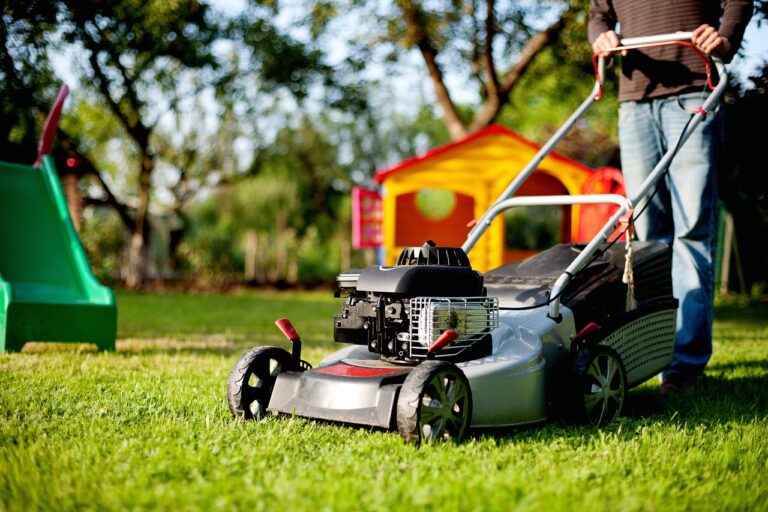
How to Tighten a Lawn Mower Blade in 5 Simple Steps
To tighten a lawn mower blade effectively, you’ll need a few essential tools like a wrench, gloves, and a block of wood. Properly tightening your lawn mower blade not only improves cutting performance but also ensures safety while operating your equipment.
Following the right steps makes the process straightforward and quick.
First, safely prepare your mower by turning it off and disconnecting the power. Then, tilt the mower to remove the blade, using the block to keep it from spinning.
Tighten the blade bolt securely but don’t overdo it.
Finally, check that the blade feels firm and runs smoothly. If you want to make sure you’re doing it right, there’s more to explore.
Key Takeaways
- Disconnect power and remove spark plug or battery to ensure mower safety before working on the blade.
- Use a block of wood to hold the blade steady and a wrench matching the bolt size to loosen or tighten the blade bolt.
- Remove the blade carefully, inspect for damage, and align it correctly before reinstalling.
- Hand-tighten the blade bolt, then securely tighten it to the manufacturer’s recommended torque without over-tightening.
- Test blade tightness by wiggling it by hand, then run the mower to check for unusual vibrations or noises.
Gather Tools to Tighten Your Lawn Mower Blade
Before you begin tightening your lawn mower blade, you’ll need to gather a few essential tools. First, grab a wrench or socket set that fits the blade bolt—usually, a 13mm or 15mm size works. You’ll also want a sturdy work glove to protect your hand while handling the blade.
A block of wood is helpful to wedge between the blade and mower deck, preventing the blade from spinning as you tighten it. Additionally, have a flashlight handy if you’re working in dim light to see bolts clearly. If your blade bolts are rusty or stuck, a penetrating oil spray can make loosening and tightening easier.
Gathering these tools upfront will make the process smoother and safer.
Prepare Your Mower Safely Before You Start
Once you have your tools ready, make sure the mower is completely turned off and disconnected from any power source. If it’s a gas mower, remove the spark plug wire to prevent accidental starting. For electric mowers, unplug the power cord or remove the battery.
This step is essential for your safety. Next, drain any fuel if you plan to work for an extended period or store the mower after maintenance. Position the mower on a flat, stable surface and tilt it carefully, ensuring the air filter and carburetor face upward to avoid leaks.
Use gloves to protect your hands from sharp edges. Taking these precautions will help you work safely and efficiently when you tighten your lawn mower blade.
Remove the Blade and Inspect for Damage
Although removing the blade might seem tricky, having the right tools makes it straightforward. First, tilt your mower on its side with the air filter and carburetor facing up to avoid leaks. Use a wrench or socket set to loosen the bolt holding the blade in place.
Removing the blade is simple with the right tools—tilt the mower properly and loosen the bolt carefully.
You may need to block the blade with a piece of wood to keep it from spinning. Once the bolt is removed, carefully take off the blade, noting its orientation for reinstallation.
Inspect the blade thoroughly for cracks, bends, or excessive wear. A damaged blade can compromise cutting efficiency and safety. If you spot any serious damage, it’s best to replace the blade rather than tighten it.
Otherwise, a clean, intact blade is ready for the next step.
Properly Tighten the Lawn Mower Blade
When you’re ready to tighten the blade, make certain it’s positioned exactly as it was before removal to guarantee proper cutting balance. Align the blade carefully so the sharp edges face the correct direction for cutting.
Next, place the blade bolt back through the center hole and hand-tighten it to hold the blade in place. Use a wrench or socket set to firmly tighten the bolt, applying the manufacturer’s recommended torque if you have it. This assures the blade won’t loosen during operation.
Avoid over-tightening, which can strip threads or damage components. If your mower uses a blade adapter or washer, reinstall these parts in the same order. Double-check that the blade is secure and seated properly before moving on to the next step in your maintenance process.
Test Your Mower to Confirm the Blade Is Tight
How can you be sure the blade is tight enough before using your mower? After tightening, give the blade a firm wiggle by hand. It shouldn’t move or feel loose.
Ensure the blade doesn’t move or feel loose by giving it a firm wiggle before use.
If it does, you need to tighten the bolt more using a wrench or socket. Next, start your mower in a safe, open area. Listen carefully for unusual vibrations or noises.
A properly tightened blade runs smoothly without excessive shaking. If the mower vibrates or sounds off, stop immediately and recheck the blade’s tightness. Also, inspect the blade visually to confirm it’s securely mounted and aligned correctly.
Taking these steps assures your mower operates safely and efficiently, protecting both you and your equipment during use.
Frequently Asked Questions
How Often Should I Sharpen My Lawn Mower Blade?
You should sharpen your lawn mower blade at least once every 20-25 hours of use or at the start of each mowing season.
If your grass looks ragged or the mower struggles, sharpen it sooner to keep cutting clean.
Can a Dull Blade Damage My Lawn?
A dull blade cuts like a butter knife through tough steak—it’ll tear your grass instead of slicing cleanly. This can cause brown tips and stress, leaving your lawn looking ragged and unhealthy over time.
What Type of Oil Is Best for Lawn Mower Maintenance?
You’ll want to use SAE 30 oil for most lawn mowers, especially in warmer weather. For cooler temperatures, 10W-30 works well. Always check your owner’s manual to make sure you’re using the right type.
How Do I Balance a Lawn Mower Blade?
To balance a lawn mower blade, start by hanging it on a nail through the center hole. If one side dips, file that side down a bit.
Keep adjusting until it’s perfectly level—easy as pie!
Is It Safe to Use Power Tools for Blade Removal?
Yes, you can use power tools for blade removal, but you’ve got to be careful. Make sure the mower’s off, disconnect the spark plug, and wear protective gear to avoid accidents or injuries while working on the blade.
Conclusion
Now that you’ve gathered your tools, prepared your mower, removed and inspected the blade, and tightened it properly, you’re ready to get back to work.
You’ll mow more efficiently, cut more cleanly, and maintain your mower more confidently. Remember, keeping your blade tight isn’t just about safety—it’s about performance, precision, and peace of mind.
So tighten up, power on, and enjoy a perfectly trimmed lawn every time! Following these simple steps to tighten a lawn mower blade will ensure your mower runs smoothly and your lawn looks its best.