How to Fix When You Can’t Pull Lawn Mower Cord
If you can’t pull your lawn mower cord, it’s important to troubleshoot the issue carefully to get your mower running again. Start by disconnecting the spark plug for safety to prevent accidental starts.
Next, check for debris or grass blocking the blade and starter area, as these can cause jams and prevent the cord from pulling smoothly. Clear any obstructions you find and inspect the pull cord itself for signs of damage or stiffness.
Make sure the recoil spring isn’t broken or stuck, as a faulty spring can stop the cord from retracting properly. Also, verify that the starter assembly is aligned correctly and that the blade spins freely without resistance.
If the cord still won’t budge after these steps, there are additional troubleshooting techniques you can try to fix the problem and get your lawn mower working smoothly again.
Key Takeaways
- Disconnect the spark plug, then inspect and remove debris or grass causing the cord to jam or stick around the blade and starter area.
- Check the pull cord for frays, stiffness, or breaks, and replace it if damaged to restore smooth operation.
- Examine the recoil spring and pulley for damage or sticking; lubricate them with silicone-based lubricant or light oil if needed.
- Verify the cord retracts smoothly and isn’t caught on internal parts like the flywheel or engine cylinder.
- Ensure the starter assembly is properly aligned and securely fitted to prevent binding or resistance when pulling the cord.
How To Quickly Diagnose Lawn Mower Pull Cord Problems
Before you jump into repairs, it’s important to quickly diagnose what’s wrong with your lawn mower pull cord. First, check if the cord is frayed or broken—this is a common issue that stops it from pulling smoothly.
Next, see if the cord retracts properly after pulling; if it doesn’t, the recoil spring inside might be damaged or jammed. Also, try pulling the cord slowly to feel for any unusual resistance or grinding, which could indicate internal problems unrelated to blockages.
Make sure the rope is securely attached to the handle and the pulley. By pinpointing these symptoms early, you can decide whether you need a simple cord replacement or a more involved repair, saving you time and effort down the line.
How To Check For Engine Or Blade Blockages Blocking The Starter
Before you assume the pull cord is the issue, check for any blade obstructions that might be blocking the starter. Make sure the engine cylinder isn’t jammed, and clear away any debris around the starter area.
These simple steps can save you time and frustration when fixing your lawn mower cord.
Inspect Blade Obstructions
If your lawn mower won’t start, you’ll want to check for any obstructions around the blade or engine that might be blocking the starter. Start by disconnecting the spark plug for safety.
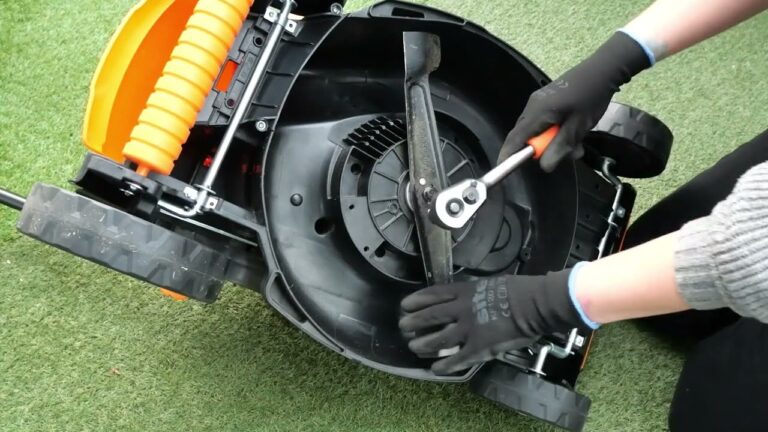
Then, carefully tilt the mower and inspect the blade area for grass clumps, sticks, or debris that might jam the blade or starter mechanism. Clear any buildup you find.
Also, verify the blade spins freely by hand; resistance could signal an obstruction.
| Step | What to Look For | Action |
|---|---|---|
| Visual Check | Grass, sticks, debris | Remove with gloves or tool |
| Blade Movement | Blade rotation resistance | Clear debris or loosen blade |
| Safety Check | Spark plug disconnected | Prevent accidental start |
Check Engine Cylinder Blockage
Wondering how to tell if your engine cylinder is blocked and preventing your lawn mower from starting? First, confirm the mower is off and cooled down. Remove the spark plug wire to avoid accidental starts.
Then, take off the spark plug and inspect the cylinder through the spark plug hole using a flashlight. Look for any visible debris, dirt, or obstructions inside. If you spot something, carefully remove it with a thin tool or compressed air.
Avoid pushing debris further inside. Sometimes, carbon buildup can block the cylinder, so cleaning the spark plug and cylinder walls gently with a soft cloth helps. After clearing blockages, reinstall the spark plug and wire.
If the cord still won’t pull, the blockage might be deeper, requiring professional help.
Clear Debris Around Starter
How can you tell if debris around the starter is causing your lawn mower cord to jam? First, disconnect the spark plug for safety, then remove the mower’s housing to access the starter area. Look closely for grass clippings, dirt, or small sticks tangled near the starter or blade.
These blockages can prevent the blade from turning freely, making the cord hard to pull. Clear out any debris using a brush or compressed air. Also, check if the blade spins by hand; if it doesn’t, debris might still be stuck or the blade could be bent.
Removing these obstructions often frees the starter mechanism, allowing the cord to pull smoothly again. Regular cleaning around the starter can prevent future jams and keep your mower running efficiently.
How To Inspect Your Lawn Mower Pull Cord For Damage
Before you start any repairs, you’ll want to carefully examine the pull cord for signs of wear or damage. Look for fraying, cuts, or weak spots that could cause the cord to snap when pulled. Also, check if the cord retracts smoothly without resistance or sticking.
If you spot any damage, it’s best to replace the cord to avoid further issues.
Here’s a quick guide to help you assess the cord’s condition:
| Condition | Description | Action Needed |
|---|---|---|
| Frayed | Threads unraveling | Replace immediately |
| Cut or Torn | Visible breaks or cuts | Replace immediately |
| Stiff or Sticky | Pull feels rough or gets stuck | Clean or replace |
| Smooth & Intact | No visible damage, retracts well | No action needed |
| Worn Handle | Handle cracks or breaks | Replace handle or cord |
How To Fix A Jammed Lawn Mower Starter Mechanism
If your lawn mower starter feels jammed, the first step is to identify what’s causing the blockage. You’ll want to carefully clear any debris or tangled parts that might be stuck in the mechanism.
After that, applying some lubricant can help the starter move smoothly again.
Identifying Starter Jam Causes
Though a jammed starter can be frustrating, you’ll often find that identifying the cause is straightforward once you know what to look for. First, check if the cord feels tight and won’t pull; this often means the recoil spring is broken or stuck.
Next, inspect the starter pulley for visible damage or debris blocking its movement. Sometimes, the engine’s flywheel can be locked due to internal engine issues like a seized piston—try turning the blade manually to see if it moves freely.
Also, look for tangled or broken starter rope inside the mechanism. In conclusion, make sure the starter assembly is properly aligned and secured, as misalignment can cause binding.
Pinpointing these causes will help you fix the jam effectively.
Clearing And Lubricating Mechanism
How do you clear and lubricate a jammed lawn mower starter mechanism effectively? First, remove the starter housing carefully to expose the pulley and spring. Check for debris like grass, dirt, or small twigs blocking movement.
Use compressed air or a brush to clear out all buildup. Next, inspect the pulley and recoil spring for rust or stiffness. Apply a light spray of silicone-based lubricant or a small amount of machine oil to these parts—avoid heavy grease, which can attract dirt.
Manually turn the pulley several times to distribute the lubricant evenly. Finally, reassemble the starter housing, ensuring everything fits properly. This process helps restore smooth operation, preventing the cord from jamming and making it easier to pull.
How To Replace A Broken Lawn Mower Pull Cord
When your lawn mower’s pull cord breaks, you’ll need to replace it to get back to trimming your grass. First, remove the mower’s cover to access the recoil mechanism.
Next, take out the damaged cord carefully. Measure and cut a new cord matching the original length. Thread the new cord through the housing and attach it to the recoil pulley.
Wind the pulley to create tension, then secure the cord’s handle. Finally, reassemble the cover.
| Step | Action |
|---|---|
| 1 | Remove mower cover |
| 2 | Remove broken pull cord |
| 3 | Cut and thread new cord |
| 4 | Attach, tension, and reassemble |
How To Lubricate And Maintain Your Lawn Mower Pull Cord System
Since your lawn mower’s pull cord system undergoes frequent use and exposure to dirt and moisture, regular lubrication and maintenance are essential to keep it functioning smoothly and prevent premature wear.
Here’s how you can do it effectively:
- Clean the Pulley and Cord: Remove debris and dust with a brush or compressed air to avoid buildup.
- Apply Lubricant: Use a silicone-based spray or light machine oil on the pulley and spring mechanism to reduce friction.
- Inspect the Cord: Check for fraying or damage; replace if necessary to avoid sudden breaks.
- Rewind Properly: Ensure the cord is wound tightly and evenly on the pulley to prevent tangling and ensure smooth operation.
Following these steps regularly will keep your pull cord system reliable and extend its lifespan.
How To Prevent Lawn Mower Pull Cord Problems With Regular Care
Although pull cords are designed to be durable, neglecting regular care can lead to frustrating problems like snapping or sticking. To prevent this, start by checking the cord for frays or cracks before each use. Replace it immediately if you spot damage.
Keep the cord clean and dry—moisture and dirt can weaken the fibers and cause it to bind. Store your mower in a dry, sheltered place to avoid exposure to harsh weather. Regularly lubricate the pulley and recoil spring to guarantee smooth operation.
Also, avoid pulling the cord too hard or letting it snap back quickly, as this stresses the components. With consistent, simple care, you’ll extend your pull cord’s life and keep your mower starting smoothly every time.
When To Call A Professional For Lawn Mower Starter Repairs
If you’ve tried basic fixes but your lawn mower still won’t start, it might be time to call a professional. Some issues require expert attention to avoid further damage or safety risks.
Here are four signs you should seek professional help:
- The starter cord repeatedly snaps or doesn’t retract properly even after replacement.
- You notice unusual noises or smoke when attempting to start the mower.
- Internal parts like the recoil spring or starter pulley seem damaged or stuck.
- Electrical components, such as the ignition switch or solenoid, might be malfunctioning.
If any of these sound familiar, a professional can diagnose and fix the problem safely and efficiently, saving you time and frustration.
Frequently Asked Questions
What Type of Pull Cord Is Best for Different Lawn Mower Models?
You’ll want a nylon or polyester cord for most push mowers due to durability and flexibility. For heavy-duty or commercial models, consider Kevlar-reinforced cords—they’re stronger and resist stretching, ensuring reliable starts every time.
Can I Use a Lawn Mower Without a Pull Cord?
You wouldn’t try to sail a ship without a rudder, right? Similarly, you can’t use a lawn mower without a pull cord unless it’s electric or battery-powered—then, just press a button and you’re good to go!
How Often Should the Pull Cord Be Replaced for Optimal Performance?
You should replace your pull cord every 1-2 years or sooner if it shows signs of fraying or stiffness.
Regular inspection helps keep your mower starting smoothly and prevents unexpected breakdowns during use.
Are There Alternative Starting Methods Besides Pull Cords?
Ever tried starting a stubborn bike without pedals? You can use electric start or push-button ignition for lawn mowers instead of pull cords. These methods make starting easier, especially if you’re struggling with traditional cords.
What Safety Precautions Should I Take When Handling the Pull Cord?
You should always wear gloves to protect your hands, make sure the mower is on a flat surface, keep your fingers clear of the blade area.
Never pull the cord while the mower is in gear or near flammable materials.
Conclusion
If you’re struggling with your lawn mower pull cord, you’re not alone—studies show that nearly 60% of small engine failures stem from starter issues like jammed cords or damaged mechanisms. By regularly inspecting, lubricating, and maintaining your pull cord system, you can keep your mower running smoothly and avoid those frustrating moments.
Remember, a little care goes a long way, but don’t hesitate to call a pro if the problem feels beyond your reach. Proper lawn mower maintenance and timely repairs are key to ensuring your pull cord works effectively. Taking these steps will help you fix when you can’t pull lawn mower cord and extend the life of your equipment.