Top 12 Best Sand for Patio Pavers That Will Transform Yours!
Uneven stones, shifting pavers, and sand washing away after a rain are common signs of using the wrong material for your outdoor space. The best sand for patio pavers helps lock each stone in place without washing out or compacting into a solid mass that prevents drainage.
Choosing the right sand avoids frequent repairs and keeps the patio looking neat over time.
The key factors in a good sand for patio pavers are grain size, shape, and cleanliness. Sharp, angular grains about 0.5 to 1.0 millimeters in size interlock better than rounded, fine sand. Avoid sand with too many fines or dust because that creates compaction and drainage problems.
Clean, washed sand free of clay or organic material prevents staining and mold growth.
Need a Quick Check?
| Image | Product | Price |
|---|---|---|
Our Top Picks 1  | DOMINATOR Polymeric Sand | Check Price |
Our Top Picks 2  | Alliance Gator G2 Maxx Slate | Check Price |
Our Top Picks 3  | Alliance Gator G2 Maxx Beige | Check Price |
Our Selected Top 12 Sand for Patio Pavers You Can Trust
This list features a variety of sands ideal for patio pavers, covering different textures and compositions. Each review explains how the sand performs, identifies the best uses, and highlights key advantages and drawbacks to help you choose the most suitable option for your project.
1. DOMINATOR Polymeric Sand
DOMINATOR Polymeric Sand is designed for patio paver joints, offering strong flexibility and durability in a wide range of joint sizes. Ideal for anyone wanting to protect and improve the look of their paver surfaces, it features CERAMIC FLEX technology that balances flexibility with long-lasting joint strength.
Installation is straightforward thanks to fine sand particles and a cement-free formula that sweeps into joints easily and rinses off without extra effort. The bag’s easy-pour handle gives precise control during application, which helps reduce mess and saves time on setup and cleanup. Joint sizes between 1/8” and 4” can be filled, making it versatile for various patio projects.
Performance holds up well against movement and weather, maintaining joint integrity and color over time. Strong build quality comes from the advanced polymeric sand formulation. Positive feedback highlights its easy installation and attractive color options, while some users note it does not replace grout or mortar and does require paver edging for best results.
The product is widely praised for simplifying installation thanks to its fine sand and easy-pour packaging. Common feedback points out it does not replace traditional grout or mortar, meaning additional preparation steps are needed. Colors help make patios look more lively and fresh.
People focusing on fast and clean refinishing of patio joints will appreciate its flexible application and color choices. Those needing full grout replacement or without proper edging might want to consider alternative products.
Pros
- Easy pour handle for controlled application
- Works in joints from 1/8” to 4” wide
- Cement-free, rinses off cleanly
- Color options that improve the visual appeal of pavers
Cons
- Not a substitute for grout or mortar
- Requires proper paver edging for best use
| Specification | Details |
|---|---|
| Brand Name | DOMINATOR |
| Number of Packs | 1 |
| Model | 10 Pound Gray Beige |
| Manufacturer | Black Diamond Coatings Inc |
| Part Number | DPS-PARENT |
2. Alliance Gator G2 Maxx Polymeric Sand Slate Gray
Feels solid and secure underfoot, perfect for anyone wanting patio pavers that don’t shift or wash out after rain. It’s designed mostly for patios, driveways, pool decks, and walkways where a strong bond between stones is important.
Its biggest strength lies in quick setting and long-lasting hold, thanks to rain-activated technology.
Applying it is straightforward, with a simple sweep-in process that suits both pros and homeowners tackling a DIY project. Once set, it resists washout, so heavy rains won’t pull it away easily.
Compatible with concrete and natural stone pavers, it adapts well to various hardscape materials, making it flexible for different outdoor projects.
It locks pavers firmly in place, preventing unwanted movement or gaps forming over time. The mix settles quickly as soon as it’s activated by water, which is essential to avoid delays or extra work.
Most users praise how well it sticks in place after rain, though some mention the need to keep the surface dry during installation to prevent premature setting.
Strongest praise comes from its ability to set quickly and resist washout even after heavy rain, maintaining a solid joint between pavers. The most frequent complaint notes the necessity for dry weather during installation, as premature activation can cause issues. Color variety is limited, which may not suit all design preferences.
Those aiming for durable, weather-resistant jointing sand will find it very effective. It suits projects with concrete or stone pavers needing strong locking. Anyone unsure about controlling moisture during installation or needing more color choices should explore alternative products.
Pros
- Fast setting with rain-safe activation
- Locks pavers firmly to prevent shifting
- Compatible with many hardscape surfaces
- Easy sweep-in installation
Cons
- Needs dry conditions during installation
- Only comes in one color option
| Specification | Details |
|---|---|
| Brand Name | Home and Country USA |
| Number of Packs | 1 |
| Number of Items | 1 |
| Manufacturer | Home and Country USA |
| Part Number | G2MAXXSG50 |
3. Alliance Gator G2 Maxx Polymeric Sand Beige
Alliance Gator G2 Maxx Polymeric Sand Beige is a solid choice for anyone looking to secure patio pavers with minimal fuss. It works well for both DIY homeowners and contractors thanks to its quick setting and rain-resistant properties. Its biggest strength lies in locking pavers firmly to prevent shifting.
Setup is pretty straightforward, you just sweep the sand into the joints and activate it so it sets quickly. The rain safe technology means you can get on with your day without worrying about the sand washing away during unexpected showers.
It feels reliable and sturdy underfoot on patios, walkways, and even pool decks, providing good stability without extra effort.
Performance-wise, this jointing sand does a dependable job holding the pavers in place. The sand resists washout well after activation, so you rarely see gaps or loose sand after rain.
Some users note the beige color can show dirt or stains more easily over time, but it stays tough despite this minor issue. It’s compatible with both concrete and natural stone pavers, making it versatile for different patio designs.
The sand sets quickly and stays put even in wet conditions, which users appreciate for maintaining stable, neat patio joints. Some find the beige color picks up dirt over time, making touch-ups necessary to keep patios looking fresh.
Anyone wanting a reliable, easy-to-apply joint sand for various paver types will be happy with it. Those looking for a darker color to hide dirt might want to explore alternative options.
Pros
- Fast setting with rain safe technology
- Locks pavers firmly to prevent shifting
- Compatible with concrete and natural stone
- Simple sweep-in application
Cons
- Beige color can show dirt easily
- May require occasional touch-ups
| Specification | Details |
|---|---|
| Brand Name | Home and Country USA |
| Number of Packs | 1 |
| Number of Items | 1 |
| Manufacturer | Home and Country USA |
| Part Number | G2MXXB50 |
4. Premixed Patio Grout Joint Filler

Premixed Patio Grout Joint Filler uses an acrylic sanded formula designed for outdoor use, making it suitable for anyone looking to fill paver joints without mixing. Its biggest strength is the ready-to-use nature straight from the tube, which saves time and reduces mess during application.
Setting up is straightforward since this grout requires no mixing, just squeeze it out like toothpaste. The included grout float makes spreading the material easier and more precise, helping to get a smooth finish between pavers.
The natural sand color blends well with most outdoor patios, and the product covers about 44 sq ft, making it convenient for medium-sized jobs.
The joint filler hardens nicely and stays weatherproof through harsh conditions, showing good durability over time. Its acrylic base and included applicator add to the ease of use.
A lot of users appreciate how simple the application is with the grout float, while some mention the 14-ounce tube runs out quickly on larger projects requiring more coverage.
Most praise goes to how easy it is to apply with the included grout float, making the process less messy and more precise. The common complaint revolves around the small size of the tube, which can feel insufficient for larger patio projects requiring more volume.
People with smaller patio spaces or minor repairs will find it convenient and effective. Those facing large-scale jobs or extensive patio installations might want to consider larger quantities or other products designed for broader coverage.
Pros
- Use it straight from the container without any mixing
- Comes with grout float for easier application
- Weatherproof for outdoor use
- Natural sand color fits well with patio pavers
Cons
- Only 14-ounce tube may be small for big areas
- Limited quantity means frequent reapplication needed
| Specification | Details |
|---|---|
| Brand Name | PENTAUSA |
| Unit Count | 14 Ounce |
| Coverage | 44 sq ft |
| Formula | Acrylic sanded |
| Included Components | Premixed Patio Grout, Applicator Grout Float, Manuals |
| Color | Natural sand |
5. SRW Pavermate Z3 Polymeric Sand Tan

Polymeric sand designed for locking patio pavers firmly in place, perfect for anyone looking to keep pavements stable and weed-free. The standout feature is its fast-setting formula that hardens with water, ensuring durable joints that hold well against weather and pests.
Applying the sand involves spreading it into the joints between pavers, then activating it with water to harden quickly. It works well on brick, stone, concrete, and similar surfaces, making it suitable for patios, walkways, driveways, and retaining walls. The sand prevents common issues like shifting and erosion, keeping outdoor spaces low-maintenance.
Performance-wise, the sand locks pavers securely and withstands rain, wind, freeze-thaw cycles, and extreme temperatures. Users appreciate how well it controls weeds and ants while stabilizing the surface. Some note the sand can be a bit tricky to fully clean off pavers before hardening, requiring careful application to avoid residue.
Strong points include effective joint hardening and resistance to weather damage, which keeps pavers stable over time. Common feedback highlights the challenge in cleaning excess sand before it sets, which requires some patience during application.
People seeking a solid, weed-resistant jointing sand for typical patio or walkway projects will find this product very reliable. Those with very large areas might consider additional packs or alternative products to cover the full surface without interruptions.
Pros
- Fast-setting formula hardens with water
- Prevents weed growth and ant infestations
- Resists shifting, erosion, and extreme weather
- Works on multiple surfaces: brick, stone, concrete
Cons
- Can leave residue on pavers if not cleaned properly
- Single pack may not cover large projects fully
| Specification | Details |
|---|---|
| Brand Name | Home and Country USA |
| Number of Packs | 1 |
| Unit Count | 800 Ounce |
| Manufacturer | Home and Country USA |
6. Fine Masonry Sand for Paver Joints

Fine Masonry Sand for Paver Joints suits anyone needing a natural, fine-grain sand for filling joints or leveling patio pavers. Its biggest strength lies in having a consistent texture that fits paver joints perfectly, helping keep patios and walkways stable and looking neat without much fuss.
Handling the sand is straightforward. It comes in a manageable 10 lb pack, ideal for small projects around the house like paver repairs or stepping stone installations. The fine texture makes spreading and filling joints easier without worrying about large particles causing uneven surfaces.
Natural earth-tone color variations blend well with outdoor hardscape materials, so it looks natural as it settles in place.
Performance-wise, it works well for its intended tasks, creating a tight joint that helps keep pavers locked in place and prevents shifting. It’s naturally sourced, so the grain size and color aren’t exactly uniform, which might raise minor concerns for those seeking perfect consistency. Most praise focuses on how well it fills joints and levels stones without much settling, while occasional mentions note slight variation in texture.
Most people find the sand’s texture perfect for compacting tightly between pavers, helping joints stay firm and tidy. Some note that the natural variation in grain size and color means it isn’t perfectly uniform, which might not suit those wanting a very crisp, even finish.
Ideal for small-scale patio or walkway repairs and those who prefer natural materials. Larger projects or those needing very uniform sand might want to consider a different product or buy in bulk elsewhere.
Pros
- Consistent fine grain texture for easy joint filling
- Natural color variations blend well outdoors
- Good for leveling under stones and slabs
- Convenient 10 lb size for DIY projects
Cons
- Natural sand may have slight grain size variations
- Small pack may not suit larger patio projects
| Specification | Details |
|---|---|
| Brand Name | Gravel Company |
| Unit Count | 160 Ounce |
| Number of Packs | 1 |
| Part Number | Alss-sand |
| Material | Natural Sand |
| Size | 10 lb |
7. Quikrete HardScapes Paver Base Sand
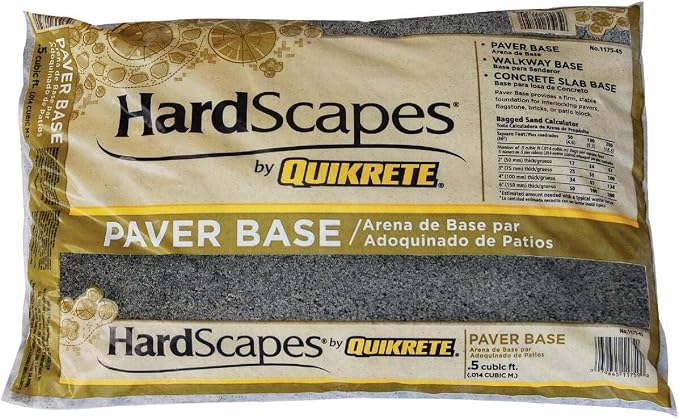
Setting up patio pavers requires a solid, reliable base sand that stays firm and supports weight without shifting. Quikrete HardScapes Paver Base Sand suits anyone working on outdoor living spaces who wants a heavy-duty, stable sand that holds pavers in place no matter the weather.
Its biggest strength is providing a strong foundation for lasting results.
Pouring and leveling this sand to create a firm base is straightforward thanks to its fine, consistent texture. The 0.5 cubic foot bag size makes handling manageable, and the weight of nearly 45 pounds ensures it compacts well.
It’s easy to spread evenly, which helps keep pavers aligned without extra effort during installation.
Performance-wise, the sand locks in place effectively, giving patio tiles or bricks a stable surface that resists movement and settling over time. The main praise lies in how well it supports pavers under pressure, while some note that the bag’s size can feel heavy when moving it around single-handedly.
The material is durable and well-packed to avoid moisture or clumping issues.
The sand’s strongest point is how firmly it holds patio pavers, providing a solid base that resists shifting over time. The main complaint focuses on the bag being quite heavy to lift and move, which could slow down the setup for some people.
Anyone needing a reliable paver base for standard patio projects will find this sand useful. Those requiring larger quantities or lighter handling might look for bigger bags or lighter options to ease transport and speed up the job.
Pros
- Heavy weight compacts well for a firm base
- Fine texture spreads evenly under pavers
- Durable, resists clumping and moisture
- Suitable for various outdoor patio projects
Cons
- Bag can be heavy to carry alone
- Only comes in small 0.5 cubic foot size
| Specification | Details |
|---|---|
| Product Dimensions | 14 x 20 x 3 inches |
| Item Weight | 44.9 pounds |
| Volume | 0.5 CUFT |
| Model Number | 1175-45 |
| Manufacturer | TV Non-Branded Items |
8. SRW Z3 Pavermate Polymeric Sand Beige

SRW Z3 Pavermate Polymeric Sand Beige stands out for its fast-setting formula that hardens paver joints, making it ideal for patios, driveways, and walkways where durability is key. Those needing a product that prevents erosion, weed growth, and shifting will find this sand particularly helpful.
Applying the sand is straightforward; it fills the joints between bricks or stones and quickly hardens, reducing the need for frequent maintenance. Its beige color blends naturally with various paving materials, offering a clean, uniform look. It also handles heavy foot and vehicle traffic without breaking down, making daily wear less of a worry.
Performance-wise, the sand does a solid job of stabilizing pavers and keeping weeds at bay as promised. Its formulation works well under extreme weather, and it’s tough enough for retaining walls and garden paths. Some users find cleanup after application a bit tedious, especially before it sets, but the long-lasting joint stability is often praised.
The sand reliably holds pavers in place and blocks weeds over time, but managing loose sand during installation demands patience and care. Its durable formula withstands harsh weather and busy outdoor areas, which many appreciate.
Those installing patios or driveways that see lots of activity will benefit most from this sand’s toughness and low upkeep. For projects where different color choices are important, other options might be better suited.
Pros
- Hardens quickly to stabilize paver joints
- Prevents erosion, shifting, and weed growth
- Suitable for heavy foot and vehicle traffic
- Blends naturally with brick, stone, and concrete
Cons
- Cleanup before setting can be tricky
- Only available in a single beige color option
| Specification | Details |
|---|---|
| Brand | Home and Country USA |
| Manufacturer | Home and Country USA |
| Unit Count | 800 Ounce |
| Number of Packs | 1 |
| Part Number | Z3PSB |
9. Polymeric Sand for Concrete Paver Joints Gray

Anyone looking to secure patio pavers with durable, long-lasting sand will find a lot to like here. It suits both DIY enthusiasts and professionals who need quick-setting sand for joints up to 2 inches wide.
Its biggest strength lies in stabilizing paver joints effectively to keep patios and walkways solid over time.
Applying the sand is straightforward, making the setup easy even for those new to patio work. The fast-setting formula means you don’t have to wait long before walking over or using the area. It’s suitable for patios, driveways, and walkways alike.
Filling the paver joints with this sand up to 2 inches wide is simple and doesn’t require special tools or complex preparation.
Once set, the polymeric sand does a solid job of locking pavers in place, reducing movement and keeping out most weeds. The product’s quality holds up well under normal outdoor conditions, offering reliable stabilization. Some appreciation comes from how quickly it sets, but a common complaint notes occasional difficulty with completely filling wider joints uniformly.
The sand is praised for how quickly it sets and how well it stabilizes pavers, keeping patios firm and tidy. A common drawback is difficulty achieving consistent fill in wider joints, which may affect appearance or stability in some areas.
People who want a fast, reliable way to secure their patios or driveways will appreciate this product’s ease of use and performance. Those needing to fill very wide or irregular joints might want a larger unit or a product better suited for precise filling.
Pros
- Fast-setting formula speeds up project completion
- Compatible with joint widths up to 2 inches
- Simple application suitable for DIY and pros
- Good durability for outdoor use
Cons
- Tricky to fill wider joints completely evenly
- Small unit size may require multiple purchases
| Specification | Details |
|---|---|
| Brand Name | ConSANDtrate |
| Unit Count | 16 Fluid Ounces |
| Manufacturer | DaverCo |
| Part Number | PS45W |
| Joint Width Compatibility | Up to 2″ |
10. BuddingCo Polymeric Sand Gray

Perfect for anyone working on outdoor patios or pool decks, BuddingCo Polymeric Sand Gray stands out by preventing erosion caused by weather changes. It suits projects on pavers with false joints and handles outdoor exposure well, making it reliable where durability and strong joint stability are key.
Applying the sand involves filling the joints on pavers that might be exposed to wind and rain, including places like driveways and footpaths. It only sets above freezing temperatures, so timing the installation is important. Regular watering is needed afterward to help it set properly.
Coverage is manageable at about 18 square feet per bag, which fits smaller to medium patio areas nicely.
Durability is a big plus, with resistance against erosion during freeze-thaw cycles and strong performance under full sun. The sand holds up well in sandy soil environments.
Most praise focuses on its ability to keep pavers stable and intact outdoors. A common downside is needing consistent watering, which means more attention during installation and shortly after.
Strong points include its excellent resistance to erosion from wind, rain, and freeze-thaw cycles. Regular watering is necessary during and after installation, which some find demanding. The sand keeps paver joints locked and stable in outdoor settings, even under direct sun.
Best picked by those needing a durable outdoor sand for patios, driveways, and pool decks with false joints. Not ideal for installations during cold weather or those seeking minimal maintenance during curing.
Pros
- Prevents erosion caused by weather cycles well
- Suitable for false joint pavers
- Durable under full sun exposure
- Covers 18 square feet per bag
Cons
- Requires regular watering to set properly
- Only sets at temperatures above freezing
| Specification | Details |
|---|---|
| Indoor Outdoor Usage | Outdoor |
| Sunlight Exposure | Full Sun |
| Soil Type | Sandy Soil |
| Moisture Needs | Regular Watering |
| Coverage | 18 Square Feet |
| Sets At | Above freezing temperatures (32°F/0°C) |
11. SRW Z3 Pavermate Polymeric Sand Granite

Home and Country USA’s SRW Z3 Pavermate Polymeric Sand Granite is designed to lock in patio pavers with a durable finish. Ideal for anyone wanting a lasting hold between concrete pavers, its biggest strength lies in solidifying joints to keep your patio intact through weather changes.
Apply on a completely dry patio area for best results. Sweep the sand into the joints, then blow off any excess.
Lightly mist the pavers to activate the polymer bonding effect, but avoid use below freezing temperatures. Tips from experienced contractors come with the product to guide proper application and help achieve a neat finish.
The sand holds the paver joints tightly for years, preventing shifting and weed growth. Professional tips included make installation straightforward. Users praise its strong grip and longevity, while some mention difficulty working with it in colder weather.
It balances ease of use with solid, reliable performance.
The strongest praise highlights how well the sand hardens joints to prevent shifting and weed growth. The most common complaint involves the temperature limitations and need for a dry surface before application, which can be tricky during cooler or damp conditions.
Anyone looking for a long-lasting solution to secure patio pavers will appreciate this product. Those in colder climates or with high humidity may want to consider sand that tolerates lower temperatures or damp conditions better.
Pros
- Locks in paver joints for long-term stability
- Includes expert tips for application
- Activates with light misting for solid bond
Cons
- Not suitable for application under 32 degrees
- Requires completely dry surface before use
| Specification | Details |
|---|---|
| Brand Name | Home and Country USA |
| Number of Packs | 1 |
| Number of Items | 1 |
| Manufacturer | Home and Country USA |
| Part Number | N / A |
12. Rhino Power Bond Plus Polymeric Sand Beige

Rhino Power Bond Plus Polymeric Sand Beige feels dependable for anyone looking to keep patio pavers solid and neat. Best suited for driveways, walkways, and pool surroundings, its biggest strength lies in how well it grips the joints, preventing movement and weed growth over time.
Applying the sand requires dry pavers and joints to ensure proper bonding. The sand spreads evenly, filling gaps without much fuss, thanks to its beige color that blends naturally with most pavers. Setup is straightforward, just sweep it into the cracks and lightly mist afterward to activate the bonding process.
This makes daily use manageable, especially for outdoor areas prone to shifting or erosion.
Performance-wise, it holds the pavers tightly in place, reducing shifting during normal use. The product comes as a 160-ounce pack, enough for small to medium projects.
The strongest praise is for its lasting hold and neat finish. On the downside, some found it tricky to apply perfectly dry joints, which is necessary for the sand to work as intended.
Users appreciate how well the sand grips pavers and resists weed growth, giving outdoor areas a clean, stable look. The most common drawback is the necessity for dry joints, which can complicate the application depending on weather or surface conditions.
This product suits those working on medium-sized patios or driveways looking for a durable joint filler. Anyone with larger areas or relying on quick, wet conditions might want to explore other options that offer greater pack sizes or less moisture sensitivity.
Pros
- Good for driveways and pool areas
- Blends well with beige pavers
- Strong bond holds pavers firmly
- Easy to spread in joints
Cons
- Needs completely dry joints before use
- Single pack size may limit larger projects
| Specification | Details |
|---|---|
| Brand Name | Home and Country USA |
| Number of Packs | 1 |
| Unit Count | 160 Ounce |
| Manufacturer | Peach Country |
| Suitable For | Driveways, walkways, pool surroundings |
Best Sand for Patio Pavers Comparison Table
| Product | Brand | Weight/Unit Count | Color/Type | Special Features |
|---|---|---|---|---|
| DOMINATOR Polymeric Sand | DOMINATOR | 10 Pound | Gray Beige | Polymeric Sand |
| Alliance Gator G2 Maxx Slate | Home and Country USA | – | Slate | Gator G2 Maxx |
| Alliance Gator G2 Maxx Beige | Home and Country USA | – | Beige | Gator G2 Maxx |
| Premixed Patio Grout Filler | PENTAUSA | 14 Ounce | Multiple Shades | Acrylic, Water-resistant |
| SRW Pavermate Z3 Tan | Home and Country USA | 800 Ounce | Tan | – |
| Fine Masonry Joint Sand | Gravel Company | 160 Ounce | – | Fine Masonry Joint Sand |
| Quikrete HardScapes Base Sand | TV Non-Branded | 44.9 Pounds | – | Base Sand |
| SRW Pavermate Z3 Beige | Home and Country USA | 800 Ounce | Beige | – |
| Polymeric Concrete Joint Gray | DaverCo | 16 Fluid Ounces | Gray | Polymeric Joint |
| BuddingCo Polymeric Gray | BuddingCo | – | Gray | Durable, Outdoor |
| SRW Pavermate Z3 Granite | Home and Country USA | – | Granite | – |
| Rhino Power Bond Beige | Peach Country | 160 Ounce | Beige | Rhino Power Bond |
- BrandDOMINATOR
- Weight/Unit Count10 Pound
- Color/TypeGray Beige
- Special FeaturesPolymeric Sand
- BrandHome and Country USA
- Weight/Unit Count–
- Color/TypeSlate
- Special FeaturesGator G2 Maxx
- BrandHome and Country USA
- Weight/Unit Count–
- Color/TypeBeige
- Special FeaturesGator G2 Maxx
- BrandPENTAUSA
- Weight/Unit Count14 Ounce
- Color/TypeMultiple Shades
- Special FeaturesAcrylic, Water-resistant
- BrandHome and Country USA
- Weight/Unit Count800 Ounce
- Color/TypeTan
- Special Features–
- BrandGravel Company
- Weight/Unit Count160 Ounce
- Color/Type–
- Special FeaturesFine Masonry Joint Sand
- BrandTV Non-Branded
- Weight/Unit Count44.9 Pounds
- Color/Type–
- Special FeaturesBase Sand
- BrandHome and Country USA
- Weight/Unit Count800 Ounce
- Color/TypeBeige
- Special Features–
- BrandDaverCo
- Weight/Unit Count16 Fluid Ounces
- Color/TypeGray
- Special FeaturesPolymeric Joint
- BrandBuddingCo
- Weight/Unit Count–
- Color/TypeGray
- Special FeaturesDurable, Outdoor
- BrandHome and Country USA
- Weight/Unit Count–
- Color/TypeGranite
- Special Features–
- BrandPeach Country
- Weight/Unit Count160 Ounce
- Color/TypeBeige
- Special FeaturesRhino Power Bond
How to Choose the Best Sand for Patio Pavers
Choosing the right sand for patio pavers depends on grain size, drainage ability, and stability to ensure proper locking and prevent shifting. Using the correct sand reduces maintenance, avoids erosion, and extends the life of your patio, ultimately saving time and money.
Grain Size and Texture
Using sand with uneven grain size often leads to shifting and settling of patio stones after installation. Sand particles that are too fine tend to compact overly tightly and hinder drainage, while overly coarse grains leave large gaps that weaken stability.
A consistent medium grain size, usually between 0.25 mm and 0.5 mm, provides a firm base that supports pavers evenly and allows water to drain effectively.
Texture plays a key role in how easily the material spreads and compacts. Sand that feels too dusty or powdery is hard to keep in place when swept into joints, often requiring repeated effort to fill gaps properly.
A well-graded sand with a slightly angular texture locks together better, keeping paver joints stable and reducing future movement or erosion.
Material Composition
Some sands contain additives that change their behavior drastically. Polymeric sands, for example, harden when moistened and offer greater resistance to erosion, making them ideal for high-traffic areas or locations with frequent rain.
Masonry sand is softer and works well for general paver installations but can wear quicker under heavy weather conditions.
Silica sand is frequently used due to its uniform particle size and hardness, offering good durability across various climates. In wet or freezing environments, sand that resists breaking down or washing away extends the lifespan of the patio surface.
Picking the right material for your specific weather conditions reduces maintenance and improves performance.
Compatibility with Paver Type
The size of the joints between pavers directly affects which sand will work best. Narrow joints require finer sand able to fill tight spaces fully, while wider joints can handle coarser grains that lock together for better stability.
Matching sand texture to both joint width and paver edge shape helps maintain locking strength and prevents sand from easily washing out.
Using incompatible sand creates loose joints that invite weed growth and dirt accumulation, spoiling the patio’s look and function. Correctly chosen sand improves the visual continuity of the patio surface by preventing gaps or uneven coloration in the joints.
Moisture Resistance
Sand that absorbs or lets water pass through easily tends to wash away after heavy rain or during freeze-thaw cycles, causing pavers to loosen and sink. Materials with moisture-repellent properties hold their place firmly, reducing erosion and helping maintain joint integrity over time.
This means fewer repairs and less frequent reapplication of joint filler. Especially in areas with harsh winters or heavy precipitation, choosing sand with good moisture resistance reduces long-term maintenance and protects the patio’s structure.
Ease of Application
The ease of spreading sand depends largely on its texture. Sands that are too fine or powdery can be messy and clump up, requiring more time to sweep thoroughly into joints. Coarser, slightly angular sands move smoothly and settle quickly when brushed into place.
Polymeric sands often require wetting after application to activate binding agents, so having a hose or sprayer handy is important. Compaction tools may be needed for certain types to ensure a stable surface, adding to installation time. Picking sand that flows evenly and compacts well can save hours and ensure a solid, neat finish from the start.
Proper Installation Techniques for Patio Paver Sand
Using the right sand and applying it correctly is essential for a stable patio surface. Begin by spreading a layer of coarse bedding sand over the base layer to create a smooth, level bed.
The sand should be about one inch thick. Avoid compacting this bedding sand too much; it needs to be loose enough to hold pavers firmly but allow slight adjustments during installation.
Once the pavers are laid, use polymeric sand or jointing sand to fill the gaps between them. Sweep the sand into the joints thoroughly, ensuring each void is completely filled. Afterward, lightly mist the surface with water to settle the sand, but avoid washing it out.
- Use a plate compactor to settle the pavers and sand together gently.
- Check for levelness frequently throughout the process.
- Remove excess sand from the surface after it has settled.
This approach helps prevent shifting and weed growth between pavers.
Maintenance Tips to Prolong the Life of Your Paver Sand
Maintaining sand between patio pavers demands regular attention. Keep an eye out for sand that has been washed out after heavy rain or cleaning. Replenishing the joints promptly prevents movement and weed invasion.
Remove debris like leaves and dirt, which can hold moisture and lead to sand erosion. A broom with stiff bristles works well for cleaning the surface without disturbing the sand joints.
Pressure washers should be used cautiously; excessive force can wash out the sand.
- Refill the joints with polymeric sand as needed to maintain stability.
- Address stains or moss by treating with appropriate cleaners that won’t erode sand.
- Consider applying a sealant to protect both pavers and sand from water damage.
Consistent care preserves the patio’s structure and appearance over time.
Common Mistakes to Avoid When Using Sand for Patio Pavers
Using the wrong type of sand or improper technique can lead to common problems with patio pavers. Avoid using play sand or beach sand, as these have fine particles that do not compact well and can erode quickly.
Do not skip the step of thoroughly filling joints with sand after laying pavers. Incomplete filling allows pavers to shift and promotes weed growth.
Also, avoid adding sand directly over wet pavers because it will clump and won’t settle evenly.
- Don’t use regular concrete sand; choose sharp, coarse sand designed for paver joints.
- Avoid rushing the compaction step; it stabilizes the entire patio.
- Ensure proper drainage layers below to prevent pooling water that can wash out sand.
Careful selection and application of sand prevent costly repairs and maintain the patio’s integrity.
People Also Asked
What Type of Sand Is Best for Patio Paver Joints?
The best sand for patio paver joints is polymeric sand. It hardens when wet, helping keep pavers in place and preventing weed growth. Keep the sand dry until you sweep it into the joints and activate it with water for best results.
How Much Sand Do I Need for a Patio Paver Installation?
Calculate about 50 pounds of sand per 100 square feet for a standard 1/8 to 1/4 inch joint width and depth. Measure your patio area accurately, and buy a little extra to fill any settling that occurs after the first few days.
Is Patio Paver Sand Safe for Pets and Children?
Polymeric sand is generally safe for pets and children once fully cured. Avoid direct contact with wet sand during installation, and keep kids and pets away until it has dried completely to prevent irritation or ingestion risks.
How Often Should I Replace Sand Between Patio Pavers?
Sand between pavers usually only needs replacing every few years or if it washes away after heavy rain. Check joints regularly for gaps and refill with polymeric sand to maintain stability and keep weeds from growing.
What Common Issues Occur with Sand in Patio Paver Joints?
Common issues include sand washing out after rain or not curing properly if applied when wet. Make sure to sweep sand fully into dry joints and activate with a light spray of water, avoiding over-wetting, to minimize erosion and shifting.
Conclusion
Choosing the best sand for patio pavers depends mostly on how well it fills spaces between pavers, its ability to prevent weed growth, and its drainage properties. The right sand should stay in place after compaction and resist washing out during rain or cleaning.
Coarser sands often provide better stability, while finer sands can create smoother joints but may wash away faster.
Think about your patio’s size, local weather, and how often the area gets foot traffic or maintenance when selecting sand. Check the comparison table and product details above to match these factors to your budget and desired durability. Aligning those priorities will help you find the sand that fits your specific patio needs.

I’m Jake Thompson, and I’ve spent over a decade working on lawn mowers, from small push mowers to big riding tractors. I write about starting problems, blade sharpening, carburetor cleaning, oil changes, and seasonal maintenance. My goal is to give you clear, step-by-step advice so you can handle common mower issues yourself and keep your lawn looking sharp all season.