Top 12 Best LED Grow Lights for Weed That Boost Yields!
Many hobbyists know the frustration that comes with cheap or poorly chosen LED lights when growing weed. The best led grow lights for weed cut down on wasted energy and heat, preventing burnt plants and weak yields. Using a light that doesn’t give off the right spectrum or intensity often results in stunted growth or uneven buds, making the whole effort feel like a loss.
Quality LED grow lights should provide a full spectrum, closely mimicking natural sunlight, usually with a mix of red and blue LEDs to promote photosynthesis effectively. Power consumption matters too, often measured in watts per square foot, a good setup delivers around 30-50 watts per square foot. Sturdiness and heat dissipation are important since poor ventilation can shorten the light’s lifespan and increase run costs.
A solid unit fits well into your grow space and is easy to clean, preventing dust buildup that cuts light output.
Need a Quick Check?
| Image | Product | Price |
|---|---|---|
Our Top Picks 1  | 1000W Full Spectrum LED | Check Price |
Our Top Picks 2  | 2-Pack LED Grow Panels | Check Price |
Our Top Picks 3  | 6000K Full Spectrum Light | Check Price |
Our Selected Top 12 Led Grow Lights for Weed Worth Buying
This list features carefully chosen LED grow lights for cannabis cultivation, highlighting key aspects of each model. You will learn about their performance, ideal user scenarios, and the main advantages and disadvantages to help you select the best option for your growing needs.
1. 1000W LED Full Spectrum Grow Light
Constructed with energy-efficient LED technology, this 1000W LED Full Spectrum Grow Light suits anyone looking to grow plants indoors through all growth stages. Its biggest strength is a full spectrum covering essential light ranges that encourage faster flowering and better leaf growth.
Setting up involves mounting it on the ceiling using its adjustable lighting method, which allows you to direct the light as needed. The touch switch makes it easy to control daily, while the corded electric power source provides steady daylight replacement. Waterproof design means it’s safe to use in humid environments without worry.
Performance proves strong in speeding up flowering and growing plant rhizomes thanks to its precise red and blue light wavelengths. It balances power and efficiency well with 100 watts of actual use and reduces light loss effectively.
Reports praise its energy-saving ability, though some mention the single bulb source might limit coverage in larger spaces.
Reviews commonly mention the grow light’s efficiency and wide spectrum as excellent for boosting yields and growth speed, but some note the limitation of a single light source which could restrict use in larger grow setups. The waterproof feature is also highlighted frequently as a practical benefit.
Anyone growing moderate indoor gardens looking for a reliable and energy-conscious light will find this suitable. Those needing coverage for bigger spaces or multiple light intensities might want to explore other options. It fits best where full spectrum and easy adjustment are priorities over size or wattage variety.
Pros
- Full spectrum includes blue, white, and red light
- Touch control offers simple operation
- Energy efficient with up to 90% light utilization
- Waterproof design is suitable for damp spots
Cons
- Single light source may cover smaller areas
- Only one wattage option at 100 watts
| Specification | Details |
|---|---|
| Wattage | 100 watts |
| Bulb Base | E27 |
| Light Source Type | LED |
| Switch Type | Touch |
| Mounting Type | Ceiling Mount |
| Water Resistance Level | Waterproof |
2. 2 Pack LED Grow Light Panel for Indoor Plants
Easy-to-set-up and practical for small indoor grows, this 2 Pack LED Grow Light Panel suits anyone wanting a balanced light spectrum for plants. It stands out for offering full-spectrum light coverage, which supports plants from seedling to flowering phase without needing extra bulbs.
Setting it up involves simply plugging in and placing it where plants get maximum exposure. The remote control lets you adjust without moving the panels. Its low heat output keeps your grow area cooler than traditional lights, making it safer and more convenient.
Designed to mount on the floor, it fits easily into limited spaces and works well across various plant types.
It delivers solid light output that encourages healthy photosynthesis year-round. The construction is straightforward and reliable but not waterproof. Most appreciate how energy-efficient it is, while some note the lack of water resistance as a downside if moisture is a concern.
The dual light sources cover UV, IR, red, and blue, which is enough to stimulate growth effectively.
The panels provide effective light suitable for various growth stages, which many find works well for different plant needs. A common downside is the lack of waterproofing, making it less ideal where humidity or spills occur.
People with small indoor gardens will appreciate these panels for their energy efficiency and easy-to-use lighting. Those needing flexible mounting or water resistance might want to explore other options better suited for those requirements.
Pros
- Balanced full spectrum lighting
- Low heat output keeps grow area cooler
- Remote control for easy adjustments
- Energy efficient operation
Cons
- Not water resistant
- Floor mounting only limits placement options
| Specification | Details |
|---|---|
| Bulb Base | E27 |
| Power Source | Corded Electric |
| Wattage | 200 watts |
| Control Method | Remote |
| Additional Features | Energy Efficient, Low Heat |
3. Full Spectrum 6000K Indoor Plant Grow Light
Designed for indoor gardeners who want light close to natural sunlight, this grow light shines at 6000 Kelvin and combines 10 red with 74 white LEDs for full-spectrum lighting. Its standout feature is the dimmable remote control with timer settings, giving precise control over light duration and intensity.
Setup is straightforward with a clip mount that attaches easily to shelves or pots. The remote attached to its cord lets you set the light to run for 4, 8, or 12 hours, then automatically repeats the cycle daily.
You can also choose between 50% and 100% brightness, which helps adapt to different growth stages without fiddling with power sources.
Performance is impressive for its size and wattage, delivering 2500 lumens while consuming just 49 watts. The soft, flicker-free light is pleasant in a room, and its high color rendering index of 90 means colors appear natural.
The build feels solid enough for long-term indoor use. Some users mention the clip mount could be a bit sturdier, but most praise the ease of adjusting the timer and brightness controls.
Many appreciate how easy it is to manage light schedules and intensity using the remote, making plant care less hands-on. The most frequent critique concerns the clip mount’s stability, which could be improved for better hold.
Those growing small to medium indoor plants will find this light very convenient and effective. Anyone needing portability or stronger mounting options might want to look for alternative models better suited to heavier or movable setups.
Pros
- Adjustable brightness with 50% and 100% options
- Timer function automates daily on/off cycles
- Soft, flicker-free light suitable for prolonged use
- High color rendering index (90) for natural light quality
Cons
- Clip mount feels less secure for heavier setups
- Only corded electric power source limits placement
| Specification | Details |
|---|---|
| Color Temperature | 6000 Kelvin |
| Light Source Wattage | 10 watts |
| Maximum Light Output | 2500 lumens |
| Color Rendering Index (CRI) | 90 |
| Timer Settings | 4Hrs, 8Hrs, 12Hrs (repeats daily) |
| Mounting Type | Clip Mount |
4. DC1000 100W Bloom Boost Indoor Grow Light

Growing indoors can be tricky, especially when space and light coverage are concerns. Made for 2×2 to 2×3 ft grow tents, this light suits anyone needing solid coverage in a small area.
Its biggest strength lies in boosting yields by delivering around 20-25% more output compared to older grow lights.
Setting it up is straightforward with the hanging mount coming in handy right out of the box. You can switch between VEG and BLOOM modes depending on your plants’ growth stage.
The cooling system keeps it running steadily without overheating, making daily use manageable without fuss or extra gear.
The full spectrum light penetrates the canopy well, even reaching lower leaves in moderately dense areas. It seems built to last with a durable frame and solid components. Praises focus on higher yields, while complaints mention it might not cover larger or very dense setups well.
The most common praise centers on increased yields and good light coverage for small tents. A frequent concern is that the discrepancy between the light source wattage (1000 watts) and overall wattage (100 watts) can cause confusion about power and energy use.
Those with small to medium grow spaces focusing on flowers will appreciate this light’s balance of power and spectrum. Anyone with bigger or heavily packed grows might want to look for something with higher output or broader coverage.
Pros
- Supports about 20-25% higher yields
- Full spectrum with two cultivation modes
- Good canopy light penetration
- Durable cooling system
Cons
- Light source wattage and wattage numbers seem confusing
- May not suit larger or very dense grow setups
| Specification | Details |
|---|---|
| Light Source Type | LED |
| Light Source Wattage | 1000 watts |
| Wattage | 100 watts |
| Beam Angle | 120 degrees |
| Voltage | 120 volts_of_alternating_current |
| Mounting Type | Hanging |
5. VIVOSUN LumaLight 100W LED Grow Light

100 watts of optimized full spectrum light makes it a solid choice for growing weed indoors. Suited for growers wanting strong, evenly spread illumination, it covers seedlings through harvest while speeding up flowering.
The biggest strength lies in its strategic diode layout, ensuring every part of the grow area gets the right intensity.
Setup is straightforward with a standard E27 bulb base and a remote control switch that lets you dim and adjust without touching the light. Mounting from the ceiling keeps the space clear, while the water-resistant rating means it stands up well to humid grow rooms.
Bluetooth connectivity adds some modern convenience. Day-to-day control and energy savings are notable features you’ll quickly appreciate.
The grow light produces powerful and uniform photosynthetic light, helping plants grow evenly across the entire surface. It feels sturdy and built for wet environments, which is essential for weed growth setups.
Most users mention excellent growth results. The remote can sometimes be less responsive at a distance, which appears as the main downside.
Users praise the powerful and even light spread that supports healthy and consistent plant growth throughout the room. The most frequent complaint is that the remote control sometimes doesn’t respond well from farther distances, which can slightly interrupt convenience.
Growers needing full-spectrum, dimmable LED grow lights for medium-size spaces will find it reliable and efficient. Those wanting a more advanced remote or different mounting types might look elsewhere. It fits best in setups with E27 sockets and where a water-resistant option is needed.
Pros
- Uniform light coverage across entire grow area
- Easy remote dimming and control
- Water-resistant for humid environments
- Energy efficient 100-watt power draw
Cons
- Remote control can be unresponsive at times
- Only compatible with standard E27 sockets
| Specification | Details |
|---|---|
| Wattage | 100 watts |
| Bulb Base | E27 |
| Switch Type | Remote |
| Water Resistance Level | Water Resistant |
| Number of Light Sources | 336 |
| Connectivity Protocol | Bluetooth |
6. KingLED KP1000 100W Indoor Grow Light
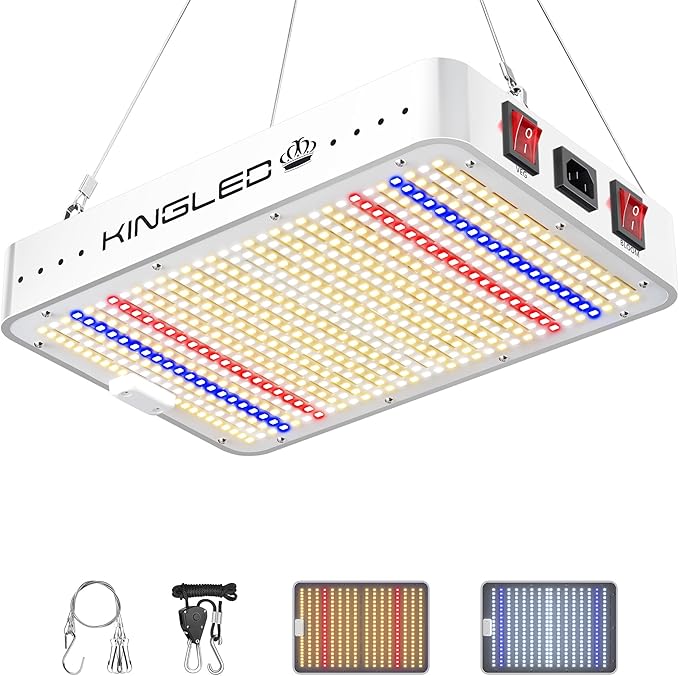
Anyone growing weed indoors in smaller tents will find this light useful. It suits 2×2 ft to 2×3 ft setups, focusing on solid coverage for a few plants or a moderate canopy.
Its biggest strength is balancing decent light penetration with compact size and manageable power usage.
Setting it up involves hanging it from the ceiling mount, which fits well in tents. It runs on a standard 120-volt corded electric source and consumes 100 watts.
The 120-degree beam angle spreads light evenly across a small area. The light’s 5000 Kelvin temperature mimics natural daylight, helping steady growth. All this makes daily use straightforward without frequent adjustments or complicated wiring.
It does a good job letting light reach lower leaves, which helps moderate foliage and up to five bushy plants. The build uses one A15 bulb with 26 A batteries required, which is unusual for grow lights but part of its design.
Reviews mention solid performance and good illumination given its size. A common complaint revolves around limited penetration for very dense canopies, meaning additional lighting might be necessary in some cases.
The light performs well reaching lower leaves, offering balanced coverage in small to medium grow tents. The main drawback is its limited penetration in dense foliage, which could require supplemental lighting to ensure all parts of the plant get enough light. Setup is straightforward but the need for multiple batteries is a bit unusual.
Growers with a few bushy plants or light to moderate foliage will appreciate this light’s coverage and power consumption. Those planning larger or denser grows may want to explore bigger models or additional lighting options for better penetration and uniform brightness.
Pros
- Fits well in 2×2 ft and 2×3 ft tents
- Provides good light penetration for moderate foliage
- Easy ceiling mount installation
- Uses standard 120-volt electric power
Cons
- Limited for very dense canopies without extra lighting
- Requires 26 A batteries despite being corded electric
| Specification | Details |
|---|---|
| Light Source Wattage | 100 watts |
| Color Temperature | 5000 Kelvin |
| Mounting Type | Ceiling Mount |
| Beam Angle | 120 degrees |
| Voltage | 120 volts |
7. 70W Dimmable LED Grow Light for Indoor Plants

Optimized especially for seedlings and vegetative plants, this 70W dimmable LED grow light stands out by delivering 11,000 lumens, which is a strong output for indoor weed cultivation. Ideal for those focusing on early growth stages, it balances power and efficiency without overwhelming your grow space.
Setting up the light is straightforward, thanks to its hanging mount which fits easily into typical indoor grows. Its dimmable feature lets you adjust brightness as needed, and the fanless design means no distracting noise.
Heat sinks keep the temperature down, so you don’t have to worry about it overheating during long lighting cycles.
Performance is solid for seedling and vegetative stages, with a full spectrum that mimics sunlight through a mix of 660nm red and 3000K/5000K white LEDs. The build uses a high-performance driver and large aluminum heat sinks that extend lifespan.
Most feedback praises how cool it stays while running, while some find the 70-watt power limiting for larger or flowering setups.
Users appreciate how quietly the light operates thanks to its fanless design and large aluminum heat sinks that keep it cool even during extended use. The main drawback is its wattage, which some find insufficient for later plant stages that demand more intense light.
Those growing mostly seedlings and vegetative plants will find this light a good fit because it provides strong, adjustable illumination focused on early growth. Anyone looking to boost flowering or cover a larger area might want to consider higher-watt options with more mounting versatility.
Pros
- Bright output tailored for seedlings and veg growth
- Dimmable to control light intensity easily
- Fanless with effective passive heat dissipation
- Balanced full spectrum mimics natural sunlight
Cons
- 70 watts may be low for flowering stages
- Limited mounting options beyond hanging
| Specification | Details |
|---|---|
| Light Source Wattage | 70 watts |
| Light Output Maximum | 11000 lumens |
| Number of Light Sources | 216 |
| Power Source | Corded Electric |
| Mounting Type | Hanging Mount |
| Light Source Special Features | Dimmable |
8. KOSCHEAL KS1200 130W Full Spectrum Grow Light
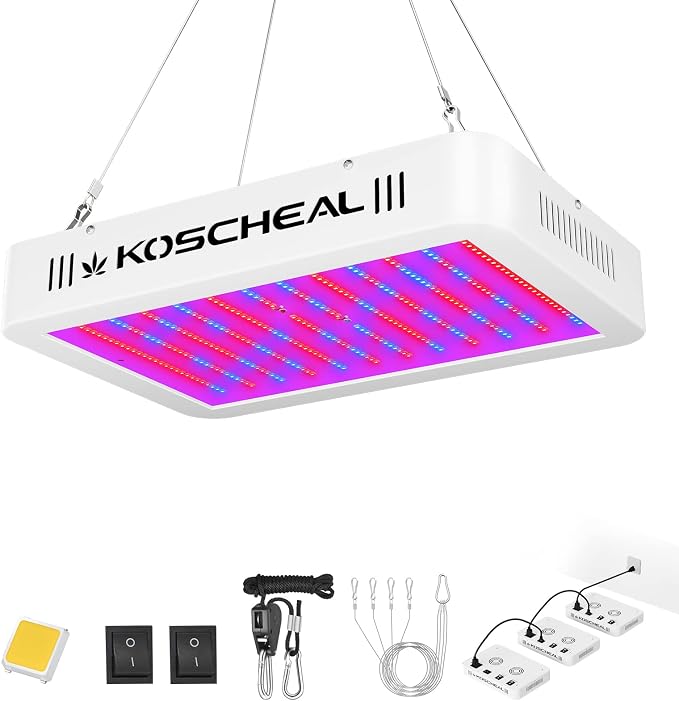
KOSCHEAL KS1200 130W Full Spectrum Grow Light is designed to deliver high energy efficiency while supporting the full lifecycle of indoor cannabis plants. It stands out for drawing an actual 130 watts while providing light output that rivals much higher wattage setups. A solid choice for anyone wanting to keep power costs down without sacrificing growth potential.
Setting it up involves mounting it on the wall using the included hardware and plugging it into a standard 110-volt outlet. The separate veg and bloom switches make it easy to adjust the light spectrum depending on your plant’s stage.
The 356 LEDs cover full spectrum needs, including UV and IR, letting you tailor the intensity as needed for both vegetative and flowering phases.
Hardy build quality feels reliable with upgraded SMD LEDs designed to last. Performance consistently matches or beats 100W standard lights, delivering steady and efficient output with a PAR value that encourages strong yields.
The biggest praise centers on its power efficiency and light coverage. Some users mention the 10.9 A draw could demand proper circuit consideration in compact spaces.
This light consistently delivers excellent power efficiency and coverage, making it a favorite for reducing electricity expenses while maintaining plant health. The main complaint focuses on its 10.9-amp requirement, which needs attention during installation to avoid overloading circuits.
Those growing cannabis indoors who prioritize energy savings and tailored spectrum control will appreciate this light’s balance of features. Users seeking more flexible mounting options or lower amperage demands might want to explore alternatives better suited to different setups.
Pros
- Actual 130W power use for high efficiency
- Separate veg and bloom switches for customization
- Includes UV and IR diodes for full spectrum coverage
- Daisy chain compatibility simplifies multi-unit setups
Cons
- High amperage draw requires careful electrical setup
- Wall mount only limits placement flexibility
| Specification | Details |
|---|---|
| Light Source Type | LED |
| Power Source | Corded Electric |
| Voltage | 110 volts |
| Light Source Wattage | 1200 watts |
| Veg & Bloom Switches | Yes |
| Number of Light Sources | 356 |
9. FECiDA Dimmable LED Grow Tent Light

Working with a light that matches a 600W traditional setup but only pulls 65W of power is a real energy saver. Ideal for growers managing indoor tents or limited spaces, it shines across the full growth cycle.
Its biggest strength is delivering strong, balanced light without the usual high energy draw.
Setting it up is straightforward thanks to the hanging mount design. The dimmable feature lets you adjust intensity easily for seedlings, vegetative, and bloom stages.
Fans and heat sinks keep the light cool and quiet, which is great when running it in a small home grow area without extra noise or heat buildup.
Light output matches the promise with a full spectrum that supports all growth phases well. Built with a sturdy aluminum heat sink and a vented system, it keeps performance steady and lifespan long, rated beyond 50,000 hours. Common praise spotlights its quiet operation, while some mention the power rating might seem low compared to traditional wattage claims.
The quiet cooling system stands out as a major benefit, making it suitable for home use without disturbing background noise. Some feel the 65W power rating contrasts with the “600W equivalent” claim, which can cause confusion about actual output strength.
Those with small to medium indoor grows will find it well suited because of its low power consumption and full spectrum. Anyone needing a light compatible with different voltages or seeking a higher watt consumption should look elsewhere.
Pros
- Consumes only 65 watts while simulating 600W light
- Dimmable for all growth stages
- Quiet cooling system with low noise fan
- Long lifespan beyond 50,000 hours
Cons
- Power rating may confuse traditional watt comparisons
- Only supports 220V power input
| Specification | Details |
|---|---|
| Light Source Wattage | 600 watts |
| Power Consumption | 65 watts |
| Voltage | 220 volts of alternating current |
| Number of Light Sources | 588 |
| Light Source Type | LED |
| Mounting Type | Hanging Mount |
10. 600W Foldable LED Full Spectrum Grow Light

Powerful and versatile, this 600W Foldable LED Full Spectrum Grow Light suits indoor weed growers needing strong, even light coverage. Its biggest strength lies in the six elongated light bars that spread light uniformly across your plants, helping them grow well at every stage.
Setup is straightforward with the included rack mount, and the light’s foldable design saves space when not in use. Daily adjustments are easy using the dimmer switch, allowing brightness control from 0% to 100% depending on your plants’ growth stage.
The daisy-chain feature lets you connect several units, making it simple to expand your grow tent or greenhouse.
Performance is consistent with its 600 watts of power providing deep canopy penetration and solid coverage. The light feels sturdy, with a thoughtful build aimed at utility rather than flair.
Most praise focuses on its brightness and the smooth dimming function. Complaints generally mention the corded electric power source needing careful management to avoid snagging in tight spaces.
The main selling point is its bright, even light thanks to six elongated bars and dimmable control. Users often mention the corded power setup can get in the way during busy grow tent arrangements, requiring a bit of extra planning.
People who want consistent light for various plant stages and easy expansion will be satisfied. Those looking for a more portable or battery-powered solution might want to explore other options better suited to flexible setups.
Pros
- Uniform and comprehensive canopy coverage
- Adjustable brightness from 0% to 100%
- Daisy chain supports connecting multiple lights
- Foldable design saves space
Cons
- Corded electric power needs careful cable management
- Rack mount limits placement flexibility
| Specification | Details |
|---|---|
| Light Source Type | Light Emitting Diode |
| Power Source | Corded Electric |
| Voltage | 120 volts_of_alternating_current |
| Light Source Wattage | 600 watts |
| Number of Light Sources | 6 |
| Light Source Special Features | Dimmable |
11. 40W Full Spectrum LED Grow Light with Dimming

Built with six oversized light heads and packed with 900 ultra-dense LEDs, this full spectrum LED grow light suits anyone growing a variety of indoor plants, especially weed. Its biggest strength lies in delivering strong brightness with wide coverage, solving the usual problems of weak light and limited reach in comparable models.
Setting it up is straightforward with a floor mount option, and the push button switch makes toggling between three lighting modes convenient for different growth stages. The corded electric power keeps it running steadily without frequent charging. Its design feels solid, and the extensive LED array covers larger plant setups effectively without needing repositioning often.
Brightness and spectrum adaptability work really well across seedling, vegetative, and flowering stages, promoting healthy plant growth. Its build is solid but not waterproof, so care is needed around moisture. Most people praise its brightness and coverage, while the common complaint is the lack of waterproofing limits outdoor or high-humidity use.
The main praise highlights its bright, broad coverage thanks to 900 LEDs and large heads, supporting various growth stages well. A frequent downside is that it lacks waterproofing, so it requires careful placement away from moisture.
Growers with sizeable indoor setups and controlled environments will benefit most from this light. Those needing waterproof or outdoor use should look for models designed specifically for those conditions instead.
Pros
- Large light heads cover more plants evenly
- Three lighting modes for different growth phases
- Strong brightness suited for indoor cultivation
- Push button makes switching modes quick
Cons
- Not waterproof, risky in humid environments
- Relatively high power usage at 26 watts
| Specification | Details |
|---|---|
| Switch Type | Push Button |
| Light Source Type | LED |
| Power Source | Corded Electric |
| Number of Light Sources | 8 |
| Is Waterproof | false |
| Wattage | 26 watts |
12. LED Full Spectrum Grow Light Bulb A19

Bright light output with energy efficiency stands out in this A19 full spectrum grow bulb. Ideal for indoor growers looking for a natural simulation of sunlight, it suits tomato, cucumber, pepper, leafy green, and herb plants throughout all growth phases.
It’s particularly strong in saving on electricity usage without compromising brightness.
Setting it up involves a simple E26 socket, and the 180-degree beam angle means coverage is solid for small to medium-sized indoor gardens. The bulb operates at just 11 watts but delivers light equivalent to a 60-watt incandescent.
Daily use revolves around the warm white 3500K light that closely mimics natural sun conditions ideal for plants.
Performance impresses with a high lumen output of 1000lm, ensuring plants get the light spectrum they need to thrive from seedling to harvest. The build feels sturdy with a typical LED lifespan of around 30,000 hours.
The standout praise highlights its brightness and energy savings. The most frequent drawback mentions its size and moderate heat output during extended use.
Brightness and energy efficiency receive praise for supporting healthy plant growth without high electricity bills. Most complaints focus on the bulb’s moderate heat output and physical size, which can affect placement flexibility.
Growers wanting reliable, full spectrum lighting with simple installation and power savings will find it suitable. Those needing compact fixtures or avoiding any heat generation might consider alternatives designed specifically for tight spaces or sensitive crops.
Pros
- Energy saving with low power consumption
- Natural full spectrum light for all growth stages
- Easily fits standard E26 sockets
- Long LED lifespan of 30000 hours
Cons
- Gets moderately warm during long use
- Bulb size may limit placement in tight spots
| Specification | Details |
|---|---|
| Light Output Maximum | 1000 lumens |
| Power Consumption | 11 watts |
| Wattage | 12 watts |
| Bulb Base | E26 |
| Color Temperature | 3500 Kelvin |
| Beam Angle | 180 degrees |
Best LED Grow Lights for Weed Comparison Table
| Product | Wattage | Spectrum | Mounting Type | Waterproof |
|---|---|---|---|---|
| 1000W Full Spectrum LED | 100 watts | Full Spectrum | Ceiling Mount | True |
| 2-Pack LED Grow Panels | 200 watts | – | Floor Mount | False |
| 6000K Full Spectrum Light | 10 watts | 6000K Full Spectrum | Clip Mount | – |
| DC1000 100W Bloom Boost | 1000 watts | – | Hanging | – |
| VIVOSUN LumaLight 100W | 100 watts | Full Spectrum | Ceiling Mount | True |
| KingLED KP1000 Light | 100 watts | 5000 Kelvin | Ceiling Mount | – |
| 70W Dimmable Grow Light | 70 watts | – | Hanging Mount | – |
| KOSCHEAL KS1200 130W | 1200 watts | Veg & Bloom Switch | Wall Mount | – |
| FECiDA Dimmable Tent Light | 600 watts | – | Hanging Mount | – |
| 600W Foldable LED Light | 600 watts | – | Rack Mount | – |
| 40W Dimmable LED Light | 26 watts | – | Floor Mount | False |
| Full Spectrum LED Bulb A19 | 12 watts | Full Spectrum | – | – |
- Wattage100 watts
- SpectrumFull Spectrum
- Mounting TypeCeiling Mount
- WaterproofTrue
- Wattage200 watts
- Spectrum–
- Mounting TypeFloor Mount
- WaterproofFalse
- Wattage10 watts
- Spectrum6000K Full Spectrum
- Mounting TypeClip Mount
- Waterproof–
- Wattage1000 watts
- Spectrum–
- Mounting TypeHanging
- Waterproof–
- Wattage100 watts
- SpectrumFull Spectrum
- Mounting TypeCeiling Mount
- WaterproofTrue
- Wattage100 watts
- Spectrum5000 Kelvin
- Mounting TypeCeiling Mount
- Waterproof–
- Wattage70 watts
- Spectrum–
- Mounting TypeHanging Mount
- Waterproof–
- Wattage1200 watts
- SpectrumVeg & Bloom Switch
- Mounting TypeWall Mount
- Waterproof–
- Wattage600 watts
- Spectrum–
- Mounting TypeHanging Mount
- Waterproof–
- Wattage600 watts
- Spectrum–
- Mounting TypeRack Mount
- Waterproof–
- Wattage26 watts
- Spectrum–
- Mounting TypeFloor Mount
- WaterproofFalse
- Wattage12 watts
- SpectrumFull Spectrum
- Mounting Type–
- Waterproof–
How to Choose the Right LED Grow Light
Selecting the right LED grow light involves focusing on factors like light intensity, spectrum, and coverage area to support healthy plant growth. Choosing the appropriate light prevents energy waste and ensures better yields, ultimately saving money and reducing hassle during cultivation.
Light Spectrum and Intensity
Plants need different light colors during each growth stage, and a light source covering the full spectrum makes a big difference. Lights that only emit a narrow range can stunt growth or reduce yield.
Many LED units combine red, blue, and white diodes to mimic natural sunlight, supporting everything from seedlings to flowering. Adjustable intensity helps switch between phases; higher brightness boosts flowering, while lower levels prevent stretch during vegetative growth.
PAR output numbers matter more than total wattage since they reflect the actual usable light energy for photosynthesis. Look for PAR ratings in micro-moles per square meter per second (µmol/m²/s) around 400-700 µmol for efficient flowering stages.
Lights excluding this data often underperform in real gardens.
Power Consumption and Efficiency
Rated wattage tells how much electricity a light will draw, but efficiency shows how well that electricity converts into usable light. A 200-watt light with outdated tech may produce less light and more heat, increasing electricity bills and ventilation needs.
Modern LEDs often achieve 2.5 to 3.0 micromoles per joule, making a noticeable difference over months of use.
Energy certifications like Energy Star or DLC indicate tested efficiency, which means lower running costs and less heat output. Lights with built-in technologies to reduce draw at lower intensities also help save electricity without sacrificing growth quality.
Coverage Area and Size
Plant growth depends on even light spread across the cultivation area. Using a small light over a large canopy results in uneven growth, messy plants, and reduced yields.
Matching the fixture size to the grow space is essential, something in the range of 2×2 feet coverage per 100-200 watts is common. Larger grow tents need multiple units or bigger panels.
Uniform distribution also depends on lens design and diode placement. Height adjustability and flexible mounting, like adjustable hangers or rails, let users find the sweet spot between light intensity and coverage.
Mounting too high or low frequently causes spots of under- or over-lit plants.
Heat Management and Durability
LED lights tend to run cooler than traditional lighting, but the heat from chips must still be managed. Models with built-in fans or passive heatsinks prevent overheating and component failure.
Poor heat management leads to dimming bulbs, shorter lifespan, or sudden burnout in just months.
Materials like aluminum backplates quickly sink heat away, while cheap plastics trap heat inside. Also, noisy fans can become annoying during long grow cycles, so it helps to check noise ratings or reviews focusing on this.
A durable, quiet cooling system keeps the environment stable and the light working longer.
Build Quality and Safety Features
Grow lights frequently encounter humidity, dust, and occasional splashes. Units with waterproof and dust-resistant ratings such as IP65 warranty that the electronics stay safe and functional. Ignoring these can cause shorts or corrosion, shortening the light’s lifespan and risking safety.
Certifications like UL or CE ensure the product meets electrical safety standards, which reduces fire or shock risks. Installation should be straightforward, with clear manuals and tool-free assembly options.
Easy-to-clean designs and accessible parts simplify maintenance over time, preventing buildup and malfunctions.
Maximizing Yield: Effective Placement and Usage Strategies for LED Grow Lights
LED grow lights need to be placed at the right height to avoid light burn while ensuring plants receive enough intensity. Most cannabis growers position LEDs about 12-24 inches above the canopy during the vegetative stage, and adjust closer during flowering but never too close to prevent heat stress.
Consistent light schedules matter as much as placement. A timer can keep plants on a reliable 18 hours of light during veg and 12 hours for flowering.
This consistency helps with uniform growth and better cannabinoid production.
- Rotate plants regularly to avoid uneven growth due to light hotspots.
- Use reflective materials on walls to maximize light distribution without increasing energy use.
- Monitor temperatures beneath the lights to ensure they stay in a safe range for cannabis.
Experimenting with distance and timing, while keeping an eye on plant response, leads to improved yields without wasting power or risking damage.
Maintaining and Cleaning LED Grow Lights for Optimal Performance
Dust and residue on LED grow light surfaces reduce the amount of light reaching plants. Wiping them down every few weeks is important to maintain intensity.
Use a soft cloth or microfiber towel with a mild soap solution to gently clean the diodes and covers.
Avoid spraying water directly on the lights. Instead, dampen the cloth to prevent moisture from entering the electrical components. Disconnect the lights before cleaning for safety.
- Check for loose screws or hanging parts regularly to ensure the fixture stays secure and doesn’t sag over time.
- Inspect power cords and plugs to avoid any risk of shorts or fire hazards.
- Replace any damaged parts immediately, as even a small malfunction can impact light output.
Keeping LED grow lights clean and mechanically sound prevents light degradation, ensuring plants receive optimal conditions throughout the growth cycle.
Comparing LED Grow Lights with Other Lighting Options for Cannabis Cultivation
Compared to traditional HID lights, LED grow lights consume less electricity and run cooler, reducing the need for extra ventilation. This lowers overall operating costs in a grow space.
LEDs also last longer, often over 50,000 hours, while HIDs need bulb replacements more frequently.
Though LEDs have a higher upfront cost, their energy efficiency makes them more economical over time. They emit less heat, which helps maintain a stable environment without risking heat stress on plants. LEDs can be designed to emit specific light spectrums tailored to cannabis growth phases, which is more difficult to achieve with other lighting types.
- HID lights can produce a broad spectrum but waste energy as heat.
- CFLs are less effective for flowering stages due to lower intensity.
- Fluorescent lights generally suit seedlings but lack power for mature plants.
LEDs offer a balanced solution for those prioritizing energy savings, long-term durability, and precise light control in cannabis cultivation.
People Also Asked
How Do I Choose the Right Size LED Grow Light for Weed?
Match the light size to your grow area, usually measured in square feet. It helps to calculate the lumens or watts needed per square foot to ensure plants get enough light without wasting energy.
Are LED Grow Lights Safe to Use Indoors for Cannabis Plants?
LED grow lights are generally safe indoors and produce less heat than other lights, reducing fire risk. Proper ventilation still matters to prevent overheating in the grow space.
How Long Do LED Grow Lights Typically Last When Growing Weed?
LED grow lights often last between 30,000 to 50,000 hours, meaning they can work through several grow cycles before dimming. Cleaning the light lenses regularly can help maintain brightness over time.
Can I Use LED Grow Lights with Other Types of Grow Lights Safely?
Combining LED lights with other lights like HPS is possible but requires adjusting distance and light schedules to avoid burning plants or light spectrum conflicts. Monitor plant response closely when mixing lights.
What Common Problems Should I Watch for with LED Weed Grow Lights?
Watch for signs of light burn, such as leaf yellowing or curling, and ensure the light is not too close to plants. Over time, dust buildup on LEDs can reduce efficiency, so keep them clean for consistent growth.
Conclusion
Choosing the right LED grow light mainly depends on coverage area, light intensity, and energy efficiency. The light should fit the size of your grow space and provide enough intensity for the plants you are growing. Energy use matters too, since these lights often run for long hours and affect your electricity bill.
Consider how much room you have and your budget before making a decision. Also think about how often you plan to use the light and for how long.
Take another look at the comparison table and the detailed options above to find a light that balances these factors for your setup.

I’m Jake Thompson, and I’ve spent over a decade working on lawn mowers, from small push mowers to big riding tractors. I write about starting problems, blade sharpening, carburetor cleaning, oil changes, and seasonal maintenance. My goal is to give you clear, step-by-step advice so you can handle common mower issues yourself and keep your lawn looking sharp all season.