Top 12 Best Cherry Tomato Plants for Containers You’ll Love
Growing cherry tomatoes in containers can be frustrating when the plants don’t thrive as expected. The best cherry tomato plants for containers balance compact growth with high fruit yield, avoiding the common issue of sprawling vines that quickly outgrow limited space. Many run-of-the-mill varieties tend to either become root-bound quickly or produce sparse fruit when confined, leading to disappointment and wasted effort.
Choosing the right cherry tomato plant for a container means paying attention to size, with determinate or semi-determinate varieties usually fitting better in limited space. A plant that reaches about 2 to 3 feet in height and width keeps manageable within a 5-gallon pot or similar container. Another factor is the plant’s disease resistance, which helps reduce the need for frequent treatment and supports steady production throughout the growing season.
Need a Quick Check?
| Image | Product | Price |
|---|---|---|
Our Top Picks 1  | Tiny Tim Seeds | Check Price |
Our Top Picks 2  | Dwarf Cherry Seeds | Check Price |
Our Top Picks 3  | Bonnie Husky Cherry Plant | Check Price |
Our Selected Top 12 Cherry Tomato Plants for Containers Worth Considering
This list features a selection of cherry tomato plants ideal for container growing, highlighting their growth performance, suitability for different gardeners, and key advantages and drawbacks. Each review provides practical insights to help you choose the best plant for your space and needs.
1. Tiny Tim Tomato Seeds
Great for small spaces, Tiny Tim Tomato Seeds suit anyone wanting sweet cherry tomatoes from a compact plant. Its biggest strength lies in thriving well in containers, making it ideal for patios, balconies, or sunny windowsills without a traditional garden.
Planting in the spring with regular watering suits these seeds well, and they grow best in loam soil under full sun. The small 12–18 inch plants comfortably fit in containers, and their disease resistance means little fuss day to day. Pollinators are attracted naturally, helping fruit production without extra effort.
These determinate plants produce heavy clusters of bright red tomatoes throughout summer, reliably delivering fresh fruit. Germination rates are high, ensuring most seeds sprout healthily.
Some users mention the 18-inch height can limit space in very small containers, but overall plants are low maintenance and withstand common pests effectively.
People appreciate the consistently heavy clusters of sweet, bright red cherry tomatoes from the compact plants. Most common drawback is the plant height, which can be a tight fit for very small containers or crowded balconies.
Anyone with modest space and access to full sun will enjoy fresh homegrown tomatoes easily. Those lacking a sunny spot or with very small containers might consider alternative tomato varieties better suited to shade or minimal space.
Pros
- Compact size perfect for small container gardens
- Disease resistant and pest resistant plants
- High germination rate from seeds
- Attracts pollinators naturally
Cons
- Limited height may constrain container choice
- Requires full sun for best results
| Specification | Details |
|---|---|
| Expected Plant Height | 18 inches |
| Sunlight Exposure | Full Sun |
| Expected Planting Period | Spring |
| USDA Hardiness Zone | 4-11 |
| Soil Type | Loam Soil |
| Moisture Needs | Regular Watering |
2. Dwarf Cherry Tomato Seeds
Dwarf Cherry Tomato Seeds are specially bred for indoor container gardening, with a compact size perfect for small spaces like balconies or patios. Its biggest strength lies in its dwarf growth habit, producing bright red cherry tomatoes right on your windowsill or indoors.
Getting started means planting these 50 seeds in well-drained, fertile loam placed in a container with adequate sunlight. The seeds have a high germination rate, so watching them sprout is rewarding.
Maintaining proper moisture and positioning in partial shade or full sun depending on your climate keeps the plants thriving throughout the year.
These seeds reliably produce vivid tomato-red fruit that tastes fresh and sweet, ideal for snacking or salads. The plants stay compact around 8 inches tall, making them very space-efficient. Most feedback highlights their consistent yield indoors, though some find they need to balance light carefully to avoid overheating in warmer climates.
The seeds consistently lead to healthy, bright red cherry tomato plants with generous yields indoors, praised for their dependable growth. The most common challenge is managing sunlight in warmer spots, where the plants may require partial shade to prevent stress.
Gardeners with limited outdoor space or those wanting fresh indoor tomatoes will appreciate this variety’s compact nature and year-round productivity. Outdoor growers or those without control over light conditions might look for different, more heat-tolerant options.
Pros
- High germination rate for reliable sprouting
- Compact size perfect for small containers
- Produces vibrant, tasty cherry tomatoes
- Year-round blooming with proper care
Cons
- Needs careful light management in warm climates
- Limited to indoor growing environments
| Specification | Details |
|---|---|
| Expected Plant Height | 8 inches |
| Sunlight Exposure | Partial Shade To Full Sun; Prefers Partial Shade In Warmer Climates And Full Sun In Cooler Climates |
| Expected Blooming Period | Year Round |
| Indoor Outdoor Usage | Indoor |
| Expected Planting Period | Early Spring Or Late Summer To Early Fall For Cool-season Blooms |
| USDA Hardiness Zone | 1-11 |
3. Bonnie Plants Husky Cherry Tomato Live Plants
Bright red cherry tomatoes growing abundantly in containers make the Bonnie Plants Husky Cherry Tomato ideal for gardeners who want easy, ongoing harvests without much fuss. It suits anyone looking to add fresh cherry tomatoes to their kitchen with minimal setup and steady production throughout the season.
Setting the plants in rich, well-draining soil ensures healthy growth, especially when placed in a sunny spot. These tomatoes thrive on full sun, and with regular watering and occasional feeding using Miracle-Gro Pour & Feed Singles, they stay productive.
Containers or raised beds work well, providing flexibility for small spaces and patios.
The plants produce plenty of cherry tomatoes all season long, perfect for snacking or cooking. They are sturdy and well-suited for container growth.
Most praise goes to their reliable and continuous fruit production, while some mention the need for consistent sunlight and proper soil to avoid slower growth or fewer tomatoes.
Bonnie Plants Husky Cherry Tomato grows consistently and yields a good amount of small, sweet tomatoes throughout the season. Plants tend to do well in containers or garden beds, producing fruit reliably in warm weather. A common downside is the plants sometimes need more frequent watering than expected, especially in containers during hot spells, which can be a concern for.
Gardeners who want a steady supply of cherry tomatoes in a manageable container will find these plants suitable. Those with limited time for daily plant care or who prefer larger fruit might look elsewhere. These plants do best in full sun and with consistent soil moisture, so they are less ideal for shady spots or neglect.
Pros
- Produces cherry tomatoes all season long
- Great for containers and raised beds
- Includes Miracle-Gro Pour & Feed plant food
- Easy to grow in well-drained soil
Cons
- Needs consistent full sun to thrive
- Requires rich, well-draining soil for best results
| Specification | Details |
|---|---|
| Sunlight Exposure | Full Sun |
4. Bonnie Plants Husky Cherry Tomato Live Plants

Ideal for home gardeners who want cherry tomatoes in containers, Bonnie Plants Husky Cherry Tomato offers reliable fruit production in a compact size. Its main strength lies in producing consistent, approximately 1-inch fruits within about 65 days, making it a solid choice for those with limited space and full sun exposure.
Setting the plant in a container with loam soil and placing it where it receives full sun is important for a good yield. It requires regular watering to keep the soil moist and healthy. From spring to summer, the plant blooms and bears fruit, fitting perfectly into a seasonal home garden routine without demanding complex care.
Fruit production happens steadily around 65 days after planting, delivering a satisfying harvest during its spring to summer blooming period. The plant is developed specifically for home use and is resistant to some common issues.
Some find that maintaining regular watering is necessary to prevent stress, which is the most frequent note in feedback about this plant.
The plant reliably produces 1-inch cherry tomatoes around 65 days after planting and handles some resistance well, but it demands regular watering and full sun exposure to perform well. Consistent care is key to avoiding stress and ensuring decent yields.
Those with a sunny spot and time to water regularly will appreciate this plant’s steady production. People unable to provide consistent moisture or lacking ample sunlight might find other more tolerant varieties better suited for their situation.
Pros
- Developed especially for home gardens
- Produces fruit in about 65 days
- Resistant to some common plant issues
- Suitable for container growing
Cons
- Requires consistent watering to thrive
- Needs full sun for best yields
| Specification | Details |
|---|---|
| Expected Blooming Period | Spring to Summer |
| Sunlight Exposure | Full Sun |
| Expected Planting Period | Spring to Summer |
| Soil Type | Loam Soil |
| Moisture Needs | Regular Watering |
| Fruit Size | About 1 inch |
5. Self-Watering Tomato Planter with Trellis

Growing cherry tomatoes in a small space often means juggling watering and support. Perfect for container gardeners wanting something that takes care of both, this planter’s biggest strength is its self-watering system combined with a trellis structure, making it easier to keep plants healthy without daily hassle.
Setting up involves filling the bottom reservoir with water, which supplies moisture steadily through the air hole circulation system. The elevated planter box means you can pack in more nutrient-rich soil, helping tomato roots grow strong. The tower design gives plants plenty of vertical space, so the tomatoes have room to stretch upward and spread out naturally over time.
It does well in nurturing tomato plants thanks to constant moisture and good oxygen flow to the roots. Its build is sturdy, with higher walls for more soil and a solid square box shape that stays stable. People love how it keeps moisture consistent but note the reservoir needs occasional refilling and might overflow if overfilled.
The self-watering system provides steady moisture, which promotes healthy root growth, but users often mention the reservoir requires careful filling to prevent overflows. Its elevated design provides ample room for strong root growth, making it easier to manage watering schedules.
People with limited space or who want less daily watering effort will find this planter helpful. Those who prefer simpler, low-maintenance containers without extra features might want to consider more straightforward options instead.
Pros
- Bottom water reservoir keeps soil consistently moist
- Elevated planter allows for more nutrient-rich soil
- Four-corner tower design maximizes vertical growing space
- Solid, stable square box design
Cons
- Water reservoir can overflow if overfilled
- Needs regular monitoring to avoid drying out
| Specification | Details |
|---|---|
| Color | Grizzly |
| Product Style | Art Deco |
| Planter Form | Box |
| Shape | Square |
| Pattern | Solid |
6. Home Grown Large Red Cherry Tomato Seeds
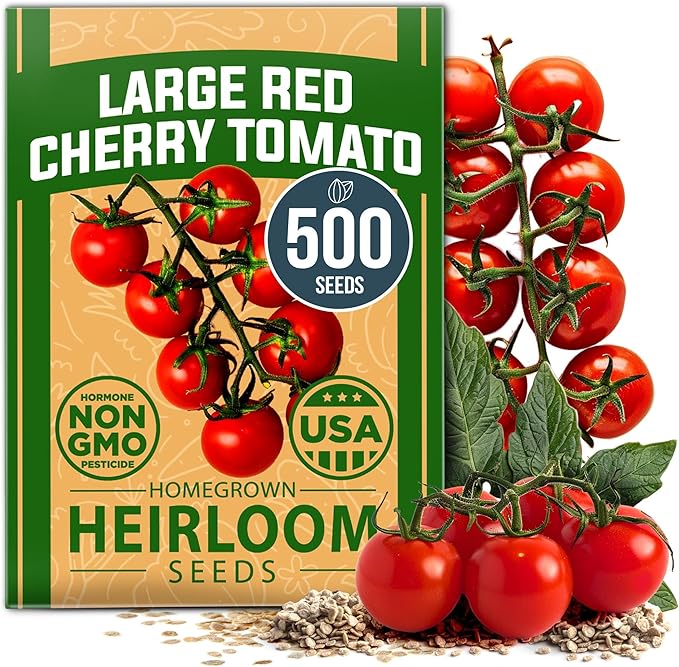
High germination rate makes these large red cherry tomato seeds ideal for growing in containers, patios, and even urban farms. They suit gardeners looking to enjoy a prolonged fruiting cycle and intense berry-like flavor from a compact 18-inch plant.
Setting up requires planting in loam soil during winter to spring, with consistent watering and full sun exposure. These seeds perform well indoors or outdoors, making them flexible for patio containers or greenhouses. Watching cascades of glossy ruby clusters grow is rewarding, especially given the untreated, non-GMO nature and open-pollinated variety.
The seeds reliably produce vibrant cherry tomatoes with exceptional flavor similar to summer berries. Plants reach about 18 inches tall and thrive in USDA zones 3 through 11, reflecting hardiness across many climates.
Most praise centers on the rich taste and consistent yields, though some find the size a bit smaller than expected for large cherry tomatoes.
Many appreciate the intense dessert-like flavor and rich ruby color of the tomatoes, making them stand out in flavor and appearance. Some note the plant height and berry size don’t always match expectations for “large” cherry tomatoes.
Gardeners who want a flavorful, reliable cherry tomato in containers within a wide hardiness range will enjoy these. Those seeking larger fruits or lower watering needs might want to consider other varieties.
Pros
- High germination rate
- Prolonged fruiting cycle
- Non-GMO and untreated seeds
- Suitable for indoor and outdoor use
Cons
- Plant size may be smaller than some expect
- Requires regular watering to thrive
| Specification | Details |
|---|---|
| Expected Plant Height | 18 inches |
| Sunlight Exposure | Full Sun |
| Expected Planting Period | Winter to Spring |
| USDA Hardiness Zone | 3, 4, 5, 6, 7, 8, 9, 10, 11 |
| Soil Type | Loam Soil |
| Moisture Needs | Regular Watering |
7. Dwarf Red Robin Tomato Seeds

Gardeners with limited space who want to grow fresh tomatoes year round will appreciate a compact option suited for containers. Its biggest strength is being highly productive while remaining easy to care for, making it great for both beginners and seasoned home growers. The plant stays small but delivers flavorful red tomatoes consistently.
Starting seeds requires attention to moisture and warmth, ideally sprouted in small containers around 8 weeks before transplanting. Keeping soil temperature steady between 70 and 85°F helps germination and growth. Container gardeners can expect a manageable plant height around one foot, perfect for patios or small gardens.
Placement in full sun and well-drained sandy soil supports steady blooming throughout the year.
The plant thrives in container environments as designed and produces fruit consistently across seasons. Built to stay compact, it avoids typical sprawling growth that can clutter small spaces. Most praise centers on its year-round productivity and manageable size.
Common complaints mention the need for precise watering and temperature control to maintain healthy growth.
Plants are praised for their steady production of flavorful tomatoes all year when kept warm and watered moderately. However, seed germination demands careful temperature control and attention to moisture, which can be challenging for some gardeners.
Gardeners with controlled indoor or outdoor container setups and the patience to maintain soil warmth will find this a rewarding plant. Those lacking consistent warmth or watering routines might prefer a less temperature-sensitive variety.
Pros
- Compact size fits small containers easily
- Produces tasty tomatoes year round
- Germination works best between 70-75°F
- Suitable for outdoor use in USDA Zone 4
Cons
- Requires consistent warmth for germination
- Needs careful watering to avoid drying out
| Specification | Details |
|---|---|
| Expected Plant Height | 1 feet |
| Sunlight Exposure | Full Sun |
| Expected Blooming Period | Year Round |
| Soil Type | Sandy Soil |
| Moisture Needs | Moderate Watering |
| USDA Hardiness Zone | 4 |
8. Miracle-Gro Tomato Plant Food

Miracle-Gro Tomato Plant Food is designed specifically to nourish both container and in-ground tomato plants with natural ingredients that feed soil microbes. It suits gardeners aiming for strong growth and more fruit production, with a standout feature being its calcium content that supports better quality and longer-lasting tomatoes.
Adding this plant food to your container tomatoes is simple. Just apply once, and it feeds for up to three months, making regular feeding unnecessary.
The natural components nourish the soil and the roots, while the micronutrients support healthy plant development. Since it works for both ground and container plants, it fits well into various gardening setups without extra effort.
Its main purpose is to provide continuous nutrients, which it achieves reliably over several months. Calcium plays a key role in preventing common calcium deficiency issues seen with edible crops. The product comes as a single 16-ounce pack, easy to store and measure.
Most praise highlights how much healthier and productive the plants become, though a few mentions noted waiting for the feeding effect to show takes some patience.
Notable improvements in plant strength and fruit quality are common after application, although benefits are not immediate and require patience. The natural formula helps feed both above and below the soil, supporting plant health from multiple angles.
Gardeners looking for steady, long-term feeding in containers or in-ground tomato plants will find this convenient and effective. Those needing a quicker nutrient boost or larger volume might want to explore other options.
Pros
- Feeds plants continually up to 3 months
- Contains calcium to prevent crop disorders
- Works well in containers and garden soil
- Includes natural ingredients for soil microbes
Cons
- Nutrient effect takes some time to appear
- Single pack may limit quantity for larger gardens
| Specification | Details |
|---|---|
| Brand | Miracle-Gro |
| Model Number | 3002510 |
| Number of Packs | 1 |
| Unit Count | 16 Ounce |
| Item Type Name | Continuous Release Plant Food Plus Calcium |
| Feeds up to | 3 months |
9. Triangle Tomato Cage with Grow Bags

Triangle Tomato Cage with Grow Bags offers solid support specifically designed for growing cherry tomatoes in containers. Ideal for gardeners who want a structured yet compact system, its biggest strength lies in combining both sturdy cages and grow bags, making it practical for limited spaces and upward plant growth.
Setup involves assembling 27 straight poles, connecting rods, and joints into three triangular cages that provide stable support. The 10-gallon grow bags fit perfectly with the cages, allowing you to easily manage watering and soil. Day-to-day use involves training tomato plants upward inside the cage, which keeps the branches secure without needing extra ties or adjustments.
The steel core stakes covered in plastic coating hold up well through weather changes and keep the cages solid for repeated use. Most praise highlights how durable and weatherproof the cages are.
Some find assembling all parts takes a little patience. They do their job of keeping plants upright and contained effectively over the growing season.
Durability stands out with strong steel cage support that resists weather well. The most frequent drawback is the complexity of assembling the numerous poles and connectors, which may feel fiddly to some users.
Those wanting a complete container planting system with solid plant support will appreciate these cages and bags. Gardeners preferring quicker setups or larger capacity containers might want to explore other options.
Pros
- Durable steel core coated for weather resistance
- Includes both cages and grow bags
- Triangular shape supports upward growth effectively
- Three sets allow multiple plants or replacements
Cons
- Assembly involves many small parts
- Grow bags limited to 10 gallons size
| Specification | Details |
|---|---|
| Color | Green |
| Cages | 3 three-layers plant support cages |
| Grow Bags | 10 gallons |
| Material | Steel core with plastic coating |
| Shape | Triangular |
10. Cherry Tomato Seeds

Growing your own cherry tomatoes in containers feels rewarding and straightforward with these seeds. Perfect for gardeners with limited space, they offer a generous amount of seeds that promise a steady supply of bright red, sweet fruit all summer long. Their main strength lies in consistent germination and continuous fruit production.
Starting the seeds involves planting them in well-drained potting soil within any container of choice. The pack contains 200 seeds sealed in a moisture-controlled pouch, which keeps them fresh and ready when you are. Daily care means regular watering and sunlight, with the seeds known to flower reliably throughout the growing season, providing plentiful harvests.
The seeds reliably sprout healthy plants that produce heavy trusses packed with sweet, bite-sized cherry tomatoes. These plants consistently offer abundant clusters ideal for snacking and salads. One of the best features is how continuous the fruiting is until the end of summer.
Some users mention the large quantity can be overwhelming if only a small garden is available or if space is very limited.
The seeds reliably germinate and produce abundant clusters of sweet cherry tomatoes, providing a long harvest season. A common note is that the large number of seeds might feel too much for gardeners with very limited container space or who want a smaller scale crop.
Anyone wanting to grow plenty of cherry tomatoes over the summer in containers will find these seeds well-suited. Those with minimal space or who prefer only a few plants might consider smaller seed quantities to avoid waste.
Pros
- Large number of seeds for extended growing
- Seeds sealed to maintain freshness and viability
- Sweet and prolific cherry tomatoes
- Continuous production throughout summer
Cons
- Quantity may be excessive for small spaces
- Requires proper moisture and sunlight care
| Specification | Details |
|---|---|
| Item Weight | 0.59 g |
| Unit Count | 1 Count |
| Seed Quantity | 200 seeds |
| Packaging | 600-milligram moisture-controlled pouch |
| Freshness | For 2026 growing season |
11. Dwarf Bush Cherry Tomato Seeds

Perfect for growing compact tomatoes indoors, these seeds suit anyone wanting fresh cherry tomatoes without a garden. Their ability to thrive year-round in small containers makes them especially great for windowsill gardeners or those with limited outdoor space.
Starting the seeds is simple, and the plants grow into tiny, round bushes about 12 to 14 inches tall. They don’t need any support, so no staking or tying is necessary.
Regular watering and access to full sun help the plants flourish, whether inside near a sunny window or outside during warmer months.
These dwarf plants deliver early, high yields and can stand up to cooler temperatures better than many cherry tomato varieties. Their modest size keeps the growing area tidy. A common issue is the delicate nature of the small seeds, which are approximate in count and require careful handling when planting.
The plants produce an abundance of fruit early in their growth cycle and remain manageable without supports. Handling the tiny seeds carefully is important since the count and size are approximate, and they can be fiddly when planting.
People with limited space who want fresh tomatoes year-round indoors will find these seeds very rewarding. Those looking for larger plants or outdoor-only varieties may want to look for different options.
Pros
- Compact size ideal for small containers
- Cold tolerant for extended growing seasons
- No need for plant support
- GMO free seeds
Cons
- Small seeds require careful planting
- Best suited for indoor use, not outdoor only
| Specification | Details |
|---|---|
| Indoor Outdoor Usage | Indoor |
| USDA Hardiness Zone | 5 6 7 8 9 10 11 12 |
| Expected Plant Height | 14 inches |
| Sunlight Exposure | Full Sun |
| Expected Blooming Period | Year Round |
| Moisture Needs | Regular Watering |
12. Small Red Cherry Tomato Seeds

Open-pollinated and heirloom, these Small Red Cherry Tomato Seeds provide a natural and traditional growing experience. Ideal for gardeners who want a steady supply of bite-sized, sweet-tart tomatoes, they shine in container spaces of five gallons or more.
Planting starts with plenty of seeds, 300 in one pack, giving room for trial and error. The indeterminate vines stretch well and produce fruit continuously until frost arrives.
Growing them in large containers keeps the plants manageable and suited for patios or balconies. A steady watering routine and good sunlight help maximize the harvest throughout the season.
These seeds reliably produce clusters of small, vivid red tomatoes perfect for snacking or adding fresh flavor to salads. The yield potential is impressive, with 720 to 2,520 pounds possible under strong growing conditions. A common drawback is that the survival rate depends heavily on care, often ranging between 20 and 70 percent.
The seeds offer a dependable supply of sweet cherry tomatoes over a long season with proper attention, but a significant number may fail to grow depending on the conditions and care. Harvest size can vary greatly.
Those with space for larger containers and willingness to manage plant care will likely enjoy a rewarding, ongoing harvest. Gardeners seeking quick, fuss-free results or limited planting space might want to explore other varieties.
Pros
- Generous seed count for multiple plantings
- Sweet-tart flavor perfect for fresh eating
- Indeterminate vine for season-long harvest
- Suitable for container growing
Cons
- Survival rate varies widely by care
- Requires at least 5-gallon container space
| Specification | Details |
|---|---|
| Variety | Small Red Cherry (Lycopersicon esculentum var. cerasiforme) |
| Seed Count | 300 Count |
| Growth Type | Indeterminate vines |
| Container Size | 5+ gallon pots |
| Yield Range | 720-2,520 LBS under good conditions |
Best Cherry Tomato Plants for Containers Comparison
| Product | Usage | Sunlight | Plant Height | Blooming Period |
|---|---|---|---|---|
| Tiny Tim Seeds | Indoor, Outdoor | Full Sun | – | Summer |
| Dwarf Cherry Seeds | Indoor | Partial Shade to Full Sun | – | Year Round |
| Bonnie Husky Cherry Plant | – | Full Sun | – | – |
| Bonnie Husky Cherry Plant | – | Full Sun | – | Spring to Summer |
| Self-Watering Tomato Planter | – | – | – | – |
| Home Grown Cherry Seeds | Indoor, Outdoor | – | – | – |
| Dwarf Red Robin Seeds | Outdoor | Full Sun | 1 feet | Year Round |
| Miracle-Gro Tomato Food | – | – | – | – |
| Triangle Tomato Cage | – | – | – | – |
| Cherry Tomato Seeds | – | – | – | – |
| Dwarf Bush Cherry Seeds | Indoor | Full Sun | 14 inches | Year Round |
| Small Red Cherry Seeds | – | – | – | – |
- UsageIndoor, Outdoor
- SunlightFull Sun
- Plant Height–
- Blooming PeriodSummer
- UsageIndoor
- SunlightPartial Shade to Full Sun
- Plant Height–
- Blooming PeriodYear Round
- Usage–
- SunlightFull Sun
- Plant Height–
- Blooming Period–
- Usage–
- SunlightFull Sun
- Plant Height–
- Blooming PeriodSpring to Summer
- Usage–
- Sunlight–
- Plant Height–
- Blooming Period–
- UsageIndoor, Outdoor
- Sunlight–
- Plant Height–
- Blooming Period–
- UsageOutdoor
- SunlightFull Sun
- Plant Height1 feet
- Blooming PeriodYear Round
- Usage–
- Sunlight–
- Plant Height–
- Blooming Period–
- Usage–
- Sunlight–
- Plant Height–
- Blooming Period–
- Usage–
- Sunlight–
- Plant Height–
- Blooming Period–
- UsageIndoor
- SunlightFull Sun
- Plant Height14 inches
- Blooming PeriodYear Round
- Usage–
- Sunlight–
- Plant Height–
- Blooming Period–
How to Choose the Best Cherry Tomato Plants
Choosing cherry tomato plants with compact growth, disease resistance, and high yield is essential for container gardening. These factors ensure healthy plants that thrive in limited space, reducing maintenance and the need for replacements, ultimately saving money and avoiding frustration.
Plant Size and Growth Habit
Plants that spread too wide or grow too tall quickly become unwieldy in containers, making daily care and harvesting a challenge. Smaller varieties designed for pots keep growth in check, so you don’t need giant buckets or constant trimming. A plant reaching about 2 to 3 feet tall with a spread under 2 feet fits well in most container setups without toppling over or overcrowding nearby plants.
Choosing between determinate and indeterminate growth affects how much space the plant will require. Determinate types stop growing once fruit sets, keeping a bushy, compact shape better for tight spaces. Indeterminate plants continue growing and need regular pruning or staking to maintain control.
Knowing the mature size helps pick a plant that won’t overwhelm its container or your available space.
Container Compatibility
Containers on porches or balconies come in many shapes and materials, so confirm the plant’s root system matches the container’s size. Most cherry tomato varieties develop roots needing at least 5 gallons of soil to avoid drying out too fast.
Smaller pots can stunt growth and lower yield.
Clay, plastic, and ceramic pots all drain differently and affect moisture levels. Drainage holes are crucial for avoiding root rot, especially in heavier materials like clay that hold more water. A plant thriving in different container types allows flexibility.
Checking that the roots won’t be cramped and the container drains well makes daily watering less of a guessing game.
Yield and Fruit Quality
Fruit production can vary widely, and in limited space, getting a good haul per plant matters. Some varieties produce dozens of small tomatoes per vine, while others yield fewer but larger fruits. Balancing total quantity with preferred fruit size and sweetness helps decide what will work best for your taste and space.
Firmness and skin thickness are practical traits that affect ease of harvest and storage. Firmer fruits resist damage when picked or carried around, and thick skins can reduce cracking and spoilage. These qualities matter during daily handling, preventing wasted tomatoes and making your harvest last longer.
Disease Resistance and Hardiness
Plants growing in containers often face different disease pressures than those in the ground. Roots can’t escape pathogens, and container microclimates can trap humidity that encourages fungal problems.
Choosing plants with strong resistance to common tomato diseases like blight or fusarium wilt reduces these risks.
Patio or indoor conditions fluctuate in temperature and humidity, so tolerance to these variables ensures a more stress-free plant. Some varieties handle heat better, avoiding sunscald, while others manage cooler nights without damage. Picking a plant adapted to your local climate lowers the chances of premature failure.
Care Requirements and Maintenance
Watering container plants usually means more frequent attention than those in garden beds. Varieties needing less water or that show good drought tolerance lighten this chore. Nutrient use also varies; some plants demand more feeding to stay productive in confined soil volumes.
Pruning and staking take extra effort in small spaces. Compact plants with lower pruning needs reduce time spent managing growth. Pest resistance or ease of pest control inside containers saves frustration and prevents yield loss.
Choosing these characteristics upfront simplifies ongoing care.
Optimal Growing Conditions for Cherry Tomatoes in Containers
Cherry tomatoes need a sunny spot that receives at least six hours of direct sunlight each day to produce a good harvest. Containers should have drainage holes to prevent water from pooling at the bottom, which can cause root rot.
Use a high-quality potting mix designed for vegetables rather than garden soil, as it retains moisture while allowing excess water to drain. Choose containers that are at least 12 inches deep and wide, giving the roots room to grow. Watering consistently is crucial; the soil should be kept moist but not soggy.
Fertilize every two weeks with a balanced liquid fertilizer or slow-release granules to support healthy growth and fruit development.
Common Mistakes to Avoid When Growing Cherry Tomatoes in Containers
Overwatering is a common problem. Cherry tomatoes hate sitting in waterlogged soil, which can lead to diseases like root rot or fungal infections. On the other hand, letting the container dry out completely stresses the plants and reduces fruit production.
Using containers that are too small limits root growth and results in smaller plants with fewer tomatoes. Neglecting to support the plants with stakes or cages can cause branches to break under the weight of the fruit.
Another mistake is using garden soil instead of potting mix, which doesn’t drain well and can introduce pests or diseases. Finally, not rotating crops or cleaning containers between growing seasons can cause pests and diseases to build up.
Comparing Cherry Tomato Varieties for Container Gardening
Certain cherry tomato varieties adapt better to container gardening. Smaller determinate types usually stay compact and produce all their fruit in one big batch, making them more manageable in tight spaces.
Indeterminate varieties grow as vines, requiring pruning and staking but can yield fruit throughout the season. Grape tomatoes tend to have thicker skins and store better, which is helpful in containers that dry out quickly. Some popular varieties for containers include ‘Tiny Tim’ for its dwarf size and ‘Sweet Million’ for high yields.
Choose varieties that have some resistance to common diseases like blight, which can spread quickly in limited container soil.
People Also Asked
How Much Sunlight Do Cherry Tomato Plants Need in Containers?
Cherry tomato plants need at least six to eight hours of direct sunlight a day to produce well. Placing the container in a south-facing spot often ensures they get enough light.
What Size Container Is Ideal for Growing Cherry Tomato Plants?
A container with at least 5 gallons of volume works well for cherry tomato plants. This size gives the roots enough space to develop and supports stable moisture levels.
Are Cherry Tomato Plants Safe for Pets or Kids at Home?
Cherry tomato plants are generally safe around pets and kids, but the leaves and stems might cause mild stomach upset if ingested. Keep an eye on small children and pets to prevent them from chewing on the plant.
How Often Should I Water Cherry Tomato Plants in Pots?
Water container-grown cherry tomatoes whenever the top inch of soil feels dry, usually every one to three days in warm weather. Soil can dry out faster in pots, so checking daily helps avoid underwatering.
What Are Common Pests or Diseases Affecting Container Cherry Tomatoes?
Aphids, whiteflies, and fungal diseases like powdery mildew often affect container tomatoes. Regularly inspecting the leaves and using insecticidal soap early helps keep these problems under control.
Conclusion
Choosing the right cherry tomato plant for containers means focusing on how big the plant will get, how much sunlight it needs, and how easy it is to manage in a small space. Plants that stay compact and produce fruit steadily are usually better for containers. Also, consider the growing season length so you can enjoy tomatoes throughout the months you want.
Fit your choice to the container size and the amount of care you’re willing to give, whether that’s regular watering or occasional feeding. Smaller patios or balconies need plants that won’t outgrow their space. For specific details and to compare options, check the table and picks above to find a plant that matches your setup and needs.

I’m Jake Thompson, and I’ve spent over a decade working on lawn mowers, from small push mowers to big riding tractors. I write about starting problems, blade sharpening, carburetor cleaning, oil changes, and seasonal maintenance. My goal is to give you clear, step-by-step advice so you can handle common mower issues yourself and keep your lawn looking sharp all season.