Top 12 Best Commercial Leaf Blowers You Can’t Miss!
Many people who rely on leaf blowers for commercial use know how frustrating it is to deal with inadequate power and frequent breakdowns. Cheap models can overheat quickly or lack the force required to clear large areas efficiently.
The best commercial leaf blowers handle tough jobs without bogging down, making them a necessary tool for landscapers and maintenance crews who tackle heavy leaffall day after day.
Key features that make a commercial leaf blower stand out include consistent power output often measured in cubic feet per minute (CFM), with good models running around 400 to 600 CFM for effective clearance. Durability also matters, especially in materials like impact-resistant plastics and metal components for longer life. Comfort and safety features like padded straps and easy-to-reach controls help reduce operator fatigue during extended use, while designs that allow straightforward cleaning and maintenance save time in the long run.
Need a Quick Check?
| Image | Product | Price |
|---|---|---|
Our Top Picks 1  | Echo PB-9010T Blower | Check Price |
Our Top Picks 2  | Generic 75.6CC Backpack Blower | Check Price |
Our Top Picks 3  | Husqvarna 580BTS Blower | Check Price |
Our Selected Top 12 Commercial Leaf Blowers Worth Your Money
This list features powerful and reliable commercial leaf blowers designed for heavy-duty outdoor cleaning. Each review explains how well it performs, identifies who would benefit most, and highlights key strengths and drawbacks to help you make an informed decision.
1. Echo PB-9010T Backpack Blower
Gasoline-powered and designed as a backpack blower, this model fits well for commercial users needing serious power at a good price. Its strongest point lies in delivering fast airflow that clears leaves quickly with minimal noise.
Putting it on is straightforward thanks to the backpack form, which distributes weight comfortably during long jobs. The throttle lock helps keep the speeds steady without having to squeeze constantly.
Its noise level stays at a low 48 dB, making for a less disruptive experience while working around neighbors or on busy job sites.
Handling leaves, debris, and yard waste proves effective with a maximum speed of 220 miles per hour, pushing air hard enough for heavy-duty cleanup. The build feels sturdy, but some users mention that the weight can feel noticeable after extended use. Most praise the power it offers, with complaints focusing on the heaviness and fit of the backpack harness.
Most people appreciate the powerful airflow combined with a surprisingly quiet noise level, which makes yard work less tiring on the ears. On the downside, its weight and backpack fit are often pointed out as uncomfortable during long days of use.
Those needing strong blowing power without much noise will be satisfied with this model. Professionals seeking a lighter, more ergonomic blower might want to explore alternative options better suited to extended daily wear.
Pros
- Powerful 220 mph air speed for tough cleanup
- Quiet operation at just 48 db noise level
- Throttle lock for consistent speed control
- Backpack design helps distribute weight evenly
Cons
- Can feel heavy during prolonged use
- Backpack harness fit not ideal for everyone
| Specification | Details |
|---|---|
| Power Source | gasoline-powered |
| Form Factor | Backpack |
| Noise Level | 48 db |
| Maximum Speed | 220 miles_per_hour |
| Additional Features | Throttle Lock |
2. Generic 75.6CC Gas Backpack Leaf Blower
Built with a gas-powered 75.6CC 2-cycle engine and a backpack design, it suits those needing a strong blower for tough outdoor chores. Its biggest strength is delivering powerful airflow at 847 CFM and speeds up to 236 MPH, making heavy leaf and debris cleanup much easier.
Starting up requires mixing fuel and oil at a 25:1 ratio, which is straightforward with the included video guide. The backpack system has padded, breathable straps that help reduce fatigue during use, while isolating heat from the engine.
Adjustable speed control and anti-vibration features make daily use more comfortable and responsive.
Performance in clearing wet leaves, snow, and heavy debris is impressive thanks to 4.2 HP output. The build feels sturdy with a 30-pound weight that’s well-balanced on the back.
The quickest pull-start works even on cold or hot starts. Some find the weight tiring over long periods, which is the main downside mentioned.
Strong airflow and quick startup make daily cleanups efficient, while the 30-pound weight can feel tiring during extended tasks. The backpack system offers comfort but doesn’t eliminate fatigue completely.
Ideal for professionals or homeowners tackling large properties or heavy debris regularly. Those needing lighter equipment for brief or less demanding jobs might prefer a handheld option instead.
Pros
- Powerful 4.2 HP engine handles heavy debris
- Backpack design reduces arm strain
- Quick start with cold and hot start video guide
- Adjustable speed with anti-vibration system
Cons
- Heavier weight can cause fatigue
- Fuel mixing ratio requires attention
| Specification | Details |
|---|---|
| Power Source | Gas Powered |
| Form Factor | Backpack |
| Air Flow Capacity | 847 cubic_centimeters_per_minute |
| Speed | 236 miles_per_hour |
| Wattage | 3.1 KW |
3. Husqvarna 580BTS Gas Backpack Leaf Blower
Power stands out immediately with the Husqvarna 580BTS Gas Backpack Leaf Blower, making it ideal for heavy-duty outdoor cleaning tasks. It’s designed for those needing strong, consistent blow force in a comfortable, wearable form.
Putting it on is straightforward thanks to the load-reducing ergonomic harness and ventilated design that helps keep you cooler. You control the throttle right on the tube, which makes adjusting the speed during work simple.
The padded hip belt spreads the load comfortably, letting you keep going without strain. Gas-powered means no cords restricting your movements.
Performance-wise, it delivers solid air volume, moving leaves and debris quickly with its powerful X-TORQ engine generating 47 N of blow force and 1000 CFM air volume. The two-stage commercial-grade air filter protects the engine by filtering fine debris, extending its lifespan.
Most find it well-built and powerful, although the weight can be a drawback during longer use.
Strong air volume and well-distributed weight make this blower efficient and comfortable for heavy tasks. The most common downside is its weight, which may tire out some users over longer periods.
Those tackling large areas or commercial cleaning jobs will appreciate its power and design. Casual users or those seeking lighter tools might prefer something less bulky and easier to carry for short sessions.
Pros
- Powerful X-TORQ engine delivers strong blow force
- Ergonomic harness spreads weight evenly
- Throttle control mounted on tube for easy adjustments
- Two-stage commercial-grade air filter for engine protection
Cons
- Can feel heavy during extended use
- Gas-powered engine requires regular maintenance
| Specification | Details |
|---|---|
| Power Source | gasoline-powered |
| Form Factor | Backpack |
| Blow Force | 47 N |
| Air Volume | 1000 CFM |
| Noise Level | 74 db |
| Additional Features | Adjustable Speed |
4. PRORUN PBB3000 Gas Backpack Leaf Blower

Power and reliability stand out with the PRORUN PBB3000 Gas Backpack Leaf Blower, especially suited for professionals who need a strong, comfortable tool for heavy-duty outdoor cleanup. Its commercial-grade 79.9cc engine delivers the kind of performance that beats typical consumer models.
Starting the blower takes less effort thanks to the spring-assisted handle, which makes it quieter to get going. Wearing it on your back feels balanced due to padded wide-grip straps combined with anti-vibration dampeners. The dual-stage filtration deals well with dusty conditions without tools, while the fan-powered back ventilation keeps you cooler during long jobs.
Blowing leaves and debris at 250 miles per hour and moving 1125 CFM of air, it has the muscle to handle even dense piles. Its frame includes a scuffguard nozzle with heavy-duty metal rings to protect against wear. People praise its power and runtime but note the weight can make extended use tiring.
It’s built for endurance with comforts that matter.
Users find the blower impressively powerful with excellent airflow and appreciate the comfort features like padded straps and back ventilation that make long jobs manageable. The main downside mentioned is the weight, which can lead to fatigue during extended use despite these comforts.
Professionals who often tackle large, dusty outdoor areas will benefit from the strong engine and filtration system. Those needing something lighter or who work in shorter bursts might consider lighter or electric alternatives instead.
Pros
- Strong 5.0 HP engine ideal for commercial use
- Comfortable fan-powered back ventilation system
- Tool-less dual-stage air filtration for dusty environments
- Padded straps and anti-vibration dampeners reduce fatigue
Cons
- Heavy when worn for long periods
- Runtime limited to 90 minutes at full throttle
| Specification | Details |
|---|---|
| Power Source | Gas Powered |
| Form Factor | Backpack |
| Engine Power | 79.9cc, 5.0 HP 2-cycle engine |
| Air Flow Capacity | 1125 cfm |
| Maximum Speed | 250 miles_per_hour |
5. Greenworks 80V Electric Leaf Blower

Clearing large yards filled with damp or stubborn leaves becomes less of a chore using an electric leaf blower designed for commercial tasks. Ideal for those working in noise-sensitive areas, this model’s biggest strength lies in its powerful 80V battery that delivers strong airflow without the noise and fumes of gas machines.
Setup involves simply charging the battery and grabbing the handheld blower, which weighs comfortably enough to use for extended periods. Adjustable speed control and cruise control let you tailor power output on the fly, helping to save battery life during longer jobs. No need to mess with petrol or oil, reducing maintenance and ongoing costs.
At 700 CFM and 170 MPH, it moves wet leaves and debris efficiently, making cleanup notably faster than standard blowers. The brushless motor reduces noise to a quieter 74 dB and lasts longer, although some users note the battery runtime limits very large jobs without a spare pack. The solid build feels ready for regular use but can be a bit heavy compared to smaller electric blowers.
Users appreciate the strong power that tackles wet leaves quickly and quietly, finding it able to handle tough yard debris better than many similar models. The most common complaint involves limited battery runtime during extensive work areas, which calls for additional batteries to avoid interruptions.
Anyone needing a low-noise alternative to gas blowers for medium to large yard cleanups will like this machine’s balance of power and quietness. Those working on very large properties or needing longer continuous runtime might want to look at options that include extra battery packs or gas models instead.
Pros
- Strong 80V commercial-grade power outperforms 27cc gas blowers
- Quieter operation at 74 dB suits noise-sensitive neighborhoods
- Brushless motor lasts 30% longer than gas motors
- Adjustable speed and cruise control save battery life
Cons
- Battery life may limit very long or intensive jobs
- Slightly heavier than some smaller electric blowers
| Specification | Details |
|---|---|
| Power Source | Battery Powered |
| Voltage | 80 volts |
| Air Flow Capacity | 700 cfm |
| Speed | 170 miles_per_hour |
| Noise Level | 74 dB |
| Form Factor | Handheld |
6. Husqvarna Leaf Blaster 350iB Cordless Leaf Blower

Generating wind speeds up to 200 MPH with an 800 CFM airflow, this cordless leaf blower suits anyone needing powerful yet quiet yard work. Best for folks who want strong performance without the hassle of cords or loud engines.
Setup revolves around getting the battery and charger ready, all included in one kit. The handheld design feels lighter than many competitors, which helps with longer jobs.
The brushless motor runs quietly, so neighbors won’t be disturbed. It’s cordless, allowing you to move around the yard easily without worrying about power outlets.
Blowing leaves and debris is impressive, with air pushed at 200 miles per hour and great force. The build feels solid but remains easy to handle due to being 15% lighter than similar models.
Praise often focuses on how quietly it operates, although some mention the battery life could stretch longer for extended jobs.
The blower is highly praised for its quiet, powerful operation which makes yard work less tiring and disruptive. Most common complaint relates to the battery life needing improvement for longer sessions.
People looking for a strong and lightweight cordless blower with included battery will appreciate this one. Those with very large areas to cover might want to consider options with longer battery life.
Pros
- Very powerful 200 MPH wind speed
- Lightweight design reduces fatigue
- Comes with battery and charger included
- Quiet operation at 65 dB noise level
Cons
- Battery life may not last long enough for large jobs
- Appearance of battery may vary
| Specification | Details |
|---|---|
| Power Source | Battery Powered |
| Voltage | 40 volts |
| Air Flow Capacity | 800 cfm |
| Noise Level | 65 db |
| Maximum Speed | 200 miles_per_hour |
7. Generic Cordless Electric Leaf Blower

Ideal for homeowners and light commercial users, this cordless leaf blower handles more than just leaves. Its standout feature is the dual 20 V batteries allowing longer use without interruption.
Anyone needing efficient yard maintenance through all seasons will appreciate its versatility with dust, light snow, and grass clippings.
Getting started is straightforward since it comes with two 5.2Ah batteries and a quick charger, so downtime is minimal. Switching batteries during cleanup means you’re rarely stopped by waiting for a charge.
Its handheld design feels balanced and manageable around the yard, making everyday cleaning on lawns, sidewalks, or garage areas less tiring.
The blower pushes a strong air flow of 650 cfm, clearing debris well across various surfaces. Build quality feels solid enough for regular use without being overly heavy. Positive reviews focus on the battery life and consistent power output, while some users note that the air speed could be stronger for heavier debris.
The 150 minutes of runtime with two batteries is praised for keeping yard work continuous without charging breaks. The most common drawback mentioned is the air speed, which some find insufficient for tougher debris clearing. For general yard cleanup and lighter conditions, it performs reliably and comfortably.
Gardeners who want a cordless tool for year-round moderate use will find this blower quite convenient. Those needing stronger force for heavy leaves or wet debris might consider options with more powerful airflow. This blower excels in balance between portability and solid run time for everyday tasks.
Pros
- Dual batteries extend running time
- Quick charger reduces waiting
- Versatile for snow, dust, leaves
- Lightweight, easy to handle
Cons
- Some users want stronger air speed
- Not designed for heavy debris
| Specification | Details |
|---|---|
| Power Source | Battery Powered |
| Voltage | 20 volts |
| Air Flow Capacity | 650 cfm |
| Battery Capacity | Two 5.2Ah batteries |
| Form Factor | Handheld |
| Additional Features | Leaf blower included |
8. Greenworks 80V Electric Leaf Blower

Battery-powered with 80V AXIAL POWER, it suits anyone looking to ditch gas blowers for something cleaner yet powerful. Its biggest strength lies in delivering 770 CFM and 180 MPH wind speed without noise or fumes, making it great for neighborhoods and heavy-duty yard cleanup.
Setup involves charging the 4.0Ah battery using the included fast charger, which takes care of extensive yard work with up to 80 minutes of runtime at half load. Adjustable speed lets you dial power as needed, while the handheld form and lightweight feel make it easy to maneuver through leaves, twigs, and debris without adding strain.
Performance matches gas blowers in power with no emissions and much lower noise at 74 dB. The brushless motor provides 30% more torque than brushed motors and requires almost no maintenance.
Build quality feels durable, though some note the weight can become noticeable after extended use. It clears wet or heavy leaves effectively and runs quietly.
Durability and quietness receive strong praise for making outdoor cleanup comfortable and eco-friendly. Common complaints mention the blower’s weight becoming noticeable during extended use and how runtime decreases under heavy loads.
People with medium to large yards looking for a quiet, strong blower will appreciate this model. Those requiring very lightweight equipment or unlimited runtime might want to consider alternatives with different power sources or specs.
Pros
- Quiet operation at 74 dB
- Strong 770 CFM air flow
- Long 80-minute runtime on one charge
- Maintenance-free brushless motor
Cons
- Weight feels tiring during long sessions
- Battery runtime depends on load levels
| Specification | Details |
|---|---|
| Power Source | Battery Powered |
| Voltage | 80 volts |
| Air Flow Capacity | 770 cfm |
| Speed | 180 miles_per_hour |
| Noise Level | 74 db |
| Runtime per charge | 80 minutes (4.0Ah battery) |
9. Schröder SR-6400L Gas Backpack Leaf Blower

Schröder SR-6400L Gas Backpack Leaf Blower suits professionals looking for raw power and comfort during long hours outside. Its strongest feature is a 63.3 cc, 3.7 HP engine that pushes air up to 230 MPH, making tough cleanups with wet or dry leaves less of a chore.
Setup involves strapping on a lightweight backpack at just 19.5 pounds, which feels surprisingly manageable thanks to ergonomic padded shoulder straps and back support. Carrying it around is less tiring compared to heavier models, allowing longer daily use without excessive strain on your back or shoulders.
Performance shines thanks to a high air volume of 920 CFM, clearing debris quickly and efficiently. The durable design holds up well in commercial tasks and harsh conditions.
Praise mainly points to its reliable power and comfort, while the common downside is the typical noise level of 65 dB for a gas blower.
The blower is highly praised for delivering strong airflow and being comfortable to wear over long periods. The main drawback mentioned is the noise level, which is common with gas engines and could be bothersome in residential areas.
People needing a reliable leaf blower for professional or large-scale jobs will appreciate its power and carrying comfort. Those wanting quieter or low-maintenance options might prefer electric or battery-powered alternatives instead.
Pros
- Powerful 3.7 HP engine for heavy-duty blowing
- Lightweight design reduces fatigue during use
- Ergonomic straps and back support improve comfort
- Handles wet and dry debris effectively
Cons
- Noise level of 65 dB can be loud for some
- Gas-powered engine requires regular maintenance
| Specification | Details |
|---|---|
| Power Source | Gas Powered |
| Engine Size | 63.3 cc |
| Air Flow Capacity | 920 cfm |
| Speed | 230 miles_per_hour |
| Weight | 19.5 pounds |
| Noise Level | 65 db |
10. Generic 72CC Gas Backpack Leaf Blower
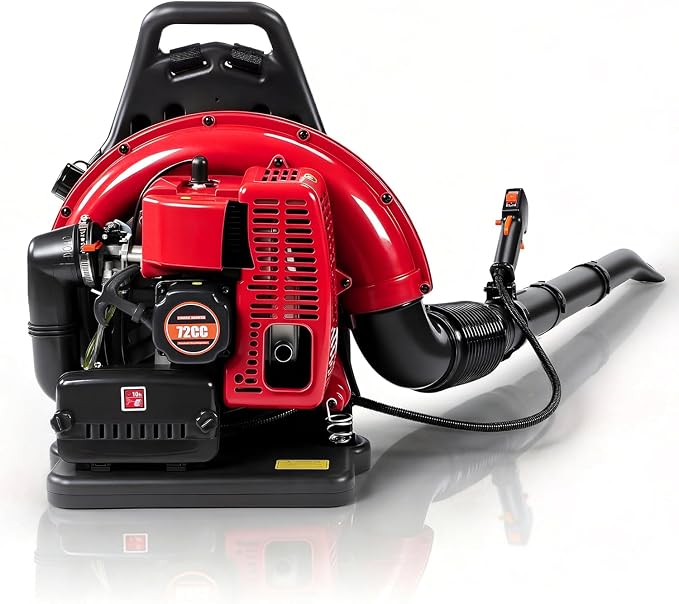
Using a backpack leaf blower with a strong 72CC engine makes tough yard work feel manageable. Designed for people who need reliable power for various outdoor tasks, its standout feature is the ability to handle multiple seasons with ease.
Putting it on feels natural because the backpack design distributes weight evenly. The adjustable speed lets you dial back the power for lighter tasks or turn it up to tackle heavy debris. It starts easily and runs smoothly, making routine yard cleanup quicker and less tiring.
It easily handles wet leaves, garden clippings, and even some light snow thanks to a powerful airflow of 760 CFM and wind speeds up to 230 mph. Built solidly for long-term use, the blower’s motor is loud but effective. Some users note the weight as a downside during extended use, but the power usually outweighs that concern.
This leaf blower delivers strong, consistent power that handles all seasons, from heavy leaf piles to light snow. The main drawback mentioned is its weight, which can make longer jobs feel more exhausting.
People covering large outdoor areas who need a dependable, powerful blower will appreciate its versatile performance. Those seeking a lighter or quieter option might want to consider alternatives better suited to shorter or less demanding tasks.
Pros
- Powerful 72CC engine for tough outdoor tasks
- Adjustable speed for varied yard work
- Backpack style reduces arm fatigue
- High wind speed clears heavy debris
Cons
- Heavier weight can tire users in long sessions
- Gas engine is loud during operation
| Specification | Details |
|---|---|
| Power Source | Gas Powered |
| Form Factor | Backpack |
| Engine Size | 72CC |
| Airflow | 760 CFM |
| Maximum Wind Speed | 230 mph |
| Additional Features | Adjustable Speed |
11. EGO POWER+ LB7654 Cordless Electric Leaf Blower

Powerful cordless leaf blower designed for heavy-duty commercial use, with a standout feature of up to 765 CFM airflow and turbo mode for tackling tough debris. Ideal for professionals needing strong performance without gas engine hassle.
Setting up involves charging the included 5.0Ah battery, delivering up to 90 minutes of run time, which suits extended tasks. Variable speed cruise control dial lets you adjust from 260 to 580 CFM for precise control. Lightweight and handheld design makes daily use comfortable while the interchangeable nozzle adds versatility.
Air speeds reach up to 200 MPH, managing wet leaves and caked-on grass with ease thanks to turbine fan engineering. The blower feels solidly built, focusing on endurance under frequent use. Most praise notes its power and battery life, while some mention weight can be tiring over long periods.
Praise focuses on its powerful suction and long runtime, making it a solid choice for clearing heavy, wet leaves. Complaints mostly deal with the occasional fatigue from the blower’s weight during lengthy tasks. The turbo mode adds extra punch but drains battery faster.
Professionals needing strong, cordless power and long run times will appreciate this blower. Those prioritizing lighter weight or quieter operation might want to consider alternatives better suited for lighter use or quieter environments.
Pros
- Strong airflow handles tough debris effectively
- Long battery life for prolonged work sessions
- Variable speed dial offers precise control
- Lightweight handheld design for easier handling
Cons
- Can feel heavy during extended use
- Battery runtime varies depending on speed setting
| Specification | Details |
|---|---|
| Power Source | Battery Powered |
| Voltage | 56 volts |
| Air Flow Capacity | 765 cfm |
| Maximum Speed | 200 miles_per_hour |
| Runtime | Up to 90 minutes |
| Noise Level | 64 db |
12. Greenworks 40V Backpack Leaf Blower
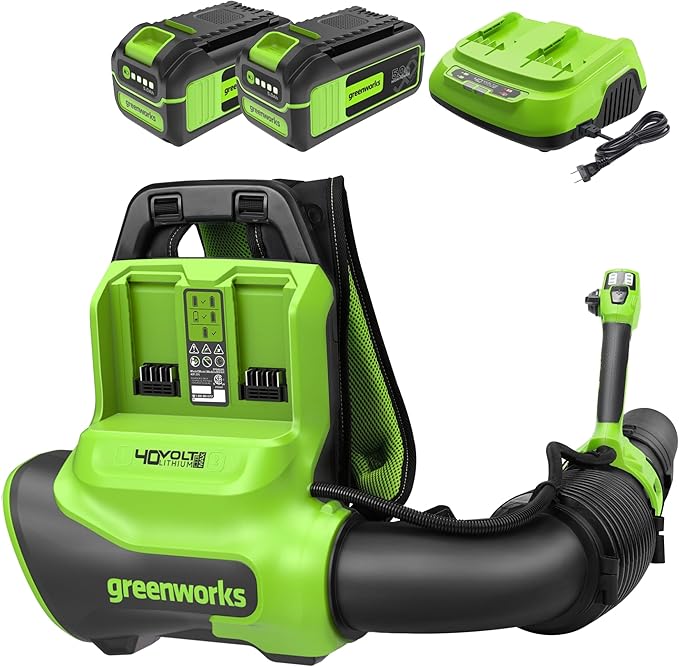
Backpack design and battery power make this blower ideal for extended jobs where mobility and durability matter, fitting well with commercial landscaping and large yard cleanup. Its strongest point is how it manages heavy-duty debris with commercial-grade power.
Setup involves loading two 5.0Ah HP batteries into the backpack, which feels balanced and reduces strain compared to handheld options. Regular work benefits from the instant start and adjustable speed, while the turbo boost and cruise control help with stubborn spots without tiring your hand. The 4A dual-port charger quickly tops off both batteries, so downtime stays minimal.
Delivering 710 CFM at 175 MPH, this blower handles wet leaves and compacted dirt better than most handheld models. It’s built to last with a focus on comfort and power, though some find the backpack a bit bulky in tight spaces.
The noise level stays relatively low at 65.6 dB, which is appreciated during long hours.
High praise centers on its powerful airflow easily handling wet and compacted debris. The main complaint focuses on the size and bulk of the backpack design, making it less convenient for confined areas. Users appreciate the quiet operation despite the power delivered.
Those needing prolonged use and strong performance in open areas will find this blower well-suited. For smaller spaces or quick jobs, a handheld model might be more practical. Battery efficiency favors users prepared for charging between longer sessions.
Pros
- Strong commercial-grade power for heavy debris
- Balanced backpack design reduces fatigue
- Two batteries extend runtime significantly
- Turbo and cruise control ease tough cleanup
Cons
- Backpack bulkiness can limit maneuverability
- Recharge time still noticeable during long jobs
| Specification | Details |
|---|---|
| Power Source | Battery Powered |
| Voltage | 40 volts |
| Air Flow Capacity | 710 cfm |
| Maximum Speed | 175 miles_per_hour |
| Noise Level | 65.6 db |
| Additional Features | Adjustable Speed, Compact Design, Instant Start, Rechargeable, Turbo |
Best Commercial Leaf Blowers Comparison Table
| Product | Power Source | Form Factor | Air Flow Capacity | Maximum Speed |
|---|---|---|---|---|
| Echo PB-9010T Blower | Gasoline-powered | Backpack | – | 220 mph |
| Generic 75.6CC Backpack Blower | Gas Powered | Backpack | 847 cfm | 236 mph |
| Husqvarna 580BTS Blower | Gasoline-powered | Backpack | – | – |
| PRORUN PBB3000 Blower | Gas Powered | Backpack | 1125 cfm | 250 mph |
| Greenworks 80V Electric Blower | Battery Powered | Handheld | 700 cfm | 170 mph |
| Husqvarna Leaf Blaster 350iB | Battery Powered | Handheld | 800 cfm | 200 mph |
| Generic Cordless Electric Blower | Battery Powered | Handheld | 650 cfm | – |
| Greenworks 80V Electric Blower 2 | Battery Powered | Handheld | 770 cfm | 180 mph |
| Schröder SR-6400L Blower | Gas Powered | Backpack | 920 cfm | 230 mph |
| Generic 72CC Backpack Blower | Gas Powered | Backpack | – | – |
| EGO POWER+ LB7654 Blower | Battery Powered | Handheld | 765 cfm | 200 mph |
| Greenworks 40V Backpack Blower | Battery Powered | Backpack | 710 cfm | 175 mph |
- Power SourceGasoline-powered
- Form FactorBackpack
- Air Flow Capacity–
- Maximum Speed220 mph
- Power SourceGas Powered
- Form FactorBackpack
- Air Flow Capacity847 cfm
- Maximum Speed236 mph
- Power SourceGasoline-powered
- Form FactorBackpack
- Air Flow Capacity–
- Maximum Speed–
- Power SourceGas Powered
- Form FactorBackpack
- Air Flow Capacity1125 cfm
- Maximum Speed250 mph
- Power SourceBattery Powered
- Form FactorHandheld
- Air Flow Capacity700 cfm
- Maximum Speed170 mph
- Power SourceBattery Powered
- Form FactorHandheld
- Air Flow Capacity800 cfm
- Maximum Speed200 mph
- Power SourceBattery Powered
- Form FactorHandheld
- Air Flow Capacity650 cfm
- Maximum Speed–
- Power SourceBattery Powered
- Form FactorHandheld
- Air Flow Capacity770 cfm
- Maximum Speed180 mph
- Power SourceGas Powered
- Form FactorBackpack
- Air Flow Capacity920 cfm
- Maximum Speed230 mph
- Power SourceGas Powered
- Form FactorBackpack
- Air Flow Capacity–
- Maximum Speed–
- Power SourceBattery Powered
- Form FactorHandheld
- Air Flow Capacity765 cfm
- Maximum Speed200 mph
- Power SourceBattery Powered
- Form FactorBackpack
- Air Flow Capacity710 cfm
- Maximum Speed175 mph
How to Choose the Right Commercial Leaf Blower
Choosing the right commercial leaf blower depends on factors like power, weight, and durability to handle heavy use efficiently. Selecting the appropriate model ensures better performance, reduces maintenance costs, and minimizes operator fatigue, ultimately saving time, money, and hassle on the job.
Power and Airspeed
Using a blower that lacks sufficient power quickly becomes frustrating when clearing dense leaves or wet debris. Gas engines around 25 to 30 cc or electric motors rated at 1000 to 1500 watts typically provide the necessary force to handle tough jobs without dragging. The important figures to check are the maximum airspeed, which should be around 150 to 200 mph for heavy debris, and the air volume, often measured in cubic feet per minute (CFM), with values over 400 CFM preferred for commercial workloads.
A model with too low horsepower or wattage will struggle, requiring multiple passes and causing undue strain on the machine and operator. Machines meeting these thresholds make the job quicker and less damaging to the equipment over long shifts. Keeping an eye on these numbers helps match the blower to the real intensity of the cleaning tasks.
Durability and Build Quality
Blowers built from fragile plastics or with poorly fitted parts tend to falter after months of frequent use. Reinforced plastics and metal components like aluminum or steel housings stand up better to impacts from rocks and debris and resist cracking or warping over time.
Apart from the material, the way pieces are assembled matters as much. Bolted joints and fewer glued parts show better durability in commercial environments.
Vendors sometimes skimp on quality to lower costs, but a solid build pays off for daily, long-term use outdoors. Check for models advertised as commercial-grade or designed for heavy-duty operation since these usually have superior construction standards.
Reliable tools reduce maintenance headaches and downtime, which quickly adds up in busy work scenarios.
Ergonomics and Weight
Extended use of a heavy, unbalanced blower quickly leads to arm strain and fatigue. Models with ergonomic grips and well-distributed weight give much better handling and control. Look for blowers weighing between 7 to 10 pounds for a balance between power and comfort.
Pay attention to grip design, rubberized or padded handles reduce vibration transfer to your hands.
Adjustable shoulder straps or harnesses are useful for larger models, transferring some weight from the arms to the torso. This makes even long periods of operation manageable without sacrificing control.
Poor ergonomics can slow down work or force breaks more often, so testing these features or reading detailed reviews is important before choosing.
Fuel Type and Runtime
The decision between models that run on gasoline or batteries impacts how long you can work without interruptions. Gas blowers handle long runtimes but need fuel refilling and generate emissions.
Battery-operated tools offer quieter, cleaner running with less maintenance but may require carrying extra batteries for full-day use. Typical battery runtimes range from 20 to 60 minutes depending on the power setting.
Assessing your daily workflow helps determine which fuel type fits best. Fuel costs and availability at job sites also matter, especially when buying replacement fuel or batteries regularly. Battery swapping systems speed up transitions but add to initial investment.
Fuel-efficient gas engines reduce trips to the pump and prolong work periods before refueling is necessary.
Noise and Emissions
Loud blowers quickly become a nuisance or break workplace noise limits, which often hover around 65 to 75 decibels in commercial zones. Operators exposed to high noise levels without protection risk hearing issues.
Some models incorporate mufflers or sound-dampening casings to reduce volume output, making them easier to use near residential areas or noise-sensitive environments.
Environmental regulations may require low emissions, especially in parks or cities with air quality concerns. Electric models naturally produce fewer emissions, while newer gas blowers meet stricter standards with improved engine technology.
Confirming the machine’s noise and emission ratings can prevent regulatory trouble and improve working conditions over time.
Maximizing Efficiency: Expert Tips for Using Commercial Leaf Blowers
Power settings directly affect how fast and effectively leaves are cleared. Starting with a low speed and gradually increasing lets you adjust to different debris types without wasting fuel or battery life. Focus on sweeping the nozzle side to side rather than blasting in one spot; this moves piles more evenly.
Consider these simple practices to save time while covering more ground:
- Use a consistent walking pace matched to the blower’s airflow to avoid repeated passes.
- Clear heavier debris first with higher speed, then finish with a lower setting for remaining small twigs or dirt.
- Wear hearing protection since commercial models often run loud, especially gas-powered units.
Positioning yourself to let the wind aid your work also reduces effort and spreads debris outside the target area. Adjust your stance and angle as you move between zones to maintain momentum without tiring quickly.
Essential Maintenance Practices to Prolong Your Leaf Blower’s Lifespan
Regular cleaning of air filters significantly impacts your blower’s efficiency. Clogged filters limit airflow and strain the engine, increasing fuel usage or battery drain.
Checking filters after heavy use and cleaning or replacing them as needed keeps performance stable.
Other key maintenance steps include:
- Inspecting spark plugs for wear and carbon buildup; replacing them prevents misfires in gas models.
- Draining old fuel before storage to avoid gum deposits in carburetors that can cause starting issues.
- Keeping the exterior free of dirt and debris to avoid blockages around intake and exhaust areas.
Battery-powered blowers benefit from proper charging habits, avoid overcharging and store batteries in a cool, dry place. Routine checks of screws and fasteners also prevent vibrations from loosening critical parts during operation.
Comparing Gas, Electric, and Battery-Powered Commercial Leaf Blowers for Optimal Performance
Gas-powered leaf blowers generally deliver the highest power and longer run times, ideal for large commercial jobs where mobility and harsh conditions are factors. They require more maintenance and produce noise and emissions but offer consistent performance.
Electric corded models have limited range but provide steady power without needing refueling. They are lighter, quieter, and have fewer parts that wear out, making them easier to maintain but better suited to smaller areas or properties with accessible outlets.
Battery-powered blowers combine portability and reduced emissions without the need for cords. Advances in battery technology provide decent run times and power for moderate tasks, although heavier workloads might require multiple batteries or recharges.
Consider job size, noise restrictions, run time, and maintenance when choosing. Each type has advantages depending on the environment and task consistency.
People Also Asked
How Do I Choose the Right Size Commercial Leaf Blower?
Choose a commercial leaf blower based on the size of the area you need to clear and the type of debris you usually handle. Larger engines offer more power but can be heavier and harder to manage for long periods. Balance power with comfort to reduce strain during extended use.
What Safety Precautions Are Needed When Using a Commercial Leaf Blower?
Always wear eye and ear protection when using a commercial leaf blower to guard against debris and loud noise. Keep a firm grip and be mindful of your footing to avoid slips or falls, especially on uneven ground. Avoid using the blower near people or pets to prevent injury from flying debris.
How Long Does a Typical Commercial Leaf Blower Last with Regular Use?
A typical commercial leaf blower can last several years with regular use, often two to five years depending on brand, maintenance, and intensity of use. Over time, parts such as air filters and spark plugs may require replacement to keep it running smoothly.
What Are Common Problems with Commercial Leaf Blowers and How to Fix Them?
Common problems include clogged air filters, worn spark plugs, and fuel issues. Cleaning or replacing the air filter regularly prevents engine strain, while changing the spark plug can solve starting problems. Use fresh fuel and proper oil to reduce carburetor issues.
How Do I Properly Maintain and Care for a Commercial Leaf Blower?
Regular maintenance includes cleaning or replacing the air filter, checking and changing the spark plug, and using fresh fuel and oil as recommended by the manufacturer. After use, wipe down the blower and store it in a dry place to prevent rust and damage.
Conclusion
Power, durability, and comfort are what really matter when choosing a commercial leaf blower. The machine should have enough power to clear leaves efficiently without straining.
It also needs to handle frequent, heavy use without breaking down. Comfort features like adjustable handles and manageable weight make a big difference during long jobs.
Pick a blower that fits your budget and the size of the area you’ll be cleaning regularly. A lighter, less powerful option might work for smaller spaces, while larger properties call for something stronger. Check the comparison table above to see which models match your needs and how they stack up on key points like power and durability.

I’m Jake Thompson, and I’ve spent over a decade working on lawn mowers, from small push mowers to big riding tractors. I write about starting problems, blade sharpening, carburetor cleaning, oil changes, and seasonal maintenance. My goal is to give you clear, step-by-step advice so you can handle common mower issues yourself and keep your lawn looking sharp all season.