Top 12 Best Carrot Seeds for Planting That Grow Fast!
Repeated sowing with cheap carrot seeds often leads to poor germination and thin, misshaped roots that may rot before maturing. Choosing the best carrot seeds for planting spares gardeners from wasting time and effort on plants that barely grow or taste bland.
Those who grow carrots know that a seed’s freshness and variety directly affect how well the crop turns out in the garden soil.
Good carrot seeds typically have a high germination rate, often above 80 percent under proper conditions. Selecting seeds that suit the length of the growing season is essential; some varieties mature in just 60 days, while others require up to 80 days.
Uniform seed size also helps in consistent planting depth, which improves root development and avoids issues like forked or stunted carrots.
Need a Quick Check?
| Image | Product | Price |
|---|---|---|
Our Top Picks 1  | Heirloom Scarlet Nantes | Check Price |
Our Top Picks 2  | Tendersweet Carrot Seeds | Check Price |
Our Top Picks 3  | Organic Scarlet Nantes | Check Price |
Our Selected Top 12 Carrot Seeds for Planting for Different Needs
This list features a variety of high-quality carrot seeds suited for different growing conditions and preferences. Each review highlights how well the seeds perform, their ideal users, and their advantages and drawbacks to help you make an informed choice.
1. Heirloom Scarlet Nantes Carrot Seeds
Planting carrots that grow straight and tender can be tricky, especially when wanting sweet, fresh roots for salads or roasting. Perfect for gardeners who want reliable, orange, nearly coreless carrots, these seeds deliver a classic shape and a great flavor that stands out in homegrown produce.
Starting these seeds means sowing them directly outside about a quarter-inch deep in loam soil and keeping them moist while waiting for sprouts, usually between 14 and 21 days. They prefer full sun and need constant watering throughout the growing season.
It’s best to plant during spring when the soil temperature stays between 55 and 75 degrees Fahrenheit. Transplanting is not recommended, so patience is key until the seedlings emerge.
The roots grow up to 6-7 inches with a tender bite, making them great fresh or cooked. The 1000-seed yield, under good conditions, can produce between 28 to 98 pounds of carrots, depending on spacing and care.
The plants reach about 18 inches in height, which fits well in compact garden beds. Most praise focuses on their sweet flavor and uniform shape, but some mention that germination success varies depending on how consistently moisture is maintained.
These seeds are praised for delivering sweet and uniform carrots with a traditional shape. The most common challenge comes from the need to keep the soil constantly moist during germination to avoid patchy sprouting. This can affect overall yield if not managed well.
The seeds suit gardeners who can dedicate time to maintaining soil moisture and planting at the right temperature. Those looking for a less moisture-sensitive variety or indoor starting options might prefer a different type of carrot seed.
Pros
- Produces tender, nearly coreless orange carrots
- High seed yield potential up to 98 pounds
- Compact plants grow well in small garden spaces
- Classic cylindrical shape ideal for multiple uses
Cons
- Germination depends heavily on consistent moisture
- Requires careful timing based on soil temperature
| Specification | Details |
|---|---|
| Sunlight Exposure | Full Sun |
| Expected Plant Height | 18 inches |
| Soil Type | Loam Soil |
| Moisture Needs | Constant Watering |
| Expected Planting Period | Spring |
| USDA Hardiness Zone | 5, 6, 7, 8, 9, 10, 11 |
2. Tendersweet Carrot Seeds
3,750 high-quality Tendersweet Carrot seeds come in one package, perfect for anyone wanting dependable germination and a big garden harvest. These seeds suit gardeners looking for sweet, tender carrots that grow long and uniform with minimal core.
The single biggest strength is the consistent growth of vibrant orange roots prized for their taste.
Planting these seeds is straightforward, best started in garden beds or raised planters prepared with well-drained soil. The seeds are fresh for the 2026 season, meaning they should sprout reliably with regular watering and sunlight.
Their tender texture makes them great for snacking right from the garden or for juicing and cooking recipes that call for sweetness and minimal core bitterness.
Performance is solid, with a dependable germination rate and abundant yields. The carrots grow smooth and long, holding up well to various growing conditions.
Some users praise the excellent sweetness and coreless texture, while a common gripe involves occasional thinning needed to prevent overcrowding. The seeds come lightly weighted at 4.54 grams, easing handling during planting.
The seeds reliably produce sweet, smooth carrots with a tender texture prized in home gardens. Some gardeners find thinning necessary to keep the carrots spaced properly for ideal growth. The freshness of the seeds promises vigorous plants and consistent yields during the 2026 growing period.
Those looking to grow a large number of sweet, coreless carrots in garden beds or raised planters will be satisfied. Gardeners wanting seeds with a longer shelf life or different harvesting years should explore other options.
Pros
- Large quantity of seeds in one pack
- Sweet and tender carrot roots
- Minimal core for better flavor
- Suitable for fresh eating and juicing
Cons
- Requires thinning to avoid overcrowding
- Only for planting in the 2026 season
| Specification | Details |
|---|---|
| Seed Count | 3,750 PREMIUM SEEDS |
| Weight | 4.54 g |
| Planting Season | Fresh for 2026 |
| Texture | Tender & Coreless |
| Root Color | Vibrant Orange |
3. Organic Scarlet Nantes Carrot Seeds
Gardeners looking for sweet, crunchy carrots will appreciate these seeds. Perfect for outdoor planting in sandy soil, they deliver a strong yield of coreless red-orange carrots. Their biggest strength lies in producing vegetables that taste better after a touch of frost.
Planting is best done outdoors during spring to summer with regular watering to keep the soil moist. These seeds thrive under full sun and attract pollinators while tolerating drought reasonably well.
Because they’re freshly packed each season, they maintain high germination rates, so starting your carrot patch is straightforward and reliable.
These seeds grow into carrots that are juicy and sweet, made even tastier after cooler weather encourages sugar storage. They come certified organic, non-GMO, and open-pollinated, which supports sustainable gardening.
The most common downside noted is the need for consistent soil moisture and the preference for sandy soil, which might not suit all gardens.
The seeds produce sweet carrots that improve in flavor with frost exposure, a highlight for those who enjoy strong tastes. On the downside, they demand steady moisture and specific soil conditions, which might require more attention. The organic certification ensures a natural growing experience.
Those growing in USDA zones 3 to 9 with sandy soil will enjoy these seeds most. Gardeners with heavy or clay soil may want a different variety better suited to their conditions, especially if regular watering is a challenge.
Pros
- Organic and non-GMO certified seeds
- Attracts pollinators for better garden health
- Drought tolerant once established
- High germination rate for reliable growth
Cons
- Requires consistent watering throughout growth
- Prefers sandy soil limiting soil suitability
| Specification | Details |
|---|---|
| Sunlight Exposure | Full Sun |
| Expected Planting Period | Spring to Summer |
| Soil Type | Sandy Soil |
| Moisture Needs | Regular Watering |
| USDA Hardiness Zone | 3,4,5,6,7,8,9 |
4. Heirloom Scarlet Nantes Carrot Seeds

Scarlet Nantes carrot seeds stand out for their drought tolerance and suitability for outdoor planting across a wide range of climates. Ideal for gardeners looking to grow vibrant orange carrots in full sun, these seeds thrive from spring through fall, making them a reliable choice for different growing seasons and USDA zones.
Preparing soil rich in loam and providing regular watering sets the stage for these seeds to sprout well. They grow best planted in outdoor spaces with full sun exposure. Regular attention to moisture and timing planting between spring and fall help the roots develop properly.
The drought tolerance offers some flexibility during drier spells, reducing worries about watering every day.
These carrot seeds mature consistently over an extended blooming period spanning spring to fall. Their ability to produce vibrant, sweet carrots even with irregular watering stands out as a key positive.
On the downside, they require loam soil to perform their best, which might limit options for gardeners with different soil types. Most praise focuses on their consistent growth and adaptability across USDA zones 2 through 10.
Scarlet Nantes carrots receive praise for growing consistently even when watering isn’t perfectly regular, thanks to their drought tolerance. The most frequent downside revolves around the need for loam soil, which limits flexibility for gardeners with other soil types.
Gardeners in locations with loam soil and full sun will find these seeds very rewarding and easy to manage over several months. Others with different soil conditions or limited watering options might want to consider seeds better suited for those restrictions.
Pros
- Drought tolerant for less frequent watering
- Grow well in full sun environments
- Wide planting and blooming periods
- Suitable for USDA zones 2 to 10
Cons
- Requires loam soil for best growth
- Needs regular watering despite drought tolerance
| Specification | Details |
|---|---|
| Indoor Outdoor Usage | Outdoor |
| Other Special Features | Drought Tolerant |
| Expected Blooming Period | Spring to Fall |
| Sunlight Exposure | Full Sun |
| Expected Planting Period | Spring to Fall |
| USDA Hardiness Zone | 2-10 |
| Soil Type | Loam Soil |
| Moisture Needs | Regular Watering |
5. Royal Chantenay Heirloom Carrot Seeds

Organo Republic Royal Chantenay Heirloom Carrot Seeds are ideal for outdoor gardeners looking for a sweet and crunchy carrot variety. Particularly suited for growing in diverse climates, these seeds stand out for their high germination rate and year-round planting flexibility.
Planting these carrot seeds is straightforward, thanks to the package design that shields them from sunlight and moisture, helping maintain seed quality until planting. They thrive in loam soil or potting mix with regular watering and prefer partial sun exposure, making them suitable for many garden setups from spring through fall and even winter in milder zones.
The seeds consistently produce carrots about 5 inches tall, known for their bright orange color and sweet flavor. The packaging supports sustainability while ensuring that seeds remain viable. Most praise highlights the high germination rate, though some users note the carrots require consistent care to maintain their quality and size.
A strong point of these seeds is their reliable germination, which means most seeds will sprout successfully when cared for properly. The most frequent drawback is the need for regular watering to achieve the best results, as neglect can affect growth and flavor.
Gardeners who can provide steady moisture and partial sun will find these seeds rewarding for fresh salads and cooking. Those needing larger carrots or less frequent watering might consider alternatives better suited for dry conditions or bigger roots.
Pros
- High germination rate ensures plenty of sprouts
- Non-GMO heirloom seeds maintain natural traits
- Seed envelope protects from sunlight and moisture
- Suitable for a wide range of USDA zones
Cons
- Requires consistent watering to grow well
- Carrot size limited to about 5 inches
| Specification | Details |
|---|---|
| Indoor Outdoor Usage | Outdoor |
| Sunlight Exposure | Partial Sun |
| Expected Plant Height | 5 inches |
| Soil Type | Loam Soil, Potting Mix |
| Moisture Needs | Regular Watering |
| USDA Hardiness Zone | 2, 3, 4, 5, 6, 7, 8, 9, 10, 11 |
6. Organic Rainbow Blend Carrot Seeds

Growing a vibrant and tasty batch of carrots is easy with Organic Rainbow Blend Carrot Seeds. Ideal for gardeners wanting colorful variety and quality in their crops, these seeds stand out for their reliable germination rates and organic, non-GMO qualities.
Anyone who values fresh, sweet carrots with great flavor will appreciate what these seeds offer.
Starting your planting is straightforward with these seeds, suited for outdoor use in sandy soil. They thrive best in full sun to partial shade, and regular watering helps maintain steady growth. Planting from spring through summer targets the prime growing period.
The seeds attract pollinators and tolerate drought, easing care during hotter spells. The seeds arrive freshly packed for the season, ensuring good sprouting for this year and next.
The seeds perform well in producing a diverse harvest of sweet and juicy carrots. They grow to about 6-8 inches, and cooler weather helps improve their sweetness.
Most gardeners praise the high germination rate and the lovely blend of colors. Some mention the need for consistent watering and the soil type preference as the main limits. The seeds come certified organic and heirloom, ensuring natural growth distinct from genetically modified options.
The seeds consistently produce colorful, tasty carrots with a high chance of sprouting. Gardeners appreciate the organic nature and sweet flavor improvements after frost. A common challenge is the preference for sandy soil and the need for steady moisture, which requires attention in less ideal conditions.
This seed blend suits those growing outdoors who want variety and organic produce in zones 3 through 11. Gardeners with heavier soils or inconsistent watering should consider other options better adapted for those conditions.
Pros
- High germination rate for reliable planting
- Drought tolerant once established
- Attracts pollinators to the garden
- Certified organic and non-GMO
Cons
- Prefers sandy soil for best results
- Needs regular watering to thrive
| Specification | Details |
|---|---|
| Sunlight Exposure | Full Sun to Partial Shade |
| Expected Planting Period | Spring to Summer |
| Soil Type | Sandy Soil |
| USDA Hardiness Zone | 3,4,5,6,7,8,9,10,11 |
| Moisture Needs | Regular Watering |
| Expected Blooming Period | Summer to Winter |
7. Heirloom Rainbow Carrot Seeds

Perfect for gardeners who want both variety and nutrition, Heirloom Rainbow Carrot Seeds offer a colorful mix of five heirloom types, each with unique flavors and health benefits. Their biggest strength lies in providing a diverse, nutrient-rich harvest that matures together for easy picking.
Planting is straightforward, requiring direct sowing in loose, well-draining sandy soil with a pH between 6.0 and 6.8. They prefer full sun and thrive outdoors in USDA zones 3-11. Daily care mostly involves thinning seedlings to 2-3 inches apart and maintaining spacing of 12-18 inches between rows.
This blend matures in 65-75 days, making the harvest period predictable and manageable.
These seeds germinate reliably with a high germination rate, ensuring a strong start for your crop. Each carrot variety grows to mature simultaneously, simplifying harvest planning. Most users appreciate the variety of flavors and colors, though some mention that soil quality can significantly impact growth success.
The hardy blend handles cooler climates well, but proper soil preparation is key to avoid uneven growth.
High germination and synchronized maturity simplify growing and harvesting, but proper soil preparation is crucial to avoid poor growth. The blend’s nutritional diversity and color variety stand out as key benefits for gardeners.
Gardeners who can provide well-draining, slightly acidic soil and full sun will enjoy a vibrant, healthy crop. Those without ideal soil conditions may want to consider varieties less sensitive to soil quality for more consistent results.
Pros
- Includes five distinct heirloom varieties
- High germination rate for consistent growth
- Varieties mature at similar rates
- Rich in various nutrients like lutein and lycopene
Cons
- Requires precise soil conditions for best results
- Performance can vary based on soil quality
| Specification | Details |
|---|---|
| Sunlight Exposure | Full Sun |
| USDA Hardiness Zone | 3-11 |
| Expected Blooming Period | Spring to Fall |
| Planting Depth | ¼-½ inch |
| Spacing | 2-3 inches apart, 12-18 inches between rows |
| Maturity Time | 65-75 days |
8. Tendersweet Heirloom Carrot Seeds
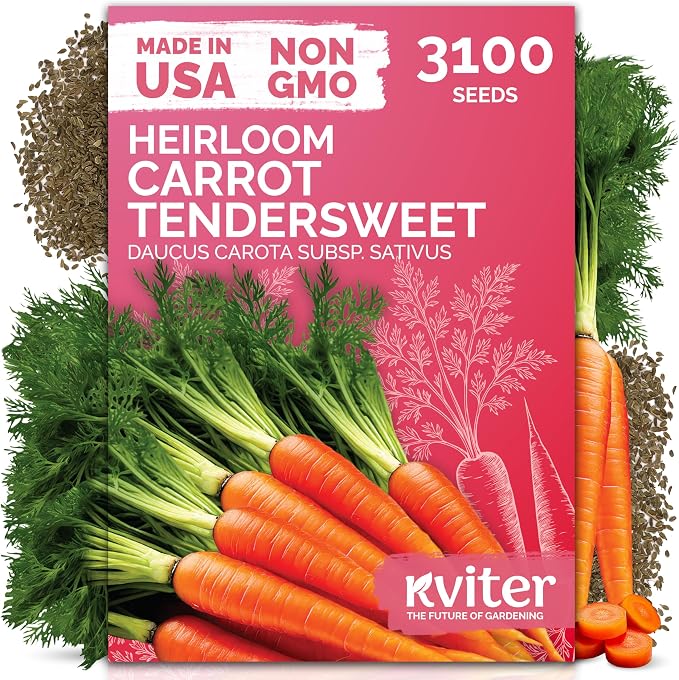
Non-GMO heirloom carrot seeds designed for outdoor planting, perfect for home gardeners looking to grow sweet, tender carrots. They thrive in USDA zones 3-10 and are known for their impressive 9-10 inch long, coreless roots with a high sugar content.
Planting is straightforward, as seeds are direct-sown about 2-3 weeks before the last frost and then every two weeks for continuous harvests. These seeds require half an inch of soil coverage in a sunny spot with sandy soil. A growing guide comes with the pack, making it easy to follow along, and regular watering keeps the roots healthy throughout the growing season.
The seeds germinate reliably within 14-21 days, providing steady sprouting for gardeners. The carrots grow around 12 inches tall and are well-suited to low maintenance gardens.
Most praise mentions the sweetness and smooth texture of the roots, while some note that growth can slow without consistent sun and water.
The sweetest and tender results come from seeds that sprout reliably within 14-21 days. Most find the flavor and texture excellent when proper sun and watering are maintained, but inconsistent care can slow growth noticeably. Soil that isn’t sandy may also reduce success rates.
Gardeners in cooler or moderate climates across USDA zones 3-10 will be happy with these seeds, especially those with sandy soil and the ability to maintain sunlight and watering needs. Those with heavy or clay soils or less consistent sun exposure might want to consider other options better suited to their conditions.
Pros
- High sugar content for sweet carrots
- Reliable germination within 14-21 days
- Growing guide included for ease
- Works well in a wide range of USDA zones
Cons
- Needs consistent sun and moisture to grow well
- Best suited for sandy soil types only
| Specification | Details |
|---|---|
| USDA Hardiness Zone | 3-10 |
| Expected Plant Height | 12 inches |
| Soil Type | Sandy Soil |
| Sunlight Exposure | Full Sun |
| Moisture Needs | Regular Watering |
9. Heirloom Carrot Variety Seed Pack

Over 7,500 seeds in one pack offer a wide range of carrot varieties to grow both indoors and outdoors. Perfect for gardeners who want diversity on a budget, this kit stands out by providing ten unique non-GMO heirloom carrot seed types at less than $1.50 per seed variety. It’s an ideal choice for anyone looking to experiment with flavors and colors in their garden.
Opening the waterproof resealable bag gives easy access to ten small individual seed packets. Seeds can be sown year-round, with partial sun preferred.
The included mini gardening tools like leaf clippers and a seed dibber make planting straightforward, whether in potting mix inside or in loam soil outside. The pack supports planting in USDA hardiness zones 2 through 11, fitting many gardening climates.
Varied carrot types germinate reliably and maintain their unique colors and sizes, with an expected plant height of around 8 inches. The packet’s solid build keeps seeds fresh and organized. Praise often focuses on the incredible seed quantity and variety.
Complaints center on some varieties needing more attention to moisture and soil type for best growth.
Many appreciate the extensive variety and large number of seeds included, making it easy to grow different carrots in one place. However, several note that some types demand consistent watering and specific soil to thrive well, which means more attention during growing.
Gardeners who enjoy experimenting with unique carrot types and can provide moderate care will find this pack enjoyable. Those seeking a simpler or low-maintenance crop might prefer fewer, easier-to-grow seed varieties instead.
Pros
- Includes 10 unique heirloom carrot seed varieties
- Non-GMO seeds with over 7,550 total seeds
- Comes with handy mini gardening tools
- Waterproof resealable packaging for seed freshness
Cons
- Some carrot types require careful moisture management
- Varied growth needs can complicate care process
| Specification | Details |
|---|---|
| Sunlight Exposure | Partial Sun |
| Expected Plant Height | 8 inches |
| Moisture Needs | Moderate Watering, Regular Watering |
| Soil Type | Loam Soil, Potting Mix |
| Expected Planting Period | Summer, Spring, Winter, Autumn, Year Round |
10. Danvers Carrot Seeds

Danvers Carrot Seeds are perfect for gardeners seeking a reliable carrot variety that thrives in cooler temperatures. Known for producing 6-8 inch tapered carrots, these seeds offer a consistent yield and a delicious harvest for those looking to extend their growing season in various USDA zones.
Planting these seeds involves placing them about 1/4 inch deep with 1-2 inches spacing, in an area that receives full sun. Soil temperatures between 55-75°F will encourage germination, which typically takes 14-21 days.
Regular watering keeps the soil moist, supporting healthy growth until maturity around 65-85 days after planting.
Performance sees dependable carrot growth with well-formed roots that suit many culinary uses. The seed packet provides around 650 seeds, ensuring plenty for multiple plantings.
Most appreciate the high germination rate and versatility. A noted downside is the relatively lengthy germination period compared to some other varieties.
Seeds offer a high germination rate and produce quality carrots, but some may find the 14-21 day germination time somewhat slow. The need for regular watering is essential to maintain growth, particularly in full sun areas.
Gardeners in cooler climates or those wanting to grow carrots across multiple seasons will appreciate these seeds. People seeking faster sprouting carrots or lower-maintenance options might consider alternatives with quicker germination.
Pros
- High germination rate for reliable planting
- Optimized for cooler temperatures
- Produces carrots 6-8” long
- Suitable for USDA zones 3-10
Cons
- Takes up to three weeks to germinate
- Requires consistent watering throughout growth
| Specification | Details |
|---|---|
| Indoor/Outdoor Usage | Indoor, Outdoor |
| Sunlight Exposure | Full Sun |
| Moisture Needs | Regular Watering |
| Days to Maturity | 65-85 days |
| Plant Spacing | 1-2” apart |
| Germination Time | 14-21 days |
11. Danvers Carrot Seeds

Growing carrots that store well after harvest can be tricky, but these seeds suit gardeners aiming for a reliable, tasty yield that keeps through winter. Danvers Carrot Seeds stand out with their classic shape and deep orange color, making them a solid choice for both meals and long-term storage.
Planting is straightforward, as the seeds do well in different soil types including heavier or loam soil. They thrive outdoors under full sun and need moderate watering to keep growing steadily.
These seeds work equally well in raised beds, traditional garden rows, or containers, offering flexibility depending on your garden space.
The roots are sturdy and resist cracking, which helps them store for months. Expect carrots about 10 inches tall with a rich, sweet flavor. The seeds are untouched by treatments but offer good disease and pest resistance, plus drought tolerance, which makes caring for them less demanding.
Some users find the carrots take their time to mature, requiring patience during growth.
The seeds produce uniform carrots with a sweet, rich flavor that store well if kept properly. The most common downside is the slower growth rate, which means patience is needed to see harvest-ready roots.
Those wanting dependable, long-lasting carrots for winter storage will appreciate these seeds. Gardeners seeking faster-growing or pre-treated seed options might want to explore alternative varieties.
Pros
- Strong roots resist cracking during storage
- High germination rate for reliable growth
- Disease and pest resistant for low maintenance
- Performs well in both loose and heavier soils
Cons
- Growth can be slow before maturity
- Untreated seeds require careful handling
| Specification | Details |
|---|---|
| Expected Plant Height | 10 inches |
| Sunlight Exposure | Full Sun |
| Soil Type | Loam Soil |
| Moisture Needs | Moderate Watering |
| USDA Hardiness Zone | 2-11 |
| Seed Treatment Method | Untreated |
12. Heirloom Rainbow Carrot Seeds

Growing rainbow carrots in your garden becomes simple with a 90%+ germination rate and a variety of colors from red to orange. Perfect for anyone wanting fresh, vibrant carrots for juicing, snacks, or market stands, these seeds suit USDA zones 3 through 11, performing best in full sun.
Plant the seeds directly outdoors during spring to summer, sowing them about 1/2 inch deep and spacing 1 to 2 inches apart in rows 18 to 24 inches wide. They prefer sandy soil with a pH between 6.0 and 7.0 and regular watering to keep moisture consistent.
The carrots mature into 7-inch roots ready to harvest in roughly 65 to 75 days, thriving best when soil temperatures stay between 55 and 75°F.
Rainbow carrot seeds deliver on their promise of colorful, sweet carrots that grow steadily with minimal fuss. The included growing guide makes starting easy. Most growers praise the high germination rate and the variety of colors.
Occasional complaints note the need for regular watering and specific soil conditions to keep the carrots growing.
The seeds consistently sprout with vibrant colors, making gardening rewarding, though maintaining regular moisture can be a challenge. Most appreciate how straightforward it is to grow these carrots once the soil and watering needs are met.
Gardening enthusiasts who can provide sandy soil and keep soil moist will enjoy fresh, colorful carrots. Those without easy full sun access or sandy soil may want to explore different carrot varieties better suited to their conditions.
Pros
- High germination rate over 90%
- Produces colorful 7-inch carrots
- Includes easy-to-follow growing guide
- Thrives in a wide range of USDA zones
Cons
- Needs consistent soil moisture
- Performs best in sandy soil only
| Specification | Details |
|---|---|
| Germination Rate | 90%+ |
| Plant Height | 7 inches |
| USDA Hardiness Zone | 3-11 |
| Soil Type | Sandy soil |
| Sunlight Exposure | Full sun |
Comparison of the Best Carrot Seeds for Planting
| Product | Usage | Special Features | Sunlight | USDA Zone |
|---|---|---|---|---|
| Heirloom Scarlet Nantes | Outdoor | Compact | Full Sun | 5-11 |
| Tendersweet Carrot Seeds | – | – | – | – |
| Organic Scarlet Nantes | Outdoor | Attracts Pollinators, Drought Tolerant | Full Sun | 3-9 |
| Scarlet Nantes Heirloom | Outdoor | Drought Tolerant | Full Sun | 2-10 |
| Royal Chantenay Heirloom | Outdoor | High Germination Rate | Partial Sun | 2-11 |
| Organic Rainbow Blend | Outdoor | Attracts Pollinators, Drought Tolerant | Full Sun to Partial Shade | – |
| Heirloom Rainbow Carrots | Outdoor | High Germination Rate | Full Sun | 3-11 |
| Tendersweet Heirloom | Outdoor | High Germination Rate, Low Maintenance | Full Sun | 3-10 |
| Heirloom Carrot Variety | Indoor, Outdoor | – | Partial Sun | 2-11 |
| Danvers Carrot Seeds A | Indoor, Outdoor | High Germination Rate | Full Sun | – |
| Danvers Carrot Seeds B | Outdoor | Disease Resistant, Drought Tolerant | Full Sun | 2-11 |
| Rainbow Heirloom Carrots | Outdoor | High Germination Rate, Low Maintenance | Full Sun | 3-11 |
- UsageOutdoor
- Special FeaturesCompact
- SunlightFull Sun
- USDA Zone5-11
- Usage–
- Special Features–
- Sunlight–
- USDA Zone–
- UsageOutdoor
- Special FeaturesAttracts Pollinators, Drought Tolerant
- SunlightFull Sun
- USDA Zone3-9
- UsageOutdoor
- Special FeaturesDrought Tolerant
- SunlightFull Sun
- USDA Zone2-10
- UsageOutdoor
- Special FeaturesHigh Germination Rate
- SunlightPartial Sun
- USDA Zone2-11
- UsageOutdoor
- Special FeaturesAttracts Pollinators, Drought Tolerant
- SunlightFull Sun to Partial Shade
- USDA Zone–
- UsageOutdoor
- Special FeaturesHigh Germination Rate
- SunlightFull Sun
- USDA Zone3-11
- UsageOutdoor
- Special FeaturesHigh Germination Rate, Low Maintenance
- SunlightFull Sun
- USDA Zone3-10
- UsageIndoor, Outdoor
- Special Features–
- SunlightPartial Sun
- USDA Zone2-11
- UsageIndoor, Outdoor
- Special FeaturesHigh Germination Rate
- SunlightFull Sun
- USDA Zone–
- UsageOutdoor
- Special FeaturesDisease Resistant, Drought Tolerant
- SunlightFull Sun
- USDA Zone2-11
- UsageOutdoor
- Special FeaturesHigh Germination Rate, Low Maintenance
- SunlightFull Sun
- USDA Zone3-11
How to Choose the Best Carrot Seeds
Choosing carrot seeds involves considering factors like disease resistance, germination rate, and suitability to your climate. Selecting the right seeds ensures healthy growth, reduces waste, and saves time and money by avoiding poor yields or replanting.
Seed Variety and Type
Different carrot varieties offer varying flavors and growth times, which can really affect your planting schedule and final harvest taste. Some types take as little as 60 days from planting to maturity, while others need 80 days or more. This matters a lot for gardeners working with shorter growing seasons or colder climates.
Varieties range from sweet and tender to more earthy flavors, so your choice can influence how enjoyable the carrots are when fresh.
Seed types matter too. Heirloom seeds often provide a more traditional flavor and open-pollinated traits but may be less disease-resistant.
Hybrids usually deliver reliable yields and uniform growth. Organic seeds appeal to those avoiding synthetic chemicals during production. Matching the days to maturity with your local climate and planting window helps avoid wasting time or risking poor harvests.
Look for varieties that specify growth duration and known flavor characteristics to pick what fits your garden and taste preferences.
Seed Viability and Germination Rate
Seed viability directly affects your success rate in growing strong carrots. Fresh seeds tend to have a germination rate of 80% or higher, but older seeds or poorly stored ones may fall below 50%, leading to sparse or patchy crops.
Packaging dates or packed for information on the packet can guide you toward fresher options.
Some seeds come with coatings or treatments that promote faster sprouting and protect against soil-borne diseases. These coatings can also improve seed handling, especially if you plant with precision tools. Avoid seeds without any germination info or older packages to prevent weak stands and wasted effort.
- Look for germination rates above 75%
- Check for recent packaging or harvest dates
- Consider coated seeds for easier planting and disease resistance
Climate and Soil Compatibility
Carrots are sensitive to their climate and soil conditions, which influences how well their roots develop. Some seeds thrive in cooler regions and shorter growing seasons, offering early maturing options.
Others need longer frost-free periods. Choosing a variety matched to your climate zone avoids wasted effort and poor crop quality.
Soil type also plays a big role. Loose, sandy loam with a pH near 6.0 to 6.8 is ideal for straight, well-formed roots.
Heavy clay or overly acidic soils often produce stunted or forked carrots. Certain varieties show better drought tolerance, holding up in less consistent moisture environments. Understanding these details helps in selecting seeds that lead to healthy carrot growth instead of disappointment.
Planting Density and Spacing Requirements
Proper spacing between seeds prevents overcrowding, which can stunt growth or cause roots to twist and split. Most carrot seeds require about 2 to 3 cm between seeds in rows roughly 30 cm apart to allow air circulation and room for roots to expand. When seeds are sown too close together, you’ll need to thin them often, which takes time and can harm nearby seedlings.
Root size at maturity matters for spacing decisions. Longer, thicker varieties need more room than small or round types. Planting depth is equally important; seeds should not sit too deep as this delays germination and weakens plants.
Generally, 0.5 to 1 cm depth is optimal for carrot seeds, ensuring they get enough moisture but also enough oxygen for sprouting.
Pest and Disease Resistance
Choosing carrot seeds with built-in resistance to pests and common diseases reduces the need for chemical treatments and helps maintain healthier crops. Some varieties specifically resist pests like carrot rust fly or fungal diseases that can severely damage roots. This resistance reduces crop loss and lowers maintenance time.
Resistant types tend to maintain vigor better under pressure, offering steadier yields over the season. However, resistance traits may sometimes come with trade-offs in flavor or root size, so balance these factors based on your priorities.
Seeds labelled for pest or disease resistance give a practical advantage in typical garden conditions prone to these challenges.
Tips for Optimal Carrot Seed Germination and Planting
Carrot seeds require soil that stays consistently moist but not waterlogged to germinate well. The ideal soil temperature for planting carrot seeds is between 50°F and 85°F, with cooler soils slowing down sprouting significantly.
Plant seeds about ¼ inch deep and space them roughly 2 to 3 inches apart to avoid overcrowding. Thinning seedlings early is crucial; spacing ensures that carrots have room to develop into straight, healthy roots. Using a light layer of compost mixed into the planting bed can improve soil texture and nutrient content without making it too rich, which can cause forked carrots.
Water the bed gently after sowing to avoid washing the seeds away. Keeping the soil evenly moist for the first few weeks will help the seeds sprout faster and more uniformly.
Common Mistakes to Avoid When Growing Carrots from Seed
One frequent error in growing carrots is planting seeds too deeply or too sparsely. Deep planting can delay germination or prevent it altogether, while planting seeds too far apart wastes valuable space.
Overwatering after sowing often leads to seed rot, yet letting the soil dry out too much will stop germination. Another common mistake involves neglecting to thin seedlings; leaving crowded carrots results in stunted growth and misshapen roots. Using soil that’s too rich or heavy in nitrogen can produce bushy tops but poor root development.
Planting carrots in poor drainage soil causes root splitting or rot. Avoid disturbing young roots by limiting early cultivation around seedlings.
Last, planting carrot seeds after the soil has warmed adequately ensures improved sprouting and reduces the risk of disease.
Comparing Heirloom and Hybrid Carrot Seed Varieties for Home Gardens
Heirloom carrot seeds are open-pollinated varieties that gardeners save and replant year after year, often chosen for unique flavors and shapes. They tend to have more diverse colors and heritage traits, making them appealing for specialty gardens. Hybrid varieties result from controlled cross-breeding and offer uniformity in size, color, and disease resistance.
They often provide earlier maturity and higher yields compared to heirlooms. Home gardeners seeking consistent, predictable crops might favor hybrids, while those wanting to preserve genetic diversity or experiment with flavors may prefer heirlooms.
Both types require similar growing conditions, but heirlooms sometimes need closer monitoring for pests and diseases. Choosing between them depends on the gardener’s goals for harvest timing, appearance, and flavor complexity.
People Also Asked
How Long Do Carrot Seeds Take to Germinate?
Carrot seeds typically take about 10 to 21 days to germinate. Ensuring the soil stays consistently moist during this period helps prevent the seeds from drying out and failing to sprout.
What Soil Type Is Best for Planting Carrot Seeds?
Loose, sandy loam soil with good drainage is best for carrot seeds. Compact or rocky soil can cause misshapen roots, so prepare the bed by removing clumps and stones before planting.
Are Carrot Seeds Safe to Consume If Saved for Next Season?
Saved carrot seeds are generally safe to consume, but they might lose some viability over time. Store them in a cool, dry place to maintain germination rates for the next planting season.
How Deep Should I Plant Carrot Seeds for Best Growth?
Plant carrot seeds about ¼ to ½ inch deep for the best growth. Covering them lightly helps protect seeds from drying out while allowing enough moisture for sprouting.
What Common Problems Affect Carrot Seeds During Germination?
Common problems during carrot seed germination include crusted soil, which can prevent seedlings from emerging, and inconsistent moisture levels. Lightly loosening the soil surface and keeping it evenly moist can reduce these issues.
Conclusion
Choosing the best carrot seeds for planting means thinking about your local growing conditions, the type of carrots you want, and how easy the seeds are to grow. Good seeds should match your climate and soil type and fit the carrot size and flavor you prefer.
It also helps to consider how long they take to mature and resist pests or diseases common in your area.
Match the seed variety to the space you have and how often you plan to plant carrots. Smaller gardens may favor compact or shorter-season types, while larger plots can try longer-growing varieties. Review the comparison table and earlier picks to find seeds that fit your needs without overspending or waste.

I’m Jake Thompson, and I’ve spent over a decade working on lawn mowers, from small push mowers to big riding tractors. I write about starting problems, blade sharpening, carburetor cleaning, oil changes, and seasonal maintenance. My goal is to give you clear, step-by-step advice so you can handle common mower issues yourself and keep your lawn looking sharp all season.