Top 12 Best Container Flowers for Full Sun That Wow!
Placing flowers in a container can turn a sunny porch or balcony into a lively spot, but not every flower does well in the heat and strong light. Choosing the best container flowers for full sun means dealing with blooms that can wilt quickly or scorch without the right handling. It helps to pick plants known to handle direct sunlight without frequent watering or extra shade, which often damages weaker species.
A good container flower for full sun usually thrives in soil that drains well to avoid root rot, especially with frequent watering. Also, containers should be deep enough, at least 8 to 12 inches, to support roots in hot weather and hold enough soil to retain moisture through the heat. Heat-tolerant blooms that can withstand temperatures above 85 degrees Fahrenheit without fading or dropping petals are ideal for these conditions.
Need a Quick Check?
| Image | Product | Price |
|---|---|---|
Our Top Picks 1  | Perfect Plants Autumn Azalea | Check Price |
Our Top Picks 2  | Hardy Hibiscus Mix | Check Price |
Our Top Picks 3  | Purple Verbena Plant | Check Price |
Our Selected Top 12 Container Flowers for Full Sun Picks for Every Need
This list features a variety of container flowers thriving in full sun, highlighting their growth performance, care requirements, and suitability for different gardeners. Each review covers strengths and weaknesses to help you choose the best option for your specific outdoor space and gardening experience.
1. Perfect Plants Autumn Bonfire Encore Azalea
Gardeners looking for a bright, compact azalea that thrives in full sun will appreciate how well this one blooms repeatedly with vivid red flowers. Its evergreen nature keeps your container green year-round, making it a great accent or mass planting option for outdoor spaces in zones 6-10.
Getting it going involves planting in spring with regular watering and well-drained, slightly acidic soil. It prefers about 4-6 hours of sun daily, which fits perfectly on porches or patios with direct sun exposure. Annual spring fertilization helps maintain its vibrant blooms, and its drought tolerance means it can handle occasional dry spells without fuss.
Deer and pests aren’t much of a concern either.
It reaches about 3 feet both tall and wide, offering a compact yet noticeable presence without overwhelming space. The flowers show up from spring right through to winter, giving you a long season of color. Most praise focuses on its bright red blooms that keep coming back.
A common downside noted is that it isn’t available in California and Arizona.
The azalea’s strongest feature is its bright red flowers that bloom repeatedly from spring through winter, offering continuous color in containers. Common issues arise from location restrictions making it unavailable in some states and the soil requirements can be limiting for those with less acidic gardens.
Those living in USDA zones 6 to 10 with acidic soil who want low-maintenance, long-lasting blooms will find it rewarding. People outside these zones or in non-compatible states might want to explore alternatives better suited for their conditions.
Pros
- Bright red flowers from spring to winter
- Compact growth suits container planting
- Drought-tolerant and pest-resistant
- Evergreen foliage year-round
Cons
- Not sold in California and Arizona
- Prefers slightly acidic, well-drained soil
| Specification | Details |
|---|---|
| Sunlight Exposure | Full Sun |
| Expected Plant Height | 3 feet |
| USDA Hardiness Zone | 6-10 |
| Moisture Needs | Regular Watering |
| Expected Blooming Period | Spring to Fall |
2. Mixed Hardy Hibiscus Plants
Mixed Hardy Hibiscus Plants stand out by offering bold, colorful blooms that thrive in full sun, perfect for anyone looking to brighten up patio containers or garden borders. These hardy shrubs suit warm climates and bring a tropical touch that turns heads during summer.
Setting up involves planting the well-rooted young shrubs in containers with well-draining soil, positioned in a spot that gets plenty of sun. Day-to-day care requires ensuring they stay in full sun and monitoring soil moisture without waterlogging.
Their bushy growth develops fully over time, making container displays look lush and lively through summer.
These hibiscus plants deliver large and showy flowers that add dramatic color to any sunny outdoor space. They are built to handle heat and grow steadily with proper soil drainage.
While they attract pollinators and create a bold display, some note they arrive without flowers and require a bit of patience before blooming.
These hibiscus plants are praised for their bold, showy summer blooms that attract pollinators, adding vibrant life to outdoor spaces. The most common drawback is that these plants don’t come with flowers at first, so you have to wait for them to grow before they start blooming.
People living in warm regions or those wanting colorful summer containers in full sun will appreciate these hardy shrubs. Gardeners in cooler climates may want to consider other options or use them as annuals or indoor container plants to enjoy their beauty.
Pros
- Produces large, colorful blooms during summer
- Thrives in full sun conditions
- Attracts pollinators to the garden
- Young plants arrive well-rooted and healthy
Cons
- Plants arrive without flowers
- Only suited for USDA zones 9-11 or as annuals
| Specification | Details |
|---|---|
| Sunlight Exposure | Full Sun |
| USDA Hardiness Zone | 9-11 |
| Expected Blooming Period | Summer |
| Moisture Needs | Well-draining soil |
| Indoor/Outdoor Usage | Outdoor |
3. Purple Verbena Plant
Purple Verbena Plant offers vibrant purple flower clusters that thrive in full sun, perfect for gardeners looking to add long-lasting color to containers or garden beds. Its biggest strength is the extended blooming season from summer through fall, making it ideal for brightening outdoor spaces over several months.
Planting in spring with well-draining soil sets the stage for consistent growth. Requires moderate watering and should be placed in an area receiving full sun to keep the blooms healthy. Its compact size, growing up to about 3 feet, fits nicely in containers without overwhelming the space.
Maintenance stays low, making it easy to care for day-to-day.
Blooms persist from summer into fall, consistently offering purple clusters that stand out. The plant is sturdy but reaches just under 3 feet, fitting well in outdoor pots or garden borders.
Positive feedback highlights the long bloom time as a favorite feature. Some note it requires full sun and well-drained soil to perform best, limiting placement options somewhat.
The most praised aspect is the extended bloom time that fills outdoor spaces with vibrant purple flowers for months. The common drawback is the strict need for full sun and well-draining soil, which can limit where it can be successfully planted.
This plant suits gardeners wanting steady color in sunny spots and prefer low upkeep. Those with shaded gardens or poor soil drainage might look for alternatives better suited to less ideal light and soil conditions.
Pros
- Long blooming season from summer to fall
- Compact size fits well in containers
- Low maintenance and easy to care for
- Produces attractive purple flower clusters
Cons
- Needs full sun to thrive
- Requires well-draining soil to avoid root issues
| Specification | Details |
|---|---|
| Live plant size | 8–12 inches tall |
| Expected plant height | 3 feet |
| Blooming period | Summer to Fall |
| Sunlight exposure | Full Sun |
| Soil type | Well Draining Soil |
| Moisture needs | Moderate Watering |
4. White Muhly Grass Plants

Bright and airy, White Muhly Grass adds a soft, wispy look to any sunny spot. Great for gardeners who want something low maintenance and striking, it thrives in full sun and adapts well to different soil types.
Its biggest strength is how easily it handles bright, direct sunlight while still looking full and lush.
Setup is straightforward since it prefers well-drained soil, fitting nicely in containers or garden beds. During daily care, moderate watering keeps it healthy without much fuss. It’s easy to grow outdoors in zones 7 through 10 and handles spring to fall planting with no special treatments.
The grass stays vibrant with 6 to 8 hours of direct sun every day.
The grass performs reliably in bright locations, providing a long blooming period from summer to fall. It stands up well in sandy or rocky soil, which makes it versatile for gardens or patio containers. A strong point is its low maintenance needs, although some might find the moderate watering requirement a bit limiting in very dry locations.
Many appreciate how low maintenance it is while delivering plenty of visual interest in sunny spots. The main limitation comes from its moderate watering needs, which can be tricky in very dry climates. It grows well in containers and garden beds without extra fuss.
People with sunny gardens in USDA Zones 7-10 looking for easy-care plants will enjoy this grass. Those outside these zones or in drought-prone areas should consider other more drought-resistant plants.
Pros
- Thrives in full sun with 6–8 hours daily
- Adaptable to sandy or rocky soils
- Low maintenance plant care required
- Long blooming season from summer to fall
Cons
- Needs moderate watering, not drought-tolerant
- Limited to USDA Zones 7-10 only
| Specification | Details |
|---|---|
| Sunlight Exposure | Full Sun |
| Expected Blooming Period | Summer to Fall |
| Soil Type | Well-drained soil |
| USDA Hardiness Zone | 7-10 |
| Moisture Needs | Moderate Watering |
5. Mixed Moss Rose Flower Seeds

Vibrant and hardy, these Mixed Moss Rose Flower Seeds are ideal for gardeners wanting a lively, colorful display in full sun areas. Their biggest strength lies in producing nonstop blooms even in poorer soils, perfect for adding summer-long color without fuss.
Planting these seeds is straightforward and rewarding, thanks to a high germination rate of 95%. They thrive from spring through summer into fall, providing continual flowers in full sun.
These plants do well both in containers and open garden beds, thriving indoors and outdoors with a vibrant mix of pinks, reds, yellows, oranges, whites, and purples that form a cheerful carpet effect.
The blooms appear fast and persist throughout the warm seasons, standing out for their double petals and rich hues. These seeds handle tough growing patches where other plants might give up. Common feedback points to excellent coverage due to the large seed count, while some might find the long flowering period less varied in color dominance.
The seeds receive praise for their nonstop blooming and vibrant mix that covers a large area effectively. Some note that the flower colors sometimes don’t appear evenly throughout the planting, affecting visual balance. Consistent full sun is essential to maintain bloom health and vibrancy.
Gardeners wanting an easy, colorful summer display with minimal soil demands will appreciate these seeds. Those with shaded areas or seeking specific color patterns might want to consider other options better suited to varied light or design needs.
Pros
- Over 23,500 seeds for extensive planting
- Vivid mix of six bright flower colors
- Thrives even in poor to average soil
- Long-lasting blooms from summer to fall
Cons
- Color dominance can vary season to season
- Requires full sun exposure for best results
| Specification | Details |
|---|---|
| Sunlight Exposure | Full Sun |
| Indoor Outdoor Usage | Indoor, Outdoor |
| Expected Blooming Period | Summer to Fall |
| High Germination Rate | 95% |
| Expected Planting Period | Spring to summer |
6. Desert Rose Outdoor Plant

Crafted as a hardy succulent, the Desert Rose Outdoor Plant suits anyone looking for a tough, low-maintenance flower container that thrives in full sun. Its biggest strength lies in its ability to handle heat and drought while producing vibrant, mixed color blooms that bring a tropical vibe to any spot.
Getting it started is simple since it’s adaptable to both indoor and outdoor environments. Minimal watering works fine, which makes daily care easy and fits well with a busy lifestyle.
The thick stems and lush foliage add a sculptural element, making it a striking accent whether placed on a patio, in a rock garden, or by a windowsill.
Performance-wise, the plant does very well in sunny, dry spots, holding up against tough conditions better than many other flowers. Its hardy nature means you don’t have to fuss over it much, though some might find the color variation less predictable.
Built to resist the elements and requiring little attention, it delivers on both beauty and durability.
The most praised feature is how well the plant stands up to heat and dry spells with little care required, making it easy to keep looking good. A frequent complaint focuses on the randomness of bloom colors, which may not fit everyone’s taste or design plans.
People who want a colorful, tough plant that doesn’t demand much attention will appreciate this choice. Those looking for precise bloom colors or shade-tolerant flowers should probably consider other types that fit their conditions better.
Pros
- Thrives in heat and dry conditions
- Vibrant assorted trumpet-shaped blooms
- Low maintenance, drought-tolerant care
- Versatile for indoor and outdoor use
Cons
- Bloom colors can be unpredictable
- Not suitable for very shady spots
| Specification | Details |
|---|---|
| Color | Mix |
| Product Style | American |
| Planter Form | Plant Pot |
| Shape | Round |
| Theme | Floral |
7. Perennial Mix Gazania Seeds
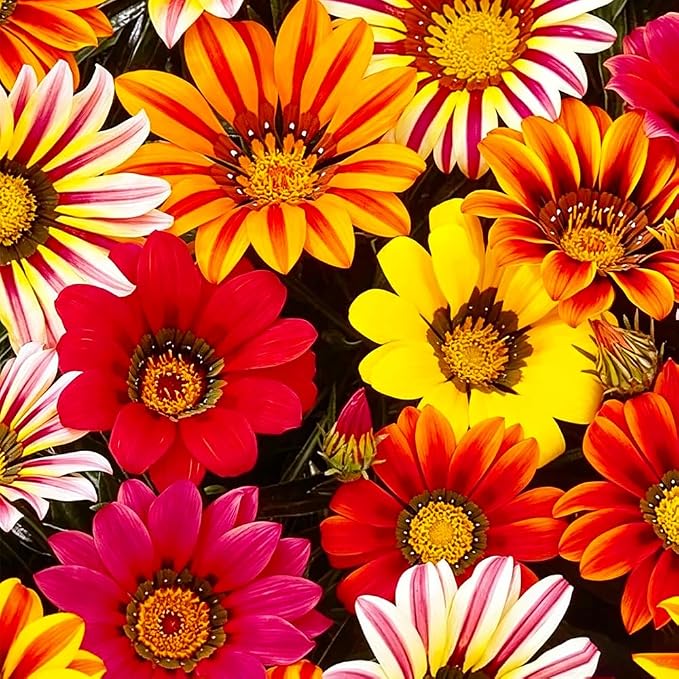
Bright, multicolored 4 flowers catch your eye quickly and keep blooming from spring to fall, making it perfect for anyone wanting a lively container garden in full sun. Its compact size and spread make it a practical choice for patios or flower beds.
Planting in spring is straightforward, and the mix thrives with regular watering in loam soil. You can group them in containers or hanging baskets, and their low spread helps fill space without overcrowding.
Watching the large blooms cover the plants from early summer to frost makes daily care rewarding.
Plants handle full sun really well and attract pollinators, adding life to your garden. They stay compact, around 8 to 10 inches tall, spreading 6 to 8 inches, which helps them fit nicely in containers.
The biggest highlight is the long bloom season and vibrant flowers. A downside is needing regular watering to keep them healthy.
These Gazania plants are praised for their impressive, colorful blooms that last through many months. The biggest challenge is keeping them watered enough to maintain vibrant health and continuous flowering.
Gardeners looking for bright, reliable flowers that thrive in full sun will appreciate this mix. Those wanting low-maintenance plants with less frequent watering might want to explore other options better suited to drought tolerance.
Pros
- Large, vibrant blooms cover plants completely
- Long blooming season from spring to fall
- Attracts pollinators for a lively garden
- Compact size fits well in containers
Cons
- Needs regular watering to stay healthy
- Spreads up to 8 inches, may need space
| Specification | Details |
|---|---|
| Sunlight Exposure | Full Sun |
| Expected Blooming Period | Spring to Fall |
| Moisture Needs | Regular Watering |
| USDA Hardiness Zone | 5 |
| Soil Type | Loam Soil |
8. Peggy Wonder Double Late Tulip Bulbs

Perfect for gardens with plenty of sunlight, Peggy Wonder Double Late Tulip Bulbs produce large, peony-style flowers that add soft pastel hues to your spring outdoors. Perfect for those wanting a standout flower container that extends spring color beyond usual tulip blooming times.
Planting these tulip bulbs requires a spot with full sun to partial shade and fertile, well-drained soil to thrive. Their moderately tall stems, reaching 14–18 inches, make them easy to arrange both in garden beds and indoor floral displays. Expect a mid to late spring flowering period, offering a nice delay compared to earlier tulips.
These tulips shine in their role with large flowers about 4 inches across, showing off layers of petals in pleasing soft pink, creamy white, pale lavender, and touches of green. The sturdy flower stems mean they stand well, although some notes mention their timely watering needs. While their indoor use is common, they handle outdoor conditions best in USDA zones 3-8.
These tulips are praised for their large, densely layered blooms that really bring a fresh look to spring gardens and floral arrangements. Common comments include the need for proper watering and well-drained soil to keep them healthy and looking their best.
Gardeners who want colorful late spring flowers in containers will find these bulbs rewarding. Those living outside USDA zones 3-8 or who cannot provide well-drained soils might want to consider other flower bulbs better suited to different conditions.
Pros
- Longer blooming period than many tulip varieties
- Large, attractive peony-style double blooms
- Suitable for both indoor and outdoor planting
- Colors blend softly for versatile garden use
Cons
- Requires moderate watering and well-drained soil
- Best suited to specific USDA hardiness zones
| Specification | Details |
|---|---|
| Sunlight Exposure | Full Sun to Partial Shade |
| Mature Size | 14–18 inches tall |
| Bloom Size | Approximately 4 inches across |
| Blooming Period | Mid to Late Spring |
| USDA Hardiness Zone | 3-8 |
| Moisture Needs | Moderate; Well-Drained Soil |
9. Cosmos Flower Seeds

Finding flowers that thrive in full sun without constant fuss can be a challenge for many gardeners. Easy to grow cosmos flower seeds are great for both beginners and seasoned green thumbs looking for colorful blooms that come back reliably year after year. Their biggest strength is how well they flourish with little care in a range of conditions.
Starting these seeds is straightforward, requiring standard outdoor planting in a sunny spot. They do well in containers and garden beds, providing flexibility on where to place them.
Day-to-day care is minimal, making them ideal for gardeners who want beauty without a lot of upkeep. Their ability to attract pollinators adds an extra bonus, turning any garden into a lively space.
Cosmos seeds do a solid job at producing vibrant flowers that suit container planting in full sun. They come in a generous package, enough for multiple plantings or larger garden areas. Most find them easy to grow and rewarding, but some note germination can vary and might need a little patience.
The seeds themselves are non-GMO, catering to those interested in natural planting options.
Many users appreciate how easy it is to grow vibrant cosmos flowers with little effort while creating a lively garden full of pollinators. A common drawback is that not every seed consistently germinates, requiring patience and sometimes additional planting to get the desired coverage.
Those wanting a splash of color in sunny container or garden spaces with minimal watering and care will find these seeds well-suited. Gardeners looking for guaranteed germination or indoor planting options might want to explore alternatives more tailored to those needs.
Pros
- Minimal care needed for abundant blooms
- Attracts bees, butterflies, and hummingbirds
- Large quantity of seeds included
- Works well in containers and beds
Cons
- Germination success may vary
- Limited to outdoor use only
| Specification | Details |
|---|---|
| Indoor Outdoor Usage | Outdoor |
| Quantity of Seeds | 1000 |
| Seed Type | Non-GMO |
| Plant Use | Container Gardens, Flower Beds, Borders |
10. Double Dwarf Petunia Seeds

Offering over 300 seeds in mixed vibrant colors, these Double Dwarf Petunias are perfect for gardeners wanting bright blooms in small spaces. They thrive in full sun, making them a great choice for balconies, containers, or garden beds that get plenty of daylight. Their compact size and long blooming season stand out as key benefits.
Setting them up requires well-draining sandy soil and moderate watering to keep the plants healthy. Their tolerance for heat and full sun means they don’t demand constant attention during hot months.
The flowers stay vibrant for months, attracting bees and butterflies, which livens up any container or small garden area without fuss.
Growth remains consistent at about 10-12 inches tall, fitting perfectly in tight areas. The mix of red, pink, purple, and white blooms adds a rich display that lasts through spring and summer.
Most find the plants sustain good health under heavy sun exposure, though some mention needing to watch watering levels to avoid dryness.
Plants maintain continuous, bright blooms attracting pollinators in full sun conditions. Watering needs are moderate but essential to avoid dry soil issues mentioned by some. They perform best when planted in sandy, well-drained soil to keep them healthy through hot seasons.
The compact growth and vibrant colors suit gardeners with limited space or those wanting containers that brighten balconies and windows. People dealing with heavy, poorly draining soil might want to consider alternatives better suited for those conditions.
Pros
- Vibrant mixed color blooms
- Compact size ideal for small spaces
- Long blooming season from spring to summer
- Heat and sun tolerant
Cons
- Requires regular moderate watering
- Can struggle if soil drainage is poor
| Specification | Details |
|---|---|
| Sunlight Exposure | Full Sun |
| Expected Blooming Period | Summer |
| Soil Type | Sandy Soil |
| Moisture Needs | Moderate Watering |
| Indoor Outdoor Usage | Indoor, Outdoor |
11. Armenian Grape Hyacinth Bulbs

Anyone looking to brighten up their garden or container with early spring charm will appreciate these Armenian Grape Hyacinth Bulbs. Ideal for full sun spots, their standout feature is the dense clusters of vibrant blue flowers that make a lively display just as the season changes.
Planting these bulbs in the fall is straightforward, especially in well-drained loam soil. They settle comfortably next to bulbs like tulips and daffodils, creating a longer spring color show. Though they prefer full sun, they tolerate partial shade, making them versatile around the yard or in pots.
Moderate watering keeps them happy without fuss.
The flower clusters reliably bloom on stems about 8 inches tall, producing a fresh blue that draws in bees and keeps deer and rabbits away. People commonly find the bulbs easy to grow and fragrant, but some mention the height might be modest for certain container arrangements. Their autumn planting paired with a spring flourish makes them a straightforward, rewarding addition.
The strongest praise highlights the bulbs’ reliable spring bloom and their scent, making outdoor spaces inviting early in the season. The most common concern relates to the limited height, which some find too short for larger container arrangements or taller garden borders.
Those who want early-season color in full sun and appreciate attracting pollinators will be satisfied. Anyone seeking taller flowers for dramatic container displays might want to pick different bulbs better suited for that purpose.
Pros
- Attracts bees and other pollinators
- Resistant to deer and rabbits
- Fragrant blooms brighten early spring
- Easy fall planting with guide included
Cons
- Plants only grow about 8 inches tall
- Best suited for well-drained loam soil
| Specification | Details |
|---|---|
| Expected Blooming Period | Spring |
| Sunlight Exposure | Full Sun |
| Expected Plant Height | 8 inches |
| Soil Type | Loam Soil |
| Moisture Needs | Moderate Watering |
| USDA Hardiness Zone | 4,5,6,7,8,9 |
12. Purple Alyssum Seeds

Purple Alyssum Seeds stand out for their vibrant purple blooms and strong fragrance that draws bees and butterflies. Perfect for gardeners wanting a lively, pollinator-friendly addition to full sun containers, these seeds offer an extended blooming period and easy growth, making them ideal for those seeking both beauty and simplicity.
Planting the seeds in well-drained loam or sandy soil outdoors is straightforward, with moderate watering supporting healthy growth. These flowers thrive from spring through fall, bringing consistent color without requiring much attention.
The plants grow to about 6 inches, fitting nicely in containers or borders where you want a low-maintenance, decorative touch.
Once established, these alyssum blooms last long and can self-seed, returning year after year especially in USDA hardiness zones 4 to 9. The seeds have a high germination rate and the plants tolerate drought well. Reviews praise their vibrant color and fragrance while noting they are frost-sensitive, limiting use in colder climates without protection.
The strongest praise highlights the flowers’ vibrant color and ability to attract pollinators throughout a long blooming season. The common complaint centers on their sensitivity to frost, limiting their use in colder areas without special care.
Gardeners who want an easy-care, colorful ground cover for sunny containers will appreciate these seeds. Those in colder climates or needing taller plants should consider alternatives better suited to frost and size needs.
Pros
- Attracts bees and butterflies naturally
- Long lasting blooms from spring to fall
- Low maintenance with moderate watering
- High germination rate for easy planting
Cons
- Frost-sensitive perennial, not cold-hardy
- Only grows up to 6 inches tall
| Specification | Details |
|---|---|
| Sunlight Exposure | Full Sun |
| Expected Plant Height | 6 inches |
| Soil Type | Loam Soil, Sandy Soil |
| Moisture Needs | Moderate Watering |
| USDA Hardiness Zone | 4-9 |
Comparison of Best Container Flowers for Full Sun
| Product | Usage | Sunlight Exposure | Blooming Period | Special Features |
|---|---|---|---|---|
| Perfect Plants Autumn Azalea | Outdoor | Full Sun | Spring to Fall | Attracts Pollinators, Deer Resistant |
| Hardy Hibiscus Mix | Outdoor | Full Sun | Summer | Attracts Pollinators |
| Purple Verbena Plant | Indoor, Outdoor | Full Sun | Summer to Fall | Compact, Extended Bloom Time |
| White Muhly Grass | Outdoor | Full Sun | Summer to Fall | Low Maintenance |
| Mixed Moss Rose Seeds | Indoor, Outdoor | Full Sun | Summer to Fall | High Germination Rate |
| Desert Rose Plant | – | – | – | – |
| Perennial Gazania Mix | Outdoor | Full Sun | Spring to Fall | Attracts Pollinators |
| Peggy Wonder Tulip Bulbs | Indoor | Full Sun to Partial Shade | Mid to Late Spring | Peony-Style Double Blooms |
| Cosmos Flower Seeds | Outdoor | Full Sun | – | Non-GMO |
| Double Dwarf Petunias | Indoor, Outdoor | Full Sun | Summer | Attracts Pollinators |
| Armenian Grape Hyacinth | Outdoor | Full Sun | Spring | Deer Resistant, Fragrant |
| Purple Alyssum Seeds | Outdoor | Full Sun | Spring to Fall | Drought Tolerant, Attracts Pollinators |
- UsageOutdoor
- Sunlight ExposureFull Sun
- Blooming PeriodSpring to Fall
- Special FeaturesAttracts Pollinators, Deer Resistant
- UsageOutdoor
- Sunlight ExposureFull Sun
- Blooming PeriodSummer
- Special FeaturesAttracts Pollinators
- UsageIndoor, Outdoor
- Sunlight ExposureFull Sun
- Blooming PeriodSummer to Fall
- Special FeaturesCompact, Extended Bloom Time
- UsageOutdoor
- Sunlight ExposureFull Sun
- Blooming PeriodSummer to Fall
- Special FeaturesLow Maintenance
- UsageIndoor, Outdoor
- Sunlight ExposureFull Sun
- Blooming PeriodSummer to Fall
- Special FeaturesHigh Germination Rate
- Usage–
- Sunlight Exposure–
- Blooming Period–
- Special Features–
- UsageOutdoor
- Sunlight ExposureFull Sun
- Blooming PeriodSpring to Fall
- Special FeaturesAttracts Pollinators
- UsageIndoor
- Sunlight ExposureFull Sun to Partial Shade
- Blooming PeriodMid to Late Spring
- Special FeaturesPeony-Style Double Blooms
- UsageOutdoor
- Sunlight ExposureFull Sun
- Blooming Period–
- Special FeaturesNon-GMO
- UsageIndoor, Outdoor
- Sunlight ExposureFull Sun
- Blooming PeriodSummer
- Special FeaturesAttracts Pollinators
- UsageOutdoor
- Sunlight ExposureFull Sun
- Blooming PeriodSpring
- Special FeaturesDeer Resistant, Fragrant
- UsageOutdoor
- Sunlight ExposureFull Sun
- Blooming PeriodSpring to Fall
- Special FeaturesDrought Tolerant, Attracts Pollinators
How to Choose the Best Container Flowers for Full Sun
Choose container flowers that thrive in direct sunlight, require minimal watering, and resist heat stress to ensure healthy growth. Selecting plants suited to full sun conditions prevents frequent replacements and reduces maintenance, saving both time and money in the long run.
Sunlight Tolerance
Plants exposed to hours of direct sunlight often show signs of stress through leaf scorch or sunburn, especially during peak afternoon hours. This not only affects the visual appeal but can stunt overall growth.
Some varieties handle long exposures better, maintaining green, healthy leaves even under intense rays.
Choosing species with high sunlight tolerance means less risk of damaged foliage and a more vibrant display throughout the day. Look for plants rated to withstand at least 6-8 hours of strong sun, with leaves that have a tougher, waxy texture or a thickness that helps prevent rapid water loss.
Container Size and Drainage
Containers that are too small restrict root growth and cause the soil to dry out quickly, leading to stressed plants. Larger pots, usually starting at around 10-12 inches in diameter for flowering plants, provide more space for roots and delay drying.
Drainage holes are critical to avoid water accumulating at the bottom, which causes root rot.
Pots made from materials like terra cotta offer breathability but may dry out faster, while plastic holds moisture longer and is lighter but sometimes less stable. Heavier ceramic or stone pottery keeps planters steady on windy patios. Ensuring at least one or two sizable drainage holes is essential to keep water flowing freely out.
Watering Needs
Plants in containers under strong sun need more frequent watering because the soil heats up and dries quickly. Some can tolerate brief dry periods, but most prefer consistent moisture without being soggy. The soil type matters too; mixes with good moisture retention help keep roots hydrated longer between waterings.
Those who have handled different pots know that porous materials like clay require watering twice as often compared to plastic or glazed pots. Matching the watering schedule to the soil and container type prevents stress-induced wilting or root diseases. A weekly deep soak supplanted with light top-ups during hot spells usually works well.
Growth Habit and Maintenance
Plants that grow too large or spread too wide soon outgrow containers, losing their shape or tipping over. Compact varieties fitting typical container sizes of 12-16 inches are easier to manage and keep looking tidy.
Regular deadheading encourages fresh blooms and keeps the plant from going leggy.
Those struggling with frequent pests or fungal issues know spending time on treatments gets tiring fast. Choosing plants with natural resistance reduces maintenance effort.
Pruning should be straightforward, stiffer or thorny stems complicate routine care. A balance of manageable size, easy upkeep, and pest resilience makes daily gardening smoother.
Bloom Duration and Color
Flowers that last just a week or two don’t justify the effort of growing in containers exposed to hot sun. Longer blooming periods, stretching several months, provide continuous color without constant replanting. Vivid, fade-resistant petals keep the planter looking lively even after peak sun.
Varieties offering a range of bloom shapes and sizes allow mixing for visual interest without overcrowding the pot. Rounded, trumpet, or daisy-like flowers each contribute differently to container style.
Choosing plants known for sustained, bright blooms in full sun means a striking display that holds up over time.
Optimal Watering and Fertilizing Techniques for Container Flowers in Full Sun
Container flowers in full sun need consistent watering because soil in pots dries out faster than garden beds. Check the moisture daily by sticking your finger about an inch into the soil; if it’s dry at that depth, it’s time to water. Avoid letting the soil stay soggy as that can lead to root rot.
Fertilizing is equally important for healthy blooms. Use a balanced, water-soluble fertilizer every two weeks during the growing season to provide essential nutrients. Slow-release granular fertilizers can also work but might not be enough for fast-growing flowers.
- Use pots with drainage holes to prevent waterlogging.
- Water early in the morning or late in the afternoon to reduce evaporation.
- Flush pots with water periodically to prevent salt buildup from fertilizers.
Regular attention to watering and feeding schedules helps flowers thrive under intense sun.
Common Mistakes to Avoid When Growing Container Flowers in Sunny Locations
One common mistake in sunny container gardens is using containers without drainage holes. Excess water will accumulate, causing roots to rot quickly under hot sun.
Another is choosing soil that retains too much moisture; standard potting mix with good drainage suits these conditions best.
Overcrowding flowers in a single pot restricts airflow and stresses plant growth. Full sun plants often grow vigorously, so give them enough room to avoid competition for water and nutrients.
- Avoid neglecting to adjust watering frequency during heatwaves; plants need more water when the sun is strong.
- Do not use garden soil in containers, it compacts and dries unevenly.
- Steer clear of placing containers where they receive reflected heat from walls or pavements, as this can cause additional heat stress.
Sticking to these guidelines helps prevent common setbacks in sunny container flower care.
Comparing Annuals and Perennials for Long-Lasting Full Sun Container Gardens
Annual container flowers tend to bloom profusely throughout the season but last only one growing cycle. Geraniums and petunias are popular examples that respond well to full sun, offering quick color and variety. They require replanting each year but often reward effort with abundant blossoms.
Perennials provide a longer-term solution. Plants like lavender and sedum withstand full sun and return year after year.
Growth may be slower initially, and some pruning is necessary, but the investment reduces replanting labor.
- Annuals offer more immediate color changes, good for seasonal displays.
- Perennials build structure and consistency in container gardens.
- Combining both types can balance constant bloom with sustainable maintenance.
Deciding between annuals and perennials depends on how much time you want to spend replanting and what look you prefer in your container garden.
People Also Asked
How Much Sunlight Do Container Flowers Need in Full Sun?
Container flowers in full sun generally need at least six hours of direct sunlight daily. Monitoring the plant’s leaf color helps; dull or crispy leaves might mean the sun exposure is too harsh or the watering is insufficient.
What Is the Ideal Pot Size for Container Flowers in Full Sun?
A pot size of 12 to 16 inches in diameter works well for many container flowers in full sun. This size allows enough soil to retain moisture while giving roots room to spread out without drying too quickly.
Are Container Flowers Safe for Pets or Children in Direct Sun?
Some container flowers are safe for pets and children, while others can be toxic. Checking the specific plant variety for toxicity is important, along with placing containers where kids and pets cannot easily reach if unsure.
How Often Should I Water Container Flowers Placed in Full Sun?
Water container flowers in full sun daily during hot weather to keep the soil moist but not soggy. Early morning watering can reduce evaporation and help plants withstand the heat better throughout the day.
What Common Problems Occur with Container Flowers Under Intense Sunlight?
Common problems include wilting, leaf scorch, and soil drying out quickly. Using pots with good drainage and applying mulch on top of the soil can help reduce moisture loss and protect roots from heat damage.
Conclusion
The key factors for choosing container flowers for full sun include selecting plants that can handle heat without wilting, ensuring the container has good drainage to prevent water buildup, and picking flowers that fit the size and style of your space. Paying attention to how much care the plants need will also save time during the growing season.
Consider the size of your patio or balcony and how much effort you want to spend watering and maintaining the flowers. Staying within your budget helps keep gardening enjoyable rather than stressful. Check the comparison table and options above to find flowers that suit your setting and routine best.

I’m Jake Thompson, and I’ve spent over a decade working on lawn mowers, from small push mowers to big riding tractors. I write about starting problems, blade sharpening, carburetor cleaning, oil changes, and seasonal maintenance. My goal is to give you clear, step-by-step advice so you can handle common mower issues yourself and keep your lawn looking sharp all season.