Top 12 Best Tomatoes for Container Planting You Must Try
Growing tomatoes in containers often ends in disappointment when the plants don’t thrive or the fruits fail to develop properly. Choosing the best tomatoes for container planting helps avoid common issues like poor drainage, insufficient root space, and weak stems.
Those problems usually come from picking the wrong tomato variety or container size rather than from general care mistakes.
The best tomatoes for container planting tend to be smaller, determinate types that stay compact, usually growing between 1 and 3 feet tall. Containers should hold at least 5 gallons of soil to support healthy tomato roots and prevent drying out too quickly.
Good drainage holes and sturdy containers also make a big difference, helping control moisture and keeping plants stable as they grow.
Need a Quick Check?
| Image | Product | Price |
|---|---|---|
Our Top Picks 1  | Land Guard Grow Bags | Check Price |
Our Top Picks 2  | Bonnie Plants Tomato 4-Pack | Check Price |
Our Top Picks 3  | Cherry Tomato Plants Duo | Check Price |
Our Selected Top 12 Tomatoes for Container Planting Worth Your Money
This list features twelve tomato varieties ideal for growing in containers, each reviewed for performance in limited space. You will learn about their growth habits, flavor, suitability for different gardeners, and both advantages and drawbacks to help you choose the best fit for your needs.
1. Land Guard Fabric Grow Bags 5 Gallon 4-Pack
Lightweight yet sturdy, these 5-gallon fabric grow bags are ideal for anyone looking to grow tomatoes in limited spaces. Their breathable material stands out, keeping soil well-drained and roots healthy, which is crucial for container tomatoes.
Getting started is simple since their heavy-duty handles help you move the bags around without spilling soil. The fabric prevents roots from circling, which promotes better growth compared to traditional pots. Daily watering doesn’t pool because moisture drains easily through the breathable material, avoiding overwatering issues.
Built with high-strength woven fabric, the bags hold up well under the weight of soil and plants without tearing. Reviews often mention how plants flourish thanks to good airflow and drainage. Some find the black color absorbs heat, which may not suit very hot climates.
Plants generally grow healthier due to good drainage and root aeration. Commonly noted drawback involves soil warming too much in strong sun because of the black fabric color.
People growing tomatoes in moderate climates with limited garden space will find these bags practical. Those needing larger containers or in very hot areas might seek alternatives with lighter colors or bigger sizes.
Pros
- Lightweight yet strong fabric
- Excellent water drainage
- Prevents root circling
- Heavy-duty handles for easy moving
Cons
- Black color can increase soil heat
- Limited to 5-gallon capacity
| Specification | Details |
|---|---|
| Color | Black |
| Product Style | Garden |
| Planter Form | Bag |
| Shape | Round |
| Pattern | Solid |
2. Bonnie Plants Celebrity Hybrid Tomato Live Plants 4-Pack
Celebrity Hybrid tomato plants suit gardeners looking for a reliable, disease-resistant tomato that thrives in containers and produces sizable fruit. Their key strength is dependability combined with the convenience of included plant food, making them a smart choice for straightforward tomato growing without fuss.
Setting up involves planting in a container with good drainage and ensuring full sun exposure. The included Miracle-Gro Pour & Feed Singles simplify feeding by requiring no measuring or mixing, just snap open and use every 10 to 14 days. These features keep care simple and consistent for gardeners who want healthy, steady growth without extra hassle.
The plants deliver solid 8 oz. tomatoes around 65 days after planting, showing steady growth and good disease resistance. Built for zones 3 through 7, they hold up well in various climates.
Reviews often praise their reliability and fruit size, while some note the feeding schedule can feel frequent for casual growers. Still, the kit’s guidance keeps things manageable.
The plants are praised for reliably producing healthy, large tomatoes and standing up well to disease. The routine use of the included plant food simplifies feeding, though some find the 10 to 14 day interval a bit demanding for casual gardeners.
Those wanting dependable, moderately sized tomatoes in most climates will appreciate this option. Gardeners seeking faster harvests or less frequent feeding might want to explore other varieties.
Pros
- Disease-resistant for less plant loss
- Produces sizable fruit up to 8 oz.
- Includes ready-to-use plant food
- Suitable for a wide range of climates
Cons
- Feeding required every 10 to 14 days
- Not the fastest to mature (65 days)
| Specification | Details |
|---|---|
| Sunlight Exposure | Full Sun |
| USDA Hardiness Zone | 3, 4, 5, 6, 7 |
| Fruit Size | Up to 8 oz. |
| Days to Maturity | 65 days |
3. Set of 2 Cherry Tomato Plants
Gardening in limited spaces often means finding plants that thrive without a sprawling garden bed. Small-footprint cherry tomato plants grow well in containers on patios or balconies, making them a solid pick for gardeners looking to enjoy sweet, fresh tomatoes without needing much room.
Their quick growth suits anyone eager to see fast results in a sunny spot.
Starting from two small plants in 4-inch pots, these cherry tomatoes need a good sunny area and consistent watering to do well. They do best in well-drained soil, which you’ll want to keep moist but not soggy.
Planted together, they’ll grow rapidly, reaching heights between 3 and 6 feet, so a sturdy spot or some support might be needed as they grow taller in your container space.
The plants produce small, round, red tomatoes that are sweet and perfect for snacking or salads. They respond well to regular watering in full sun and will fill out a container nicely over the growing season. Most users enjoy the early fruiting and taste, while some wish the plants stayed shorter or needed less support as they grow tall in confined spaces.
Cherry tomato plants produce sweet fruit fairly quickly and fill out containers nicely once grown. One common challenge is their height, which can reach up to 6 feet, meaning support is often necessary to keep them upright in confined planting spaces. They require steady care with watering in a sunny location.
Gardeners with sunny balconies or patios who want fresh tomatoes without a big garden space will find these plants a good fit. Those looking for low-maintenance or smaller plants might want to consider varieties that stay more compact or require less support.
Pros
- Fast-growing with early fruit production
- Suitable for container or patio planting
- Produces sweet, small, round tomatoes
- Two plants per pot for fuller growth
Cons
- Plants grow tall, may need staking
- Requires full sun and consistent watering
| Specification | Details |
|---|---|
| Sunlight Exposure | Full Sun |
| Soil Type | Well drained soil |
| Plant Height | 3-6 feet tall |
| Starter Plants per Pot | 2 starter plants, 4-8″ tall |
| Number of Pots Included | 2 pots for planting |
4. San Marzano Tomato Live Plant 2-Pack

Two live San Marzano tomato plants come together in one pot, perfect for container planting on patios or balconies. Their standout feature is adaptability to small spaces while still producing those classic elongated red tomatoes that make San Marzano tomatoes so prized.
Setting them up is straightforward, place the pot in a sunny spot with well-draining soil and keep a consistent watering routine. The plants arrive about 5–8 inches tall, so letting them settle in before steady growth starts is key.
They need moderate watering and benefit from regular sunlight to thrive well in containers. Leaves and plant sizes do vary with conditions, which feels natural for an outdoor planting.
The plants often produce a good yield of elongated red tomatoes that taste authentic under the right conditions. They’re sturdy live plants that show natural variation in size and appearance depending on seasons. Reviewers frequently note how well they grow in containers, though some mention appearance variation can be less predictable.
The strong point is their adaptability to container gardens while the main drawback is variability in plant growth.
These live plants are praised for growing well in small container spaces and producing the classic San Marzano tomato flavor. A common issue is that plant size and shape can change a lot depending on the season and care, resulting in some unpredictability.
Gardeners with sunny balconies or patios who want authentic San Marzano tomatoes in a compact setup will appreciate these plants. Those looking for uniform size or exact appearance every time might prefer a different option.
Pros
- Includes 2 plants in one pot
- Suitable for outdoor and container growing
- Produces authentic elongated red tomatoes
- Plants ship 5–8 inches tall
Cons
- Plant size and leaf count can vary widely
- Appearance depends heavily on growing conditions
| Specification | Details |
|---|---|
| Indoor/Outdoor Usage | Indoor, Outdoor |
| Sunlight Exposure | Full Sun |
| Soil Type | Well Draining Soil |
| Moisture Needs | Moderate Watering |
5. Self-Watering Tomato Planter with Trellis 2-Pack

Gardeners with limited outdoor space or balcony growers will find this self-watering tomato planter with a trellis especially suited for container planting. Its standout feature is the bottom water reservoir which ensures plants get consistent moisture without daily watering.
Setting up is straightforward thanks to a square, art deco planter box designed with live plants in mind. The elevated planter walls hold more soil, supporting healthy root development.
The corner towers provide vertical room to train your tomato plants upwards, which saves space and helps plants spread out naturally. The air hole circulation adds fresh oxygen to the roots, encouraging strong growth.
Moisture retention works well through the water reservoir, keeping plants hydrated longer than typical planters. Built with solid materials in a grizzly color, the planter holds its shape nicely and resists common wear.
Positive notes mention how well the air circulation supports root health. Some find the size limiting if larger tomato varieties are intended, as vertical space, while increased, still has bounds.
The self-watering reservoir combined with air hole circulation effectively maintains healthy root moisture and oxygen levels, leading to better plant vitality. The most common downside is limited space for tomatoes that grow extensively, which may restrict larger varieties.
Growers aiming for space-saving container tomatoes and easy watering will appreciate this planter. Those needing extra large root zones or more horizontal spread should look at larger or open designs instead.
Pros
- Consistent bottom watering system
- Elevated planter for more soil volume
- Four corner towers maximize vertical growth
- Air hole circulation supports root oxygen
Cons
- Size may be tight for very large tomato plants
- Cleaning around corner towers can be tricky
| Specification | Details |
|---|---|
| Color | Grizzly |
| Product Style | Art Deco |
| Planter Form | Box |
| Shape | Square |
| Pattern | Solid |
6. Cherry Tomato Seeds 200 Count

Offering 200 premium cherry tomato seeds, this pack suits anyone wanting a steady supply of sweet, bite-sized tomatoes straight from a container garden. Its single biggest strength lies in producing abundant clusters of bright red tomatoes that keep coming all season long.
Starting the seeds is straightforward since they come in a moisture-controlled pouch that preserves freshness until planting. Once sprouted, the plants thrive in containers, delivering continuous harvests throughout summer.
The seeds’ excellent germination means less waiting and more gardening enjoyment without needing complicated care routines.
Plants grown from these seeds form long, heavy trusses loaded with ultra-sweet cherry tomatoes ideal for snacking or salads. Seed vigor and flowering are reliable, supporting steady fruiting. The prime complaint is that being a seed packet, growing success depends on conditions and care, obviously not guaranteed by just the seeds.
Seeds come in a carefully moisture-controlled pouch which preserves freshness, supporting excellent germination and continuous tomato production. Most common limitation comes from external factors; actual growth and yield depend heavily on environment and care.
Ideal for gardeners who want a long-lasting supply of sweet cherry tomatoes from containers. Those seeking instant plants or guaranteed crops might consider seedlings or nursery-bought options instead.
Pros
- High seed count for extended planting
- Seeds sealed for extended shelf life
- Produces sweet, bite-sized tomatoes
- Continuous production through summer
Cons
- Dependent on grower’s care and conditions
- No guarantee of sprouting in all environments
| Specification | Details |
|---|---|
| Seed Count | 200 Count |
| Weight | 0.59 g |
| Seed Packaging | 600-milligram freshness pouch |
| Season | Fresh for 2026 growing year |
| Fruit Type | Sweet cherry tomatoes |
7. Grow Bags 5 Gallon 5-Pack with Handles

Grow Bags 5 Gallon 5-Pack with Handles offers a practical way to grow tomatoes in containers, especially suited for gardeners needing sturdy, reusable pots. Its biggest strength lies in the heavy-duty fabric that supports healthy root development and makes moving plants easy.
Setting up the bags is straightforward because their durable fabric and handles make filling and repositioning simple. The breathable material ensures your tomatoes get enough airflow and drainage, preventing water buildup and root problems. The handles let you carry the bags even when filled with soil and plants, so managing your container garden doesn’t turn into a chore.
These fabric pots promote strong root growth by avoiding root circling, which helps tomato plants absorb nutrients better and produce more fruit. Built from thick 300G BPA-free fabric, they feel tough and long-lasting. Positive feedback highlights how well the bags drain and support plant health.
A frequent complaint points to some tearing if handled roughly, emphasizing careful use.
The fabric’s strength and breathability receive strong praise as they support fast, healthy tomato growth. Some people have noticed tears when moving the bags carelessly, highlighting the need to handle them carefully despite the tough material.
Gardeners looking for lightweight, reusable containers for tomatoes will appreciate this set. Those needing colorful options or extra rugged pots for rough handling might want to consider other products.
Pros
- Durable, tear-resistant fabric
- Breathable for healthy roots
- Easy to carry with strong handles
- Prevents root circling effectively
Cons
- Fabric can tear if handled roughly
- Only comes in black, no color options
| Specification | Details |
|---|---|
| Material | 300G BPA-free nonwoven fabric |
| Capacity | 5 Gallon |
| Color | Black |
| Shape | Cylindrical |
| Handles | Widened X-stitched |
| Pack Size | 5-Pack |
8. Sow Right Seeds Classic Tomato Seed Collection
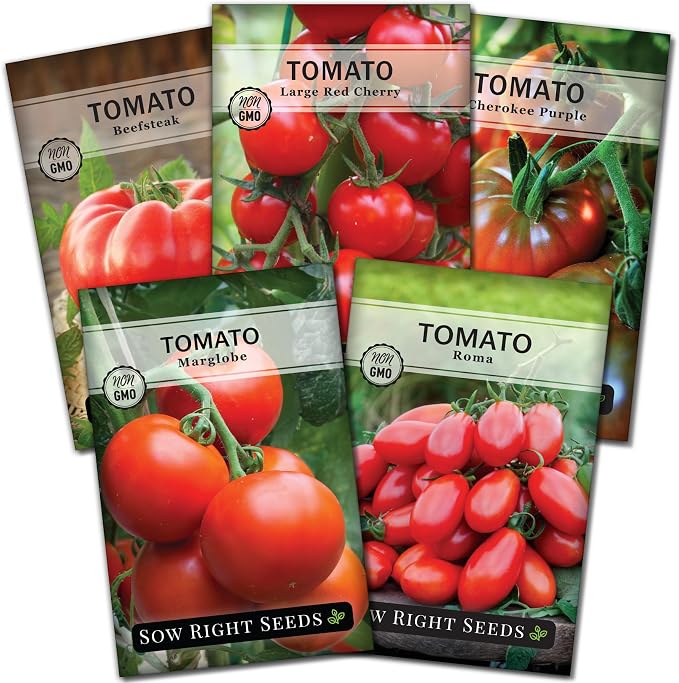
Growing tomatoes in containers becomes more enjoyable with the Classic Tomato Seed Collection. Ideal for gardeners who want a variety of heirloom tomatoes that perform well in limited space, it offers a mix of familiar and flavorful types, making the harvest season rewarding for diverse tastes.
Starting the seeds indoors or directly planting them outside during spring is straightforward. Each packet contains seeds from well-loved varieties like Cherokee Purple and Roma, ensuring a high germination rate.
Regular watering and full sun exposure help keep these plants thriving, and their ability to attract pollinators gives an added boost in container settings.
The seed collection delivers on producing large, tasty tomatoes across different varieties. The heirloom seeds offer much better flavor compared to typical supermarket types. Packaging the seeds in separate packets keeps them organized.
Some mention the usual challenges with watering and sun needs, but that’s part of growing tomatoes anywhere. The seeds germinate reliably and yield good crops.
The seeds have a high germination rate and produce flavorful heirloom tomatoes, making them a solid choice for container gardening. Most users appreciate the variety but point out that the plants need consistent watering and plenty of sun to do well.
Gardeners looking for multiple tomato types with great taste will find this collection appealing. Those who lack sunny spots or struggle with regular watering might want to consider easier tomato varieties or different plants better suited to low-light or low-maintenance conditions.
Pros
- Five popular heirloom tomato varieties included
- High germination rate for successful planting
- Attracts pollinators to your garden space
- Suitable for both indoor and outdoor growing
Cons
- Requires regular watering to thrive
- Needs full sun, limiting some planting locations
| Specification | Details |
|---|---|
| Indoor Outdoor Usage | Indoor, Outdoor |
| Expected Blooming Period | Spring to Summer |
| Sunlight Exposure | Full Sun |
| Expected Planting Period | Spring to Summer |
| Moisture Needs | Regular Watering |
| Special Feature | Attracts Pollinators, High Germination Rate |
9. Potato Grow Bags 10 Gallon 5-Pack

Great for growing tomatoes in small spaces, these 10-gallon potato grow bags offer durable and breathable containers that work well for container planting. Perfect for gardeners looking to avoid root circling and improve drainage, their biggest strength lies in how they promote healthy root growth while being reusable over years.
Setting up is straightforward, you just fill the bags with soil and plant your tomatoes like you would in a regular pot. The breathable non-woven fabric keeps soil from waterlogging while letting oxygen reach the roots. Handles are sturdy and well-stitched, so moving them around is easy, even when full.
The visualization window provides a simple way to check on root development without disturbing the plant.
These bags perform their main job of supporting plant health and drainage very well. The thick 300g fabric is strong and durable for at least three years of use. Many appreciate the ventilation that prevents roots from circling inside the bag.
Some have noted the bags can dry out faster than traditional pots, requiring attentive watering.
Many find the breathable fabric valuable for preventing root circling and promoting healthy plant growth, though the bags tend to dry out quicker and need regular watering. The durable handles and visualization window make routine care and harvesting easier.
Anyone wanting a reusable, lightweight container with good aeration will appreciate these bags, especially in limited space gardens. Those who prefer lower maintenance or less frequent watering might look for thicker or self-watering pots instead.
Pros
- Durable fabric lasts over three years
- Excellent drainage through breathable material
- Sturdy handles for easy movement
- Visualization window for root inspection
Cons
- Can dry out soil faster than traditional pots
- May need more frequent watering attention
| Specification | Details |
|---|---|
| Material | 300g thick non-woven fabric |
| Capacity | 10 Gallon |
| Color | Black |
| Handle | Polypropylene webbing with X-shaped stitching |
| Reusable Lifetime | More than 3 years |
| Special Feature | Visualization window |
10. Cherry Tomato Seeds 3 Varieties

Compact and colorful, this seed pack includes three cherry tomato varieties suited for container gardening and small patios. Ideal for gardeners seeking variety and continuous harvests, its biggest strength lies in offering multiple tomato types in one pack, delivering both sweet and vibrant fruits through the growing season.
Planting starts in spring with untreated seeds in loam soil that receives full sun. The Tiny Tim thrives in containers, while the other two varieties extend harvests through indeterminate vines outdoors.
Regular watering supports steady growth, and disease and pest resistance reduce the care needed, making daily garden maintenance straightforward for beginners and seasoned growers alike.
Seeds boast a high germination rate and produce healthy plants that grow up to 7 feet tall when given space. The combination of small and larger cherry tomatoes keeps the harvest interesting with red and yellow fruits.
Most feedback highlights the reliable and flavorful yields, though some find the taller vines require extra support and space management in smaller patios.
The seed pack consistently produces flavorful and abundant tomatoes that keep coming throughout the season. Regular care is important since some of the taller indeterminate vines need support, which can pose a challenge for tightly spaced patios or containers.
Those who want a variety of cherry tomatoes and have room for taller plants will enjoy these seeds. Small-space gardeners comfortable with managing vine growth can benefit most. Gardeners lacking enough sunlight or space might prefer more compact or bush-type tomato varieties.
Pros
- Includes three distinct cherry tomato varieties
- High germination rate for reliable growth
- Disease and pest resistant plants
- Suitable for containers and outdoor gardens
Cons
- Taller vines need extra support in small spaces
- Untreated seeds require attentive watering
| Specification | Details |
|---|---|
| Expected Blooming Period | Spring to Summer |
| Sunlight Exposure | Full Sun |
| Expected Plant Height | 7 feet |
| Soil Type | Loam Soil |
| Moisture Needs | Regular Watering |
| USDA Hardiness Zone | 3-11 |
11. Dwarf Duo Tiny Tim Red & Yellow Tomato Seeds

Compact size is often what draws people to these seeds first. Perfect for anyone with limited outdoor space or a balcony, they produce bright red and yellow cherry tomatoes without needing a big garden.
Their biggest strength lies in their dwarf growth habit that suits container gardening.
Planting these seeds in pots or raised beds is straightforward thanks to their easy-grow nature. They thrive with full sun exposure and don’t require much fuss to produce fruit.
Placed outdoors on a patio or near a sunny window, these seeds germinate well and produce plenty of colorful tomatoes in a small footprint.
Yield from these dwarf plants is impressive given their size, producing a steady harvest of flavorful cherry tomatoes. They grow only 12–18 inches tall, making them manageable in tight spots. Most find the germination rate high and reliable, though some note that the compact nature means smaller overall harvest than larger varieties.
Many praise the high germination rate and vibrant colors of the tomatoes, making it enjoyable for small-space gardeners. A common drawback is the smaller yield compared to bigger tomato plants due to the dwarf size. These tomatoes maintain good flavor despite their size.
Ideal for gardeners limited by space who want flavorful cherry tomatoes easily grown outdoors. Not the best choice for those needing large quantities or indoor cultivation, as the seeds are better suited for sunlit outdoor conditions on patios or balconies.
Pros
- Compact size ideal for container planting
- High germination rate for reliable growing
- Includes red and yellow tomato seeds
- Low maintenance and easy to grow
Cons
- Plants produce smaller yields than large tomato varieties
- Suitable primarily for outdoor planting, limited indoor use
| Specification | Details |
|---|---|
| Seed Count | 200+ (100+ red, 100+ yellow) |
| Plant Height | 12–18 inches |
| Sunlight Exposure | Full Sun |
| Indoor/Outdoor Use | Outdoor |
| Seed Type | Heirloom & Non-GMO |
12. Organic Non-GMO Beefsteak Tomato Seeds

Organic Non-GMO Beefsteak Tomato Seeds suit gardeners looking for natural, healthy produce and a large harvest. Their biggest strength is being USDA Certified Organic and Non-GMO, which guarantees a pure and safe seed source for container planting.
Starting these seeds indoors or outdoors requires some patience, but the generous 60-seed packet gives plenty of chances to succeed. Seeds prefer full sun and regular watering to thrive.
Soil should be well-draining, like loam or sandy types, ensuring no waterlogging. Attracting pollinators naturally supports fruit development, especially during spring and summer planting periods.
Growers can expect plants to reach about 60 inches in height, producing big, beefsteak tomatoes ideal for containers. The seed packet promises replacement if seeds don’t germinate, offering added confidence.
Most note vigorous growth and healthy yields, though some struggle with slower starts or variable germination rates.
Most feedback praises the seed packet’s size and organic certification, assuring healthy and plentiful tomatoes. Occasional complaints focus on erratic germination speed that can frustrate growers starting their crops. Replacement offers ease of mind in such cases.
This seed works well for gardeners committed to organic practices and container growth in sunny spots. Anyone wanting immediate or uniformly fast results might look for hybrid seeds with guaranteed rapid sprouting instead.
Pros
- USDA Certified Organic and Non-GMO seeds
- Generous packet with 60 seeds
- Attracts pollinators for better fruit set
- Wide zone tolerance (3-11)
Cons
- Some seeds may germinate slower than expected
- Requires consistent watering and full sun
| Specification | Details |
|---|---|
| Sunlight Exposure | Full Sun |
| Expected Plant Height | 60 inches |
| Expected Planting Period | Spring, Summer |
| Soil Type | Loam, Sandy, Well-draining |
| Moisture Needs | Regular Watering |
| USDA Hardiness Zone | 3-11 |
Best Tomatoes for Container Planting Comparison Table
| Product | Usage | Sunlight | Special Features | USDA Zone |
|---|---|---|---|---|
| Land Guard Grow Bags | Container Bag | – | – | – |
| Bonnie Plants Tomato 4-Pack | Tomato Plants | Full Sun | – | 3-7 |
| Cherry Tomato Plants Duo | Tomato Plants | Full Sun | – | – |
| San Marzano Tomato 2-Pack | Tomato Plants | Full Sun | Moderate Watering | – |
| Self-Watering Tomato Planters | Container Planter | – | – | – |
| Cherry Tomato Seeds 200ct | Tomato Seeds | – | – | – |
| 5 Gallon Grow Bags 5-Pack | Container Bags | – | – | – |
| Sow Right Tomato Seeds | Tomato Seeds | Full Sun | Attracts Pollinators | – |
| Potato Grow Bags 10 Gal | Grow Bags | – | – | – |
| Cherry Tomatoes 3 Varieties | Tomato Plants | Full Sun | Disease Resistant | 3-11 |
| Dwarf Tiny Tim Seeds | Tomato Seeds | Full Sun | High Germination | – |
| Organic Beefsteak Seeds | Tomato Seeds | Full Sun | Attracts Pollinators | 3-11 |
- UsageContainer Bag
- Sunlight–
- Special Features–
- USDA Zone–
- UsageTomato Plants
- SunlightFull Sun
- Special Features–
- USDA Zone3-7
- UsageTomato Plants
- SunlightFull Sun
- Special Features–
- USDA Zone–
- UsageTomato Plants
- SunlightFull Sun
- Special FeaturesModerate Watering
- USDA Zone–
- UsageContainer Planter
- Sunlight–
- Special Features–
- USDA Zone–
- UsageTomato Seeds
- Sunlight–
- Special Features–
- USDA Zone–
- UsageContainer Bags
- Sunlight–
- Special Features–
- USDA Zone–
- UsageTomato Seeds
- SunlightFull Sun
- Special FeaturesAttracts Pollinators
- USDA Zone–
- UsageGrow Bags
- Sunlight–
- Special Features–
- USDA Zone–
- UsageTomato Plants
- SunlightFull Sun
- Special FeaturesDisease Resistant
- USDA Zone3-11
- UsageTomato Seeds
- SunlightFull Sun
- Special FeaturesHigh Germination
- USDA Zone–
- UsageTomato Seeds
- SunlightFull Sun
- Special FeaturesAttracts Pollinators
- USDA Zone3-11
How to Choose the Best Tomatoes for Containers
Selecting tomatoes with compact growth, disease resistance, and high yield is essential for container planting. These traits ensure healthy plants that fit smaller spaces and reduce maintenance, ultimately saving time, effort, and money by preventing common problems and maximizing harvest.
Container Suitability
Tomatoes planted in containers often struggle when the pot is too small, leading to stunted growth as roots lack proper space. Root systems of many varieties need depth around 12 to 18 inches and enough width to spread out.
Without this, plants can become root-bound, which reduces nutrient uptake and overall vigor. Containers that are too shallow or narrow restrict root development, causing yellowing leaves and poor fruit set.
Picking varieties that naturally stay compact or have smaller root demands makes a big difference. Containers with a volume around 5 gallons or more usually work well for most tomatoes. Soils and nutrients are limited in containers compared to ground planting, requiring plants that can adapt to these restrictions by efficiently using space.
Avoid large, sprawling types for small pots to prevent overcrowding.
Plant Type and Variety
Choosing between determinate and indeterminate types impacts how space is used in containers. Determinate plants stop growing at a certain height, making them easier to manage in tight spaces.
They usually set fruit all at once, which suits containers on small patios. Indeterminate types keep growing and producing fruit longer but require more support and space.
Varieties bred with disease resistance suited for container conditions avoid common problems like blight and mildew that happen in confined, moist environments. Smaller fruits often yield better in pots, as large-fruited types may not mature fully without enough nutrients. Look for those labeled resistant and suitable for containers to reduce hassle.
Care and Maintenance Needs
Plants in containers dry out faster, so watering frequency can be a daily need during hot weather. Varieties that tolerate some drought cope better with occasional neglect but still need consistent moisture to avoid fruit cracking. Feeding is more critical since soil is limited, requiring regular, balanced fertilization.
Slow-release pellets or water-soluble fertilizers applied weekly work well.
Pruning becomes important to manage limited space and airflow. Indeterminate types especially benefit from removing suckers and staking since sprawling stems can get tangled or damage the container.
Choose plants with lower staking demands or bushy types if pruning isn’t practical.
Climate and Light Adaptability
Sunlight exposure often varies with container placement, such as balconies or indoors near windows. Tomatoes that handle partial shade produce healthier plants where light is inconsistent.
Some varieties also resist heat stress, preventing leaf scorch and blossom drop on hot patios. Cold tolerance matters in cooler climates or early spring, allowing longer growing seasons.
Indoor containers need selections that thrive with less light and stable temperatures, whereas outdoor pots require plants that endure fluctuating weather. Match the variety’s adaptability to expected microclimate conditions to avoid slow growth or poor fruiting in restrictive spots.
Harvest and Usage
Faster-maturing plants benefit container gardeners by allowing multiple harvests before the growing season ends. Continuous fruiting varieties make the most of limited space and time.
Flavor and texture often change with container conditions; selecting types known for good taste even under stress avoids bland or mealy fruit.
Storage life matters since many container-grown tomatoes are picked fresh for immediate use. Firmness at harvest helps fruits last a week or more on the counter, preventing waste.
Using varieties suited to container freshness ensures better meals from smaller yields.
Optimizing Sunlight and Watering Schedules for Container Tomatoes
Tomato plants need consistent exposure to sunlight to thrive, ideally receiving at least 6 hours per day. Placing containers where they can catch morning sun, yet avoid the harsh afternoon heat, often yields the best results.
Watering schedules should provide a steady supply of moisture without waterlogging the soil. Because container soil dries out faster than garden beds, daily checks are crucial, especially during hot weather.
Key watering tips include:
- Water deeply until water drains from the container’s bottom to encourage healthy root growth.
- Use mulch on the soil surface to help retain moisture and reduce evaporation.
- Choose containers with adequate drainage holes to prevent root rot.
- Adjust watering frequency based on weather and plant size; smaller plants need less water.
Balancing sunlight and water helps maintain steady growth and supports fruit development in container tomatoes.
Common Mistakes to Avoid When Growing Tomatoes in Containers
One common mistake is choosing containers that are too small. Tomato plants require at least 5 gallons of soil to develop a strong root system and produce quality fruit. Overcrowding multiple plants in a single container reduces airflow and raises disease risk.
Another issue is incorrect watering. Overwatering can cause root rot, while underwatering stresses the plant and results in poor fruit quality. Frequent shallow watering should be avoided; deep, less frequent watering is better.
Failing to provide sufficient nutrients also hinders growth. Container tomatoes need regular feeding since soil nutrients wash out quickly. Using a balanced, water-soluble fertilizer every two weeks helps support flowering and fruit setting.
Neglecting staking or support can lead to broken stems. Containers often place plants near walkways or low areas where wind can do damage, so adding stakes or cages early keeps vines upright and healthy.
Comparing Determinate vs Indeterminate Tomato Varieties for Small Spaces
Determinate tomato varieties are compact and tend to stop growing once fruit sets on the top bud. They usually produce all their fruit within a shorter window, making them suitable for containers with limited space.
These are easier to manage without continuous pruning.
Indeterminate varieties grow as vines that keep producing fruit throughout the growing season. Their sprawling habit means they need larger containers and regular pruning to keep stems manageable and promote healthy airflow.
Consider these points when selecting for small spaces:
- Determinate tomatoes require less vertical space and support.
- Indeterminate tomatoes yield more over time but need more attention and room.
- Container size limits root growth affecting overall plant size and productivity.
Choosing based on space, maintenance preference, and harvest timing will lead to better success in container tomato growing.
People Also Asked
What Size Container Is Ideal for Growing Tomatoes at Home?
A container should be at least 5 gallons to grow tomatoes well at home. This size provides enough soil for roots to spread and holds enough moisture to support the plant between waterings.
How Often Should I Water Tomatoes Planted in Containers?
Water container-grown tomatoes about once a day during warm weather. Make sure the soil stays consistently moist but not soggy; the top inch drying out between watering helps avoid overwatering.
Are There Specific Tomato Varieties That Do Well in Pots?
Cherry tomatoes, patio varieties, and determinate types grow well in pots. These varieties tend to be more compact and use less space, which is essential for container planting.
What Common Problems Affect Tomatoes Grown in Containers?
Common problems include inconsistent watering leading to blossom end rot, pests like aphids, and diseases such as powdery mildew. Regularly checking the plant and proper watering help reduce these issues.
How Long Do Tomato Plants Typically Produce Fruit in Containers?
Tomato plants in containers usually produce fruit for about 60 to 90 days. The harvest period can be extended by removing old leaves and keeping the plants healthy with proper feeding and watering.
Conclusion
Choosing the right tomatoes for container planting depends mainly on fruit size, plant variety, and growth habit. Smaller, determinate types tend to perform better in pots since they don’t need as much space or support. Also, consider plants that produce fruit suited to your taste and intended use, whether for fresh eating or cooking.
Compact growth helps manage container space and makes maintenance like watering and pruning easier.
Match your tomato choice to the container size and how often you plan to harvest or cook with them. Larger pots can support bigger plants but take up more room and require more frequent watering. Smaller spaces work better with smaller or dwarf varieties.
Check the comparison table above for a clear overview and return to the individual picks for more detailed information on each option.

I’m Jake Thompson, and I’ve spent over a decade working on lawn mowers, from small push mowers to big riding tractors. I write about starting problems, blade sharpening, carburetor cleaning, oil changes, and seasonal maintenance. My goal is to give you clear, step-by-step advice so you can handle common mower issues yourself and keep your lawn looking sharp all season.