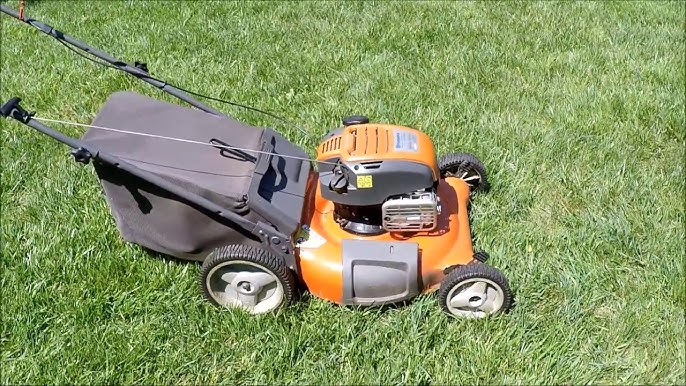
7 Easy Steps to Check Your Lawn Mower Spark Plug
To check your lawn mower spark plug, start by turning off the mower and allowing it to cool completely. Ensuring the mower is off and cool is essential for your safety.
Next, safely disconnect the spark plug wire by firmly gripping the boot to avoid damage.
Use a spark plug socket and wrench to carefully remove the spark plug from the engine.
Inspect the spark plug for signs of wear, cracks, or carbon deposits. If it appears damaged or dirty, clean it using a wire brush or replace it with a new one.
Check the spark plug gap and adjust it to the manufacturer’s specifications using a feeler gauge. Proper gap adjustment ensures efficient engine performance.
Finally, reinstall the spark plug securely, reconnect the spark plug wire, and start the engine to test its operation.
Keep reading to uncover more detailed tips and important safety precautions for maintaining your lawn mower spark plug.
Key Takeaways
- Turn off and cool the mower, then disconnect the spark plug wire by gripping the boot firmly to ensure safety.
- Use the correct spark plug socket and wrench to carefully remove the spark plug by turning counterclockwise.
- Clean and inspect the spark plug for cracks, corrosion, fouling, and electrode wear or damage.
- Measure and adjust the spark plug gap to manufacturer specifications using a gap gauge, bending the electrode gently if needed.
- Reinstall the spark plug by hand to avoid cross-threading, tighten securely without over-tightening, then reconnect the spark plug wire firmly.
Tools You Need to Check Your Lawn Mower Spark Plug
Before you plunge into checking your lawn mower spark plug, you’ll want to gather a few essential tools to make the process smooth and efficient. First, you’ll need a spark plug socket wrench, which fits snugly around the plug for easy removal. A ratchet or a wrench with an extension bar works well to reach the spark plug without hassle.
You’ll also want a spark plug gap gauge to check and adjust the gap accurately. A wire brush or spark plug cleaner will help remove dirt and deposits. Finally, keep a clean cloth handy to wipe the plug and your hands if needed.
Having these tools ready will save you time and frustration during the inspection and maintenance process.
How to Safely Disconnect Your Lawn Mower Spark Plug Wire
When you’re ready to disconnect the spark plug wire, make sure your lawn mower is completely turned off and cooled down to avoid any accidental shocks or burns. Locate the spark plug wire, which is usually a thick, insulated cable attached to the top of the spark plug.
Grasp the boot (the rubber or plastic cover) firmly—not the wire itself—and gently twist while pulling it away from the spark plug. This prevents damage to the wire. If it’s stuck, wiggle it slowly to loosen.
Always wear gloves for protection.
| Step | Action | Tip |
|---|---|---|
| 1 | Turn off mower | Remove key or unplug spark |
| 2 | Locate spark plug wire | Follow thick cable |
| 3 | Grip boot firmly | Avoid pulling wire itself |
| 4 | Twist and pull gently | Use gloves for safety |
Remove the Spark Plug From Your Lawn Mower
Now that the spark plug wire is disconnected, it’s time to locate the spark plug itself. Make sure you have the right tools, like a spark plug socket and wrench, to remove it safely.
Taking these steps carefully will help you avoid damaging the plug or the mower.
Locate The Spark Plug
Wondering where to find the spark plug on your lawn mower? It’s usually located on the engine’s side, near the cylinder head. You’ll spot a thick wire connected to it, making it easier to identify.
The spark plug is small but essential for ignition.
Here’s a simple way to visualize its location:
| Engine Side View | Spark Plug Position | Wire Attached? |
|---|---|---|
| Top Left | Near Cylinder Head | Yes |
| Top Right | Near Cylinder Head | Yes |
| Front | Centered | Yes |
| Back | Off to the side | Yes |
| Bottom | Usually not found | No |
Knowing this helps you quickly locate and remove it for inspection or replacement.
Disconnect The Spark Plug Wire
Before you remove the spark plug, you’ll need to disconnect the spark plug wire carefully to prevent any electrical shocks or damage. First, locate the spark plug wire attached to the top of the spark plug. Grip the boot—the rubber end of the wire—firmly and pull it straight off.
Avoid pulling on the wire itself, as this could damage the connection. If the boot feels stuck, gently twist it while pulling to loosen it. Make sure your hands are dry and the mower is off to stay safe.
Once the wire is disconnected, you’ll have clear access to the spark plug for inspection or replacement. Taking this simple precaution helps keep you safe and protects your mower’s ignition system.
Use Proper Tools
Although it might seem simple, using the proper tools to remove your spark plug is essential to avoid damaging it or the mower. First, you’ll need a spark plug socket that fits snugly over the plug—usually a 5/8-inch or 13/16-inch size. Attach it to a ratchet wrench with an extension for better reach.
Avoid using pliers or regular wrenches, as these can strip the spark plug’s metal casing or damage the threads in the cylinder head. Once you have the right tool, turn the plug counterclockwise gently but firmly. If it’s stuck, don’t force it—apply a penetrating oil and wait before trying again.
Using proper tools guarantees you remove the spark plug safely and keeps your mower in good shape.
How to Inspect Your Spark Plug for Wear and Damage
Now that you’ve removed the spark plug, it’s time to inspect it closely. Look for signs of wear on the electrode and check for any carbon deposits that could affect performance.
These visual clues will help you decide if the spark plug needs cleaning or replacement.
Visual Spark Plug Inspection
When you take a close look at your spark plug, you’ll quickly spot signs of wear or damage that could affect your lawn mower’s performance. Start by cleaning any dirt or debris off the plug so you can see clearly. Look for cracks in the ceramic insulator, which can cause misfires.
Check the metal casing for corrosion or rust, which might interfere with the spark. Also, note any black soot or oily deposits on the plug’s tip, indicating possible engine issues. Finally, verify the plug’s threads aren’t stripped or damaged, as this could prevent a proper seal.
- Cracked or chipped ceramic insulator
- Rust or corrosion on the metal casing
- Black soot or oily build-up on the electrode
- Damaged or stripped threads
Checking Electrode Wear
After you’ve inspected the spark plug’s exterior for cracks, corrosion, and deposits, the next step is to check the electrode for wear and damage. The electrode is where the spark jumps to ignite the fuel. If it’s too worn or damaged, your mower may struggle to start or run poorly.
Look for rounded or eroded edges, which signal the spark plug needs replacing. Also, check for any cracks or chips.
| Condition | What It Means |
|---|---|
| Sharp, intact | Good electrode condition |
| Rounded edges | Wear; consider replacement |
| Cracks/chips | Damaged; replace immediately |
Regular checks here help keep your mower running smoothly.
Identifying Carbon Deposits
How can you tell if your spark plug has carbon deposits? When inspecting your spark plug, look for a dry, black, sooty coating on the electrode and insulator. This buildup indicates incomplete combustion or a rich fuel mixture.
Carbon deposits can cause poor engine performance or difficulty starting your mower.
Here are signs to check for carbon deposits:
- Black, powdery residue covering the electrode and insulator
- Soft, easily wiped-off soot indicating excessive carbon buildup
- Spark plug fouling causing misfires or decreased power
- A strong smell of fuel around the spark plug area
If you spot these, cleaning or replacing the spark plug might be necessary for ideal mower performance.
Clean or Replace Your Spark Plug
Since your spark plug plays a crucial role in starting your lawn mower, keeping it clean or knowing when to replace it is essential for peak performance. If you spot carbon deposits or dirt, gently clean the spark plug using a wire brush or spark plug cleaner. Avoid using abrasive materials that can damage the electrode.
Once clean, inspect the plug for any cracks, worn electrodes, or corrosion. If you notice any damage or excessive wear, it’s best to replace the spark plug with a new one designed for your mower’s model. Regularly cleaning or replacing your spark plug prevents starting problems and keeps your engine running smoothly.
Check and Adjust Your Spark Plug Gap
Why does the spark plug gap matter? The gap affects the spark’s strength and timing, directly influencing your lawn mower’s performance. If the gap’s too wide or narrow, your mower might misfire, run poorly, or struggle to start.
You’ll need a feeler gauge to check it accurately. Here’s how to get it right:
- Refer to your mower’s manual for the recommended gap measurement.
- Insert the appropriate feeler gauge between the center and side electrodes.
- If the gap’s off, gently bend the side electrode to adjust—don’t force it.
- Double-check the gap after adjusting to ensure it matches the specs precisely.
Getting the gap right ensures your mower runs smoothly and efficiently.
Reinstall the Spark Plug and Test Your Lawn Mower
After you’ve checked and adjusted the gap, go ahead and screw the spark plug back into the engine by hand to avoid cross-threading. Once it’s snug, use a spark plug wrench to tighten it firmly, but don’t overdo it—you want it secure without damaging the threads.
Next, reconnect the spark plug wire by pushing it firmly onto the top of the plug until it clicks or feels secure. Now, it’s time to test your lawn mower. Start the engine as you normally would and listen for a smooth, steady sound.
If it runs well, you’ve done everything right. If it struggles or won’t start, double-check the spark plug installation or consider replacing the plug altogether. This simple maintenance step helps keep your mower running efficiently.
Frequently Asked Questions
How Often Should I Check My Lawn Mower Spark Plug?
You should check your lawn mower spark plug at least once a season or every 25 hours of use.
If it’s running rough or hard to start, it’s a good idea to inspect it more often to keep things smooth.
What Type of Spark Plug Is Best for My Lawn Mower?
You’ll want a spark plug that matches your lawn mower’s engine specs, usually a copper or platinum type.
Check your owner’s manual for the exact model number to guarantee peak performance and easy starting every time.
Can a Faulty Spark Plug Cause My Mower to Stall?
Yes, a faulty spark plug can definitely cause your mower to stall. It disrupts the ignition process, leading to poor engine performance or sudden stops.
Replacing it usually fixes the issue and keeps your mower running smoothly.
How Do I Know if My Spark Plug Is Compatible With My Mower?
You can check your mower’s manual or look online using your mower’s model number to find the recommended spark plug type. Make sure the plug’s size, heat range, and gap match what’s specified for your mower.
This ensures your mower runs efficiently and avoids potential engine damage. Always double-check the specifications before purchasing a new spark plug.
If you’re unsure, consult a professional or the mower manufacturer for guidance.
Are Spark Plugs Covered Under Lawn Mower Warranty?
Are spark plugs covered under lawn mower warranty? Usually, no—they’re considered wear-and-tear parts.
You’ll likely need to replace them yourself after a certain period. Always check your specific warranty to be sure, though!
Conclusion
Checking your lawn mower’s spark plug is a simple task that can save you from frustrating breakdowns. While a worn or dirty plug might seem like a small issue, it’s the difference between a mower that sputters and one that roars to life effortlessly.
Taking a few minutes to inspect and maintain this tiny part guarantees your mower stays ready, turning a chore into a smooth, satisfying experience every time you head outside.
Regular spark plug maintenance is key to ensuring optimal performance and extending the life of your lawn mower. By following these easy steps, you can keep your mower running efficiently and avoid common issues.
Remember, checking your lawn mower spark plug is one of the easiest ways to keep your equipment in top shape and enjoy hassle-free mowing all season long.