How to Use Premium Gas in My Lawn Mower Safely
If your lawn mower requires premium gas, using the correct fuel type is essential for safe and efficient operation. Premium gas helps prevent engine knocking and ensures smooth performance, especially in high-compression engines.
Always verify the fuel type and octane rating in your owner’s manual or on the fuel cap before filling up.
Avoid using premium gas excessively if it’s not recommended, as this can lead to carbon deposits and unnecessary expenses. Proper storage of premium gas with stabilizers is important if you don’t use your mower frequently.
Following these guidelines will keep your lawn mower running well and extend its lifespan.
Keep reading to learn how to handle premium gas safely and effectively, ensuring your mower stays in top condition season after season.
Key Takeaways
- Only use premium gas if your lawn mower’s manual explicitly recommends it for optimal performance.
- Ensure the mower’s engine is compatible with high-octane fuel to prevent carbon deposits and engine issues.
- Store premium gas properly in a sealed container and use fuel stabilizers to avoid degradation and varnish buildup.
- Avoid mixing premium gas with regular fuel unless specified, to maintain consistent engine performance.
- Regularly inspect and clean the mower’s fuel system when using premium gas to prevent residue buildup.
Does Your Lawn Mower Really Need Premium Gas?
Although you might think premium gas boosts your lawn mower’s performance, most models don’t actually need it. Lawn mowers typically run on regular unleaded gasoline with an octane rating of 87. Using premium gas won’t improve engine power or fuel efficiency unless your mower’s engine specifically requires higher octane fuel.
In fact, premium gas can cost you more without providing any real benefits. Overusing premium gas in engines designed for regular fuel might even cause carbon deposits over time. So, unless your mower’s manufacturer explicitly calls for premium gas, sticking to regular unleaded is the smarter choice.
This helps you save money without risking any damage or wasted fuel. Just make sure you’re using fresh, clean gasoline to keep your mower running smoothly.
How to Find and Understand Your Mower’s Fuel Requirements
To know what fuel your mower needs, start by checking the owner’s manual for specific recommendations. Look for details on the required fuel type and the appropriate octane rating. Understanding these will help you choose the right gas and keep your mower running smoothly.
Check Owner’s Manual
Wondering how to make sure you’re using the right fuel for your mower? The first step is to check your owner’s manual. This booklet is your best guide—it clearly states the recommended fuel type and octane rating for your specific mower model.
Look for sections labeled “Fuel Requirements” or “Fuel Recommendations.” If you can’t find a physical copy, try searching online using your mower’s make and model. Following these guidelines helps prevent engine damage and guarantees maximum performance.
Don’t guess or rely on general advice, since using the wrong fuel can cause costly issues. Taking a few minutes to understand your mower’s fuel needs by reading the manual will save you headaches and keep your mower running smoothly season after season.
Identify Fuel Type
How do you determine the right fuel type for your mower? Start by checking the fuel cap or tank; many mowers have the recommended fuel type labeled right there. If not, your owner’s manual is the best source for this info.
Most push mowers run on regular unleaded gasoline, but some models, especially high-performance ones, might need premium gas or a specific fuel blend. Pay attention to whether your mower uses gasoline only or a gas-oil mix, common in two-stroke engines. Using the wrong fuel type can harm your mower’s engine or reduce efficiency.
If you’re unsure, look up your mower’s model online or contact the manufacturer for official recommendations to keep your mower running safely and smoothly.
Understand Octane Ratings
Once you know which fuel type your mower needs, the next step is understanding octane ratings. Octane rating measures a fuel’s ability to resist knocking or pinging during combustion. Most lawn mowers require regular unleaded gas with an octane rating of 87, but some high-performance or newer models might recommend premium gas with a higher octane, like 91 or above.
Using fuel with an octane rating lower than recommended can cause engine knocking, reducing performance and potentially damaging your mower. On the other hand, using higher octane than necessary won’t improve performance or fuel efficiency—it’s just extra cost. Check your mower’s owner manual or fuel cap for the exact octane rating needed, then stick to it to keep your engine running smoothly and safely.
The Benefits and Risks of Using Premium Gas in Lawn Mowers
Why might you consider using premium gas in your lawn mower? Premium gas has a higher octane rating, which can prevent engine knocking and improve performance in some high-compression engines. If your mower’s engine is designed for premium fuel, using it can help maintain smooth operation and potentially extend engine life by reducing carbon buildup.
However, there are risks. Using premium gas in engines not designed for it won’t boost performance and may simply waste money. Additionally, premium gas can degrade faster if left unused, leading to varnish buildup that harms fuel lines and carburetors.
You’ll need to store it properly and use fuel stabilizers if you don’t mow often. So, while premium gas can offer benefits, it’s important to weigh them against possible downsides before making a choice.
Is Premium Gas Worth the Extra Cost?
You might wonder if premium gas really boosts your engine’s performance enough to justify the higher price. Understanding how it affects efficiency can help you decide if the cost matches the benefits.
Let’s look at what you can expect from using premium fuel.
Performance Benefits Explained
How much difference does premium gas really make in your car’s performance? When it comes to your lawn mower, the benefits are usually less noticeable. Premium gas has a higher octane rating, which helps prevent knocking in high-compression engines.
If your mower’s engine is designed for regular fuel, you likely won’t see a performance boost using premium. However, if it’s a high-performance model or has a turbocharged engine, premium gas can help it run smoother and maintain power. You might experience better throttle response and slightly improved efficiency, but these gains are often marginal.
Cost Versus Efficiency
When weighing the cost versus efficiency of premium gas, is it really worth paying extra for your mower? For most standard lawn mowers, using premium gas won’t provide noticeable improvements in performance or fuel economy. The higher octane rating mainly benefits high-compression engines, which most mowers don’t have.
So, you’re likely spending more without gaining efficiency. However, if your mower’s manufacturer specifically recommends premium fuel, it’s wise to follow that advice to avoid engine knocking and maintain peak performance. Otherwise, regular unleaded gas is typically sufficient and more cost-effective.
Ultimately, you should consider your mower’s requirements and how often you mow. For occasional use, the extra cost of premium gas rarely justifies itself. Stick to what your engine needs to save money without sacrificing reliability.
How to Safely Switch and Store Premium Gas
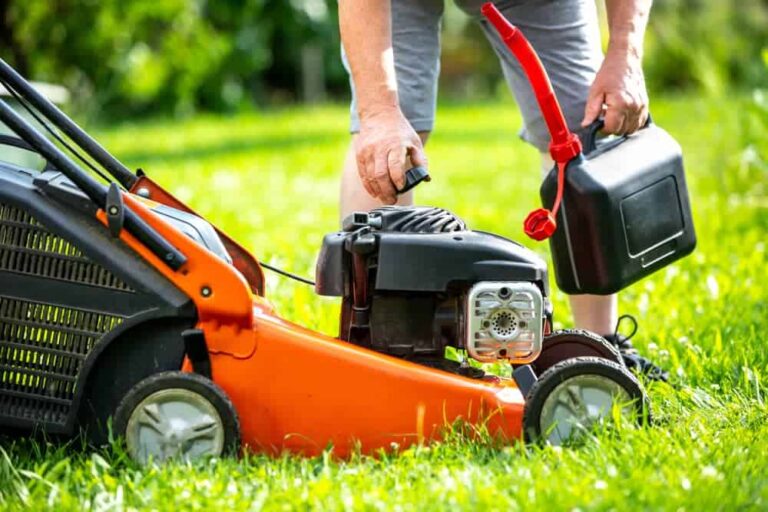
Although switching to premium gas can boost your engine’s performance, it’s important to make the shift carefully to avoid any issues. First, fully drain the old fuel from your mower to prevent mixing different gas types, which can harm the engine.
When storing premium gas, follow these safety tips: Use an approved, airtight container to keep the fuel fresh and prevent spills. Store the container in a cool, dry place away from direct sunlight and heat sources.
Always label the container with the purchase date to keep track of fuel freshness.
Fixing Common Problems When Using Premium Gas
If you notice your engine running roughly or experiencing reduced performance after switching to premium gas, don’t worry—it’s often a fixable issue. First, check for fuel compatibility; some lawn mowers are designed for regular gasoline and may not run optimally on premium. Also, inspect the fuel filter and carburetor for clogs, as premium gas can sometimes cause deposits to loosen and block these parts.
If you see black smoke or poor idling, cleaning or replacing spark plugs might help. Avoid mixing old fuel with premium gas, as this can cause starting problems. Lastly, always store premium gas in a clean, sealed container to prevent contamination that could affect engine performance.
Taking these steps will get your mower running smoothly again.
Frequently Asked Questions
Can Using Premium Gas Void My Lawn Mower’s Warranty?
Using premium gas usually won’t void your lawn mower’s warranty, but it’s best to check your owner’s manual. If the manufacturer recommends regular gas, using premium might raise concerns if damage occurs.
How Does Altitude Affect Premium Gas Performance in Mowers?
Altitude can be a tricky beast for your mower’s premium gas performance. Higher altitudes mean thinner air, which can cause your engine to run lean and reduce power, so you’ll want to adjust your fuel mixture accordingly.
Is Ethanol-Free Premium Gas Better for My Lawn Mower?
Yes, ethanol-free premium gas is better for your lawn mower because it prevents gum buildup and corrosion. It keeps your engine running smoothly and lasts longer, especially if you don’t use your mower frequently or store it for months.
Can I Mix Premium Gas With Regular Gas in My Mower?
Yes, you can mix premium gas with regular gas in your mower, but it’s best to stick to one type to avoid performance issues. Mixing won’t harm the engine but may affect efficiency and power slightly.
Using a consistent fuel type helps maintain optimal mower performance. If you do mix, ensure the gas is fresh and stored properly. This helps prevent potential fuel system problems.
How Often Should I Clean the Carburetor When Using Premium Gas?
You should clean the carburetor at least once a season or every 25 hours of use. Using premium gas doesn’t change this schedule, but regular maintenance keeps your mower running smoothly and prevents buildup.
Regular cleaning ensures optimal performance and longevity of your equipment. It helps avoid clogs that can reduce fuel efficiency. Always check the manufacturer’s guidelines for specific recommendations.
Conclusion
So, does your mower truly need premium gas? Sometimes yes, sometimes no—it’s like choosing the right fuel for your own engine. By understanding your mower’s needs and handling premium gas safely, you can boost performance without burning a hole in your wallet.
Remember, the key is knowing when premium gas is worth it and storing it properly. After all, a happy mower means a happy you—ready for a perfect cut every time!
Using premium gas in your lawn mower safely ensures optimal engine performance and longevity. Proper fuel storage and handling are essential to avoid issues. Embrace these tips for the best lawn mower results.