Top 12 Best Shade Tolerant Grass You Can’t Miss Today
Shady areas in the yard often turn into bare, patchy spots where regular grass struggles to grow. Choosing the best shade tolerant grass matters because most common varieties need at least six hours of direct sunlight daily.
Without that, they thin out quickly, inviting weeds and soil erosion. A lawn that looks healthy and dense under trees or beside buildings depends on grass that can handle limited light and still spread effectively.
Good shade tolerant grass usually features fine to medium leaf blades that require less sunlight to photosynthesize. It often thrives with four hours or less of direct sun, favoring cooler temperatures and moist soil.
Varieties with creeping growth habits or strong rhizomes help fill in shaded patches better than bunch grasses. Maintaining adequate watering and mowing height around 2 to 3 inches also aids survival in low-light environments.
Need a Quick Check?
| Image | Product | Price |
|---|---|---|
Our Top Picks 1  | Pennington Smart Seed Shade | Check Price |
Our Top Picks 2  | Pennington The Rebels Fescue | Check Price |
Our Top Picks 3  | Seeds2Go Red Fescue | Check Price |
Our Selected Top 12 Shade Tolerant Grass for Different Needs
These grass types are chosen for their ability to thrive in shaded areas while meeting different lawn needs. Each review explains how well the grass performs, who it is best suited for, and highlights its strengths and weaknesses to help you find the right option.
1. Pennington Smart Seed Dense Shade Mix
Pennington Smart Seed Dense Shade Mix is tailored for lawns struggling in heavy shade, ideal for spots receiving 2 to 6 hours of sunlight daily. It stands out with its built-in fertilizer coating that helps grass green up quickly, making it fitting for new lawns or overseeding thin areas with limited sunlight.
Setting it up suits home gardeners planting in spring or fall when temperatures range between 60°F and 80°F. The seed’s advanced breeding promotes drought tolerance once established, so daily watering demands lessen over time. Care involves moderate watering, and the grass grows to about 3 inches, creating a dense lawn even in shaded corners.
Performance-wise, the seed mix handles shaded environments well and comes with a built-in fertilizer for a healthy start. Grass achieves a good green color and density under heavy shade.
One strong point is the drought tolerance, reducing watering frequency. A common drawback is that it requires moderate watering initially to establish properly.
Grass seeded from this mix greens up well under thick shade thanks to its built-in fertilizer and drought-resistant qualities. However, moderate watering in early growth stages is necessary to see these benefits fully take hold in the lawn.
Gardeners with lawns that get limited sunlight and can commit to watering during establishment will appreciate this mix. Anyone looking to plant outside spring or fall or seeking a no-maintenance grass option might want to explore other products.
Pros
- Includes built-in fertilizer coating
- Good for heavy shade areas
- Drought tolerant after establishment
- Suitable for a wide range of zones
Cons
- Needs moderate watering to establish
- Best planted during specific seasons only
| Specification | Details |
|---|---|
| Sunlight Exposure | 2-6 Hours |
| Expected Plant Height | 3 inches |
| Expected Planting Period | Spring |
| Moisture Needs | Moderate Watering |
| USDA Hardiness Zone | 1-12 |
| Indoor Outdoor Usage | Outdoor |
2. Pennington the Rebels Tall Fescue
Thick and dense with a deep root system, Pennington The Rebels Tall Fescue is a solid choice for anyone needing grass that stays green in partial shade. It’s especially good for spots getting between 4 to 6 hours of sunlight, and it handles heavy wear without dying out.
Getting it started in spring is straightforward, and seeing green blades pop up in just over a week is a nice bonus. Regular watering keeps it healthy, although it copes well with drought once established.
The coated seed makes planting a bit easier, and it grows around 3 inches tall, so mowing won’t be a chore. The grass fits well in many soil types, which gives flexibility to most yard setups.
Performance stands out in how well it holds up under foot traffic, insects, and even heat. This turf keeps a darker green compared to other tall fescues, making a noticeably lush lawn.
Common feedback points to needing enough sunlight or it won’t thrive as well, but for many, the toughness and color make it a winner.
Gardens with adequate partial sunlight see a lawn that grows thick, dark, and holds up well under foot traffic and heat. Common limits come from insufficient sunlight or irregular watering that can slow growth and reduce its toughness.
Anyone with areas getting 4 to 6 hours of sun and a need for durable grass will find it useful. Those with fully shaded yards or poor watering conditions might want to look for other grass types better suited to those challenges.
Pros
- Thrives with limited sun, 4 to 6 hours daily
- Dense, darker green lawn than similar grasses
- Strong against traffic, drought, and insects
- Quick germination time, visible effects in 8–16 days
Cons
- Needs regular watering to stay healthy
- May struggle without minimum sunlight requirements
| Specification | Details |
|---|---|
| Sunlight Exposure | 4-6 Hours of Sun |
| Expected Plant Height | 3 inches |
| Expected Blooming Period | Spring |
| Indoor Outdoor Usage | Outdoor |
| USDA Hardiness Zone | 1-8 |
| Moisture Needs | Regular Watering |
3. Seeds2Go Creeping Red Fescue Grass Seed
Seeds2Go Creeping Red Fescue Grass Seed is perfect for lawns with partial shade. It handles drought well and has deep roots that resist wear, making it ideal for those wanting low-maintenance, shade-tolerant grass that looks good and controls erosion.
Planting requires 3 to 5 pounds of seed per 1,000 square feet, and it establishes quickly in cooler, temperate climates. You’ll notice the medium to dark green blades growing up to 14 inches tall, and it handles moderate watering needs without fuss. Its deer-resistant quality means fewer worries about wildlife damage.
The grass grows reliably in shaded areas and stands up well to wear and dry spells, thanks to its dense root system. Some reported its height can be taller than expected, which might require more frequent trimming.
While it’s easy to establish, some users feel it needs consistent moisture during initial growth to thrive well.
The creeping red fescue is praised for its resilience to drought and shade, making it low-maintenance once established. Common complaints center around its height, which can be taller than anticipated and might need regular mowing.
Gardens with shaded areas and moderate water access will benefit most from this grass seed. Those wanting very short grass or requiring rapid growth without trimming may want to explore other options.
Pros
- Drought tolerant and thrives in shade
- Deep roots provide erosion control
- Medium to dark green, fine blades
- Deer resistant
Cons
- Grows taller than expected, needs trimming
- Requires moderate watering during establishment
| Specification | Details |
|---|---|
| Sunlight Exposure | Partial Shade |
| Expected Plant Height | 8 inches |
| Moisture Needs | Moderate Watering |
| Indoor Outdoor Usage | Outdoor |
| Coverage | 3 to 5 lbs per 1000 square feet |
4. Pennington Kentucky 31 Tall Fescue

Kentucky 31 Tall Fescue grass seed is designed to thrive in both sun and medium shade, making it ideal for yards with partial sunlight. Its biggest strength lies in its adaptability to different light conditions, suiting those who deal with shaded lawn areas and want dependable coverage without constant reseeding.
Planting requires preparing the soil during spring and ensuring regular watering, especially in clay soil where drainage can vary. The coated seeds help start growth smoothly.
It covers up to 4,000 sq. ft., perfect for small to medium areas.
The grass stays relatively short, around 3 inches, which keeps lawn maintenance manageable in the shade.
The grass performs well in the 4 to 8 hours of sun it needs daily, maintaining a green, healthy look from spring through summer. Its growth rate suits regular mowing without overwhelming work. One common praise highlights its endurance in shaded, tough spots.
On the other hand, some find the seed takes time to fully establish in heavier clay soil.
The seed’s resilience in medium shade stands out, making it a solid choice for shaded yards. Users notice it takes longer to settle into clay soil, requiring patience during establishment. Regular watering is essential to keep the lawn healthy, especially at first.
Gardens that receive partial sunlight and gardeners committed to regular watering will benefit from this grass seed. Those with very heavy clay soil or expecting fast results might want to explore alternatives better suited for rapid growth in challenging soil conditions.
Pros
- Suitable for sun and medium-shaded areas
- Covers up to 4,000 sq. ft.
- Coated seeds improve germination
- Tolerates clay soil well
Cons
- Slow to establish in heavy clay soil
- Needs consistent watering to thrive
| Specification | Details |
|---|---|
| Sunlight Exposure | 4-8 Hours of Sun |
| Expected Planting Period | Spring |
| Expected Blooming Period | Spring to Summer |
| Soil Type | Clay Soil |
| Moisture Needs | Regular Watering |
| Expected Plant Height | 3 inches |
5. Jonathan Green Dense Shade Grass Seed

Dense Shade Grass Seed stands out as a solid choice for anyone looking to grow grass in areas with limited sunlight. It’s particularly suited for shady yards and gardens where other grass varieties tend to struggle. Its main strength lies in its shade-resistant quality, making it reliable where sunlight is scarce.
Using the grass seed involves straightforward spreading over the desired area. The 3 pound bag covers about 1,800 square feet, which is practical for medium-sized lawns.
Designed for outdoor use, it thrives best when planted in spring or fall. Since it’s marked for full sun exposure as well, it adapts reasonably well in mixed light conditions, helping maintain lawn density where natural shade is present.
Once established, the grass performs well in maintaining coverage under tree canopies or shadowed walls. The product consists of 100% superior grass seed, aiming to provide thick and healthy turf. Reviewers often praise its ability to grow in shaded areas while some mention it requires patience and proper care before fully blooming.
The seed’s quality helps ensure a consistent and dense lawn when conditions are met, but it does need proper timing in planting seasons.
The strongest praise highlights the seed’s ability to grow in shaded spots effectively, resulting in a dense, green lawn. Common complaints focus on the requirement for patience and proper timing, as it may take time before showing its full potential in less sunny areas.
Anyone with shady outdoor spaces who is willing to care for their lawn during the spring or fall seasons will find the grass seed beneficial. Those seeking quick results or wanting to grow grass indoors should look for alternatives tailored to those needs.
Pros
- Good coverage for medium-sized areas
- Specifically resistant to shade
- Works well when planted in correct seasons
- Uses high-quality grass seed
Cons
- Needs patience for full growth in shade
- Requires outdoor conditions, not for indoor use
| Specification | Details |
|---|---|
| Bag Weight | 3 pound |
| Coverage | 1,800 Square foot |
| Seed Quality | 100% superior grass seed |
| Indoor Outdoor Usage | Outdoor |
| Shade Resistance | Yes |
| Expected Blooming Period | Spring and Fall |
6. Jonathan Green Black Beauty Grass Seed

Ideal for lawns that struggle with shade but face hot summers, this grass seed mix fits well for homeowners wanting a green lawn in partly shaded areas. Its top strength lies in tolerating heat up to 100°F without giving up on density or color.
Spreading the seed on loam soil with moderate watering keeps it going strong throughout the year. It handles full sun to light shade, so setting it up where sunlight varies is straightforward.
Low maintenance is a plus, meaning you don’t need special care routines or constant attention to keep it healthy.
Grass tends to grow thick and dense thanks to the combination of tall fescue and Texas bluegrass in the mix, with roots that can reach down 4 feet. The waxy leaf coating helps the lawn resist drought by holding in moisture well. Some note patchy spots in heavy shade as a drawback, but most appreciate how well it holds up under heat and dry spells.
The grass stays green and resilient in heat, thanks to its waxy leaves keeping moisture in. Patchy growth in dense shade is a common observation, so its performance depends on the light conditions. Low maintenance adds convenience to a generally hardy lawn seed.
Gardeners seeking reliable heat tolerance and some shade adaptability will benefit most. Those with heavily shaded yards or very dry environments might want to consider varieties specialized for full shade or extreme drought tolerance instead.
Pros
- Heat tolerant up to 100°F
- Can grow roots up to 4 feet deep
- Drought resistant with waxy leaf coating
- Works in sunny and lightly shaded areas
Cons
- Not ideal for heavy shade areas
- Requires moderate watering to thrive
| Specification | Details |
|---|---|
| Sunlight Exposure | Full Sun |
| Soil Type | Loam Soil |
| Moisture Needs | Moderate Watering |
| Indoor Outdoor Usage | Outdoor |
| Expected Blooming Period | Year Round |
7. Pennington the Rebels Tall Fescue Mix

Finding grass that stays green and healthy in shaded yards can be a challenge. Pennington The Rebels Tall Fescue Mix works well for lawns getting between 2 to 6 hours of sunlight daily, offering shade tolerance and tough growth.
Its biggest strength is how it creates a dense, dark green lawn where others struggle.
Planting the seed in spring and maintaining moderate watering helps the grass establish strong roots. It grows best in sandy soil and only needs a few hours of sunlight, which suits shaded spots in many backyards. Within a couple of weeks, you’ll start to see new growth, making it fairly quick to establish compared to other grasses.
The grass handles heavy foot traffic well and stands up to heat, drought, and insects with relatively low maintenance. It forms thick, deep roots that keep the lawn looking dense and green, especially compared to varieties like Kentucky-31. Some have noticed it stays about 3 inches tall and requires occasional mowing to keep the neat appearance.
Highly praised for producing a dense, dark green lawn relatively quickly, the grass remains tough through different stresses like heat and foot traffic. Common feedback notes that it grows to about 3 inches, so some mowing is necessary, and it performs best in sandy soils.
Those with shaded lawns who want a hardy, shade-tolerant grass will find this mix fitting their needs well. Lawns with heavy clay soils or totally shaded areas without any sunlight might want to look for alternatives better suited to those conditions.
Pros
- Thrives in low sunlight areas
- Dense, dark green color
- Resists heat, drought, and insects
- Quick germination in 8 to 16 days
Cons
- Needs occasional mowing to maintain height
- Best suited for sandy soil types
| Specification | Details |
|---|---|
| Sunlight Exposure | 2-6 Hours |
| Expected Plant Height | 3 inches |
| Expected Planting Period | Spring |
| Moisture Needs | Moderate Watering |
| Soil Type | Sandy Soil |
| USDA Hardiness Zone | 1-8 |
8. Scotts Turf Builder Sun & Shade Grass Seed
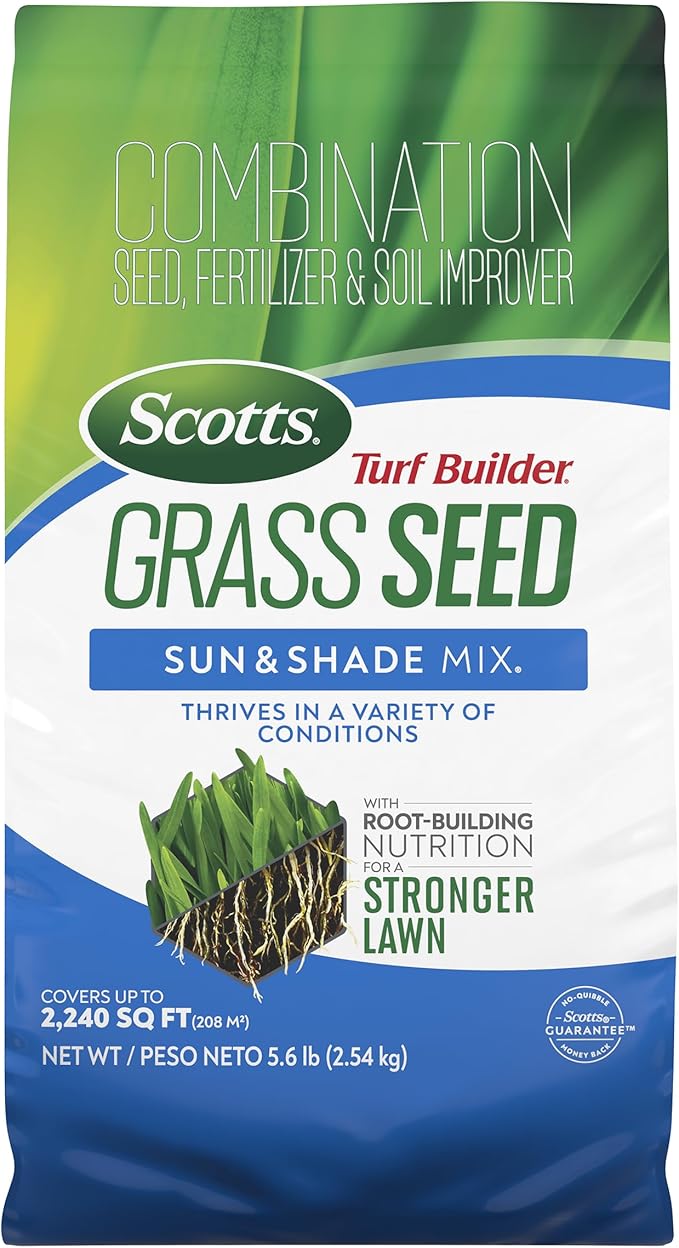
Root-Building Nutrition makes Scotts Turf Builder Sun & Shade Grass Seed ideal for lawns facing both sun and moderate shade. It suits homeowners looking for a thick, green lawn that can take on various outdoor conditions.
Its biggest strength is helping grass develop deep roots, leading to a healthier turf.
Using the seed involves spreading it evenly outdoors during spring, then keeping the lawn regularly watered to support growth. The mix includes Kentucky bluegrass, ryegrass, and different fescues, which all thrive together in spots that get full sun or partial shade.
Medium drought tolerance means it handles dry spells better than some other seed blends.
The grass grows thick and green as promised, with different grass types combining to cover shady and sunny spots well. The fertilizer and soil improver in the mix support strong root growth. Most users notice dense coverage and good durability, but some find it requires consistent watering at the start to get established properly.
Strong root development and thick coverage are consistent positives. Some gardeners note extra effort is needed with watering during the initial growth phase to see the best results.
Those wanting a grass seed mix that handles partial shade and moderate drought will find this suitable. People needing seed usable outside spring or requiring less water during establishment might want to look elsewhere.
Pros
- Supports deep root growth for stronger lawns
- Mix works well in sun and moderate shade
- Medium drought tolerance helps with watering challenges
- Includes fertilizer and soil improver
Cons
- Needs regular watering to establish fully
- Best planted in spring only
| Specification | Details |
|---|---|
| Sunlight Exposure | Full Sun |
| Expected Planting Period | Spring |
| Moisture Needs | Regular Watering |
| Medium Drought Tolerance | Yes |
| USDA Hardiness Zone | 5 |
9. Scotts Turf Builder Thickr Lawn Mix

People looking to thicken thin or weak lawns in partly shaded areas will find a good fit with Scotts Turf Builder Thickr Lawn Mix. Its biggest strength lies in promoting up to a 50% thicker lawn by combining grass seed, fertilizer, and soil improver, making it practical for home gardeners facing patchy turf.
Planting this mix is straightforward, best done twice yearly, in late spring and again in late summer or early fall. It works by filling gaps in thinning grass while also feeding existing turf and enhancing root growth. Using it requires regular lawn care routines to get the best results, especially as the sun and shade tolerant seeds settle in and grow.
The seed formula delivers on thickening and greening lawns, especially when the lawn receives proper care. The product combines essential nutrients and soil improvement materials in one bag, which simplifies lawn maintenance.
On the downside, results may vary depending on lawn condition, and the product mainly suits full sun exposure rather than deep shade.
Most positive feedback highlights the noticeable thickening of thin lawns when the product is applied properly. Common complaints point to the need for consistent care and limited effectiveness in heavily shaded areas.
Homeowners with lawns receiving moderate sunlight and willing to maintain regular care routines will appreciate this product. Those dealing with deep shade or seeking immediate transformation might want to look for alternatives tailored specifically for low-light conditions.
Pros
- Combines seed, fertilizer, and soil improver
- Supports thicker and greener lawn growth
- Suitable for sun and shade areas
- Easy twice-yearly application
Cons
- Best results need proper lawn care
- Designed mainly for full sun, not deep shade
| Specification | Details |
|---|---|
| Sunlight Exposure | Full Sun |
| Coverage per Bag | One 10 lb. |
| Application Frequency | Once late spring, once late summer/early fall |
| Key Components | Grass seed, fertilizer, soil improver |
| Expected Lawn Thickness Increase | Up to 50% |
10. Jonathan Green Shady Nooks Grass Seed

Jonathan Green Shady Nooks Grass Seed works well in spots with heavy shade and challenging soil, standing out for growing healthily in damp or poor dry soil. It suits anyone needing a lawn that holds up where the sun barely shines and soil conditions aren’t great.
To get it going, spread the seed over shady, moist areas and keep the soil damp, as it prefers such conditions. It thrives without needing much fertilizer thanks to its Hard Fescue content.
The mix includes Poa Trivialis, a grass that grows well where sunlight is minimal. Expect to manage damp soil without worrying too much about pests, thanks to the endophyte enhancement.
Growth stays consistent in shaded spots, showing resilience in less-than-ideal soil. The seed mix is built with shade tolerance and low fertilizer needs at its core.
Many find it excellent for damp areas, though a couple of reports mention it may not thrive in full sun or extremely dry spots. Its insect resistance impresses, helping keep the lawn healthier with less intervention.
The seed mix is praised for handling damp, shady spots and resisting insects effectively. Common issues revolve around its poor fit in sunny or very dry conditions. The grass adapts well in shade but has clear limits when the environment changes.
People with shaded lawns and patchy soil will appreciate this grass seed for its resilience and low fertilizer needs. Those with open, sunny lawns or extremely dry soil should consider other options better suited to those conditions.
Pros
- Grows well in heavy shade
- Thrives in damp or poor dry soils
- Low fertilizer requirement
- Good insect resistance
Cons
- Not ideal for areas with full sun
- May struggle in very dry soil
| Specification | Details |
|---|---|
| Sunlight Exposure | Full Sun |
| Soil Type | Clay Soil |
11. Jonathan Green Shady Nooks Grass Seed

Jonathan Green Shady Nooks Grass Seed is designed specifically for growing grass in shady areas, making it ideal for yards with limited sunlight. Its biggest strength lies in its ability to thrive under those low-light conditions where many other grass seeds fail.
Seed application is straightforward with the 3lb packet providing a generous amount for medium-sized shady spots. The seed mixes well into soil, encouraging steady growth without demanding excessive maintenance. Day-to-day care involves regular watering and avoiding heavy foot traffic during establishment to allow the grass to root properly.
Performance on shaded lawns is solid; it manages to stay green and fill in areas that usually remain patchy. The sturdy plastic packaging protects the seeds well from moisture.
Most praise highlights its reliable growth in shade, while some mention a slower start compared to full sun varieties.
Grass grows reliably in shaded places and fills patchy areas well. Some seeds take longer to sprout, necessitating patience and attention during the early phase. Packaging keeps the product fresh for a good period, maintaining seed quality.
People with lawns shaded by trees or structures wanting green coverage will find it useful. Those expecting rapid germination or sun-exposed lawns might want to explore other seed options. Consistent care during the initial weeks improves success.
Pros
- Works well in low sunlight environments
- Large 3lb bag covers ample shady area
- Durable plastic packaging keeps seeds fresh
- Establishes green coverage in patchy spots
Cons
- Slower to germinate than sun-loving seeds
- Requires consistent watering during establishment
| Specification | Details |
|---|---|
| Item Package Dimensions L x W x H | 12.8 x 9.29 x 4.49 inches |
| Package Weight | 1393 g |
| Item Weight | 3.1 pounds |
| Brand Name | Jonathan Green |
| Model Name | Shady Nooks 3lb |
| Included Components | Shady Nooks 3lb |
12. Pennington Smart Seed Kentucky Bluegrass Blend

Getting a nice green lawn where sunlight is limited can be tricky, but this Kentucky bluegrass blend handles shade pretty well. It works best for yards receiving around 4 to 6 hours of sun and stands out because it comes with just the right fertilizer to help new grass grow thick and healthy.
Mixing and spreading the seed is straightforward since it’s coated, making it less messy and easier to handle. Watering regularly is important to keep the grass growing strong. Seeing some green shoots within two to four weeks makes it feel like your lawn is quickly coming back to life, especially during spring planting.
It’s designed to save water compared to regular seeds, which helps if you don’t want to water endlessly.
The grass grows a dense, lush patch that holds up well even when people or pets walk on it. It resists common lawn diseases, which means less worry about brown spots. Some people mention that it doesn’t thrive well if your space gets less than 4 hours of sunlight or if watering isn’t consistent.
Otherwise, it’s pretty reliable for cooler zones and moderate shade.
Many find the quick sprouting time and thick grass coverage impressive, which creates a lush lawn faster than expected. Some struggle if watering isn’t consistent or the sunlight falls below the recommended hours, which limits its performance in dimmer spots.
Anyone with moderate shade and the ability to water regularly will appreciate this seed blend because it takes the guesswork out of fertilizing. Those dealing with heavy shade or very dry conditions might want to look for a grass type tolerant of lower light or less water.
Pros
- Contains fertilizer for easier growth
- Good for moderate shade areas
- Resistant to disease and traffic
- Uses less water than ordinary seed
Cons
- Needs regular watering to thrive
- Not suitable for less than 4 hours sunlight
| Specification | Details |
|---|---|
| Sunlight Exposure | 4-6 Hours |
| Expected Planting Period | Spring |
| Indoor Outdoor Usage | Outdoor |
| Seed Treatment Method | Coated |
| Expected Plant Height | 3 inches |
| USDA Hardiness Zone | 1, 3, 4, 5, 6, 7 |
Best Shade Tolerant Grasses Comparison Table
| Product | Sunlight Exposure | Moisture Needs | Expected Plant Height | USDA Hardiness Zone |
|---|---|---|---|---|
| Pennington Smart Seed Shade | 2-6 Hours | Moderate Watering | 3 inches | 1-12 |
| Pennington The Rebels Fescue | 4-6 Hours | Regular Watering | 3 inches | 1-8 |
| Seeds2Go Red Fescue | Partial Shade | Moderate Watering | 8 inches | – |
| Pennington Kentucky 31 Fescue | 4-8 Hours | – | – | 1-8 |
| Jonathan Green Dense Shade | Full Sun | – | – | – |
| Jonathan Green Black Beauty | Full Sun | Moderate Watering | – | – |
| Pennington Rebels Fescue Mix | 2-6 Hours | – | 3 inches | 1-8 |
| Scotts Turf Builder Sun & | Full Sun | – | – | – |
| Scotts Thick’R Lawn Mix | Full Sun | – | – | – |
| Jonathan Green Shady Nooks 1 | Full Sun | – | – | – |
| Jonathan Green Shady Nooks 2 | – | – | – | – |
| Pennington Smart Seed Bluegrass | 4-6 Hours | Regular Watering | 3 inches | 1-7 |
- Sunlight Exposure2-6 Hours
- Moisture NeedsModerate Watering
- Expected Plant Height3 inches
- USDA Hardiness Zone1-12
- Sunlight Exposure4-6 Hours
- Moisture NeedsRegular Watering
- Expected Plant Height3 inches
- USDA Hardiness Zone1-8
- Sunlight ExposurePartial Shade
- Moisture NeedsModerate Watering
- Expected Plant Height8 inches
- USDA Hardiness Zone–
- Sunlight Exposure4-8 Hours
- Moisture Needs–
- Expected Plant Height–
- USDA Hardiness Zone1-8
- Sunlight ExposureFull Sun
- Moisture Needs–
- Expected Plant Height–
- USDA Hardiness Zone–
- Sunlight ExposureFull Sun
- Moisture NeedsModerate Watering
- Expected Plant Height–
- USDA Hardiness Zone–
- Sunlight Exposure2-6 Hours
- Moisture Needs–
- Expected Plant Height3 inches
- USDA Hardiness Zone1-8
- Sunlight ExposureFull Sun
- Moisture Needs–
- Expected Plant Height–
- USDA Hardiness Zone–
- Sunlight ExposureFull Sun
- Moisture Needs–
- Expected Plant Height–
- USDA Hardiness Zone–
- Sunlight ExposureFull Sun
- Moisture Needs–
- Expected Plant Height–
- USDA Hardiness Zone–
- Sunlight Exposure–
- Moisture Needs–
- Expected Plant Height–
- USDA Hardiness Zone–
- Sunlight Exposure4-6 Hours
- Moisture NeedsRegular Watering
- Expected Plant Height3 inches
- USDA Hardiness Zone1-7
How to Choose the Best Shade Tolerant Grass
Choosing the right shade tolerant grass depends on factors like sunlight levels, soil type, and water availability to ensure healthy growth in shaded areas. Picking the appropriate variety prevents patchy lawns and reduces maintenance, saving both time and money in the long run.
Shade Ability
Grass growing under trees or on north-facing slopes often struggles with low light, failing to establish dense coverage and turning patchy by mid-season. Those varieties that manage shade better keep a greener, fuller appearance throughout spring and fall, when sunlight shifts and canopy cover changes. Dense shade reduces photosynthesis, so grass must need less direct sunlight or grow well on reflected or dappled light.
Look for grasses labeled with a shade tolerance rating that specifies performance under less than four hours of direct daily sun. These tend to maintain density even when sunlight varies across seasons. Poor performers thin out, leaving bare spots where weeds can take hold, while top choices provide consistent coverage in tree-covered yards or lots with long shadows.
Grass Type and Blend
Blends combining fine fescues with some ryegrass or bluegrass often handle shade better than single-species options. Fine fescues like creeping red or chewings grass adapt their leaf blades to capture light more efficiently, while some ryegrasses boost wear resistance if the lawn sees regular foot traffic.
Seed mixes that balance species for shade tolerance and durability avoid a lawn that looks thin or worn quickly. Growth habits also affect appearance; spreading grasses build thicker mats, while bunch grasses may leave gaps unless overseeded frequently.
Checking the seed bag for a detailed mix helps match the grass to your yard’s conditions and use.
Soil and Climate Compatibility
Shaded areas tend to hold more moisture and often have different soil pH due to leaf litter or root competition. Choosing a grass compatible with local soil types, whether clay, sandy, or loamy, prevents poor growth and disease pressure from soggy conditions.
Some species resist common fungal problems that thrive in damp shade.
Zones with high humidity or prolonged damp seasons call for grasses tested in similar climates. This reduces surprises like persistent patchiness or disease outbreaks.
Seed sellers usually indicate the climate zones where their blends are proven; selecting that decreases the risk of needing excessive treatments or reseeding.
Maintenance Requirements
Shade-loving grasses usually need less frequent watering but benefit from deep watering sessions to reach roots competing with tree roots. Overwatering is easy in shaded spots because lower evaporation rates cause soil to stay wet longer, inviting rot or fungal diseases.
Mowing height tends to be taller than for sun-loving lawns, commonly 2.5 to 3.5 inches, to maximize leaf surface for light capture. Regular mowing schedules help maintain density without stressing the grass.
Nutrient demands are moderate; balanced fertilization every six to eight weeks during the growing season supports steady growth without encouraging weak, quick shoots prone to disease.
Establishment Speed
Seeds for shaded areas generally take longer to germinate compared to sun-tolerant kinds because low light slows metabolic processes. Early growth may be slow, so patience is necessary during establishment. However, good mixes include varieties that recover faster after wear or damage, essential for lawns used frequently.
Dense seed coverage helps minimize weed intrusion, especially important in shady spots where grass growth is slower. Seed rates often exceed standard lawns, sometimes requiring overseeding within the first year to fill in gaps.
Paying attention to germination guidelines and consistent watering ensures the best start despite light limitations.
Tips for Maintaining a Healthy Shade Tolerant Lawn
Shade tolerant grasses need consistent moisture, especially because shaded areas often retain less sunlight that helps dry out the soil. Avoid overwatering by checking soil moisture regularly; soggy soil can promote fungal issues. Mowing height matters here, cutting too short stresses the grass, so keep blades a bit longer, around 3 to 3.5 inches, to encourage stronger roots.
Aeration benefits shaded lawns by loosening compacted soil and improving oxygen flow beneath the surface. Fertilizing should be done cautiously; low nitrogen formulations suit shaded grass better since excessive nitrogen can encourage disease and weak growth.
Regularly remove leaves and debris that block light and reduce airflow. Finally, do not underestimate the value of periodic testing to confirm soil pH and nutrient levels, as shaded zones may have different requirements than sunnier spots.
Common Mistakes to Avoid When Growing Grass in Shaded Areas
One common mistake is planting grass that isn’t truly shade tolerant. Many cool or warm season grasses require some sunlight and fail to thrive in deep shade. Overfertilizing is another pitfall; it can lead to excessive top growth with weak roots, making the turf more vulnerable to stress and disease.
Cutting the grass too short also damages it, especially since shade slows growth. Another frequent error involves poor soil preparation, shaded areas often have compacted or poor-quality soil under tree canopies that needs correcting.
Also, ignoring thinning tree foliage and canopy management can leave the grass weak from restricted air circulation and light. Lastly, using herbicides or pesticides indiscriminately near trees can harm beneficial fungi and microbes vital for sod health.
Comparing Shade Tolerant Grasses to Ground Cover Alternatives
Shade tolerant grasses offer a natural, green lawn feel but often require more upkeep compared to ground covers. Grasses such as fine fescues or St.
Augustine can fill shaded spots but may grow slowly and be thinner than in full sun. Ground covers like creeping thyme, ajuga, or vinca may handle dense shade with less maintenance and stay green year-round without mowing. However, ground covers typically do not handle foot traffic as well as grass and may not offer the same uniform appearance.
Grass works well for areas where you want traditional lawn use, while ground covers suit decorative or hard-to-mow spots. Assessing the location’s light level, traffic, and maintenance willingness helps determine which option fits best in shaded landscapes.
People Also Asked
How Do I Care for Shade Tolerant Grass in Low Sunlight?
Shade tolerant grass needs less direct sunlight but still requires some indirect light and regular watering to stay healthy. Avoid over-fertilizing because it grows slower than full-sun varieties and can be damaged by excess nutrients.
What Size Area Can One Bag of Shade Tolerant Grass Cover?
One bag of shade tolerant grass seed usually covers about 500 to 1000 square feet, depending on seed density and soil conditions. For patchy areas, spreading seed thinly and overseeding helps fill in bare spots over time.
Is Shade Tolerant Grass Safe for Pets and Children?
Shade tolerant grass is generally safe for pets and children. Avoid using herbicides or pesticides near play areas to prevent exposure to harmful chemicals.
Can Shade Tolerant Grass Grow Well with Existing Garden Plants?
Shade tolerant grass can coexist with garden plants, especially under tree canopies, but watch for competition over water and nutrients. Supplemental watering might be necessary during dry periods.
How Long Does Shade Tolerant Grass Typically Last Without Replanting?
Shade tolerant grass typically lasts several years without replanting, but it can thin out in very shaded or high-traffic areas. Routine overseeding every couple of years helps maintain a lush lawn.
Conclusion
Choosing the right shade tolerant grass depends largely on how much shade your lawn receives, the type of soil you have, and the level of foot traffic the area gets. Some grasses handle deep shade better but may require more care, while others survive with less maintenance but need partial sunlight. Considering these factors helps ensure the grass will grow well and last.
Think about how much you plan to use the lawn and your budget before deciding. Some grasses cost more upfront but reduce maintenance expenses over time. Review the comparison table and consider the detailed picks to find a match that suits your yard’s conditions and your schedule for upkeep.

I’m Jake Thompson, and I’ve spent over a decade working on lawn mowers, from small push mowers to big riding tractors. I write about starting problems, blade sharpening, carburetor cleaning, oil changes, and seasonal maintenance. My goal is to give you clear, step-by-step advice so you can handle common mower issues yourself and keep your lawn looking sharp all season.