
Top 12 Best Seeds for Sprouting You Must Try Today!
Starting sprouts often runs into issues like slow germination or mold growth, problems that come from using the wrong seeds. The best seeds for sprouting typically come fresh, untreated, and are specifically intended for sprouting to avoid these common issues.
Seeds not meant for sprouting might be treated with chemicals or too old, leading to poor yields or unhealthy sprouts.
What separates good sprouting seeds from poor ones is primarily freshness and purity. Seeds should be free of coatings and pesticides and have high germination rates, often above 90 percent. Smaller seed sizes, such as alfalfa or broccoli, sprout faster and with less chance of contamination.
Packaging that protects seeds from moisture and light also helps maintain viability for months when stored properly in a cool, dry place.
Need a Quick Check?
| Image | Product | Price |
|---|---|---|
Our Top Picks 1  | Nature Jims Salad Mix | Check Price |
Our Top Picks 2  | Nature Jims Organic Broccoli | Check Price |
Our Top Picks 3  | Variety Pack Sprouting Seeds 1 | Check Price |
Our Selected Top 12 Seeds for Sprouting Worth Considering
These selections include a variety of seeds known for their sprouting qualities, covering different flavors and nutritional benefits. Each review explains how well the seeds sprout, who might prefer them, and highlights their main advantages and drawbacks to help you choose the best fit for your needs.
1. Nature Jims Sprouts Salad Mix
Gardeners looking to grow fresh, organic microgreens at home will appreciate a seed blend designed for quick results. Nature Jims Sprouts Salad Mix suits anyone wanting a variety of nutritious sprouts without complicated steps. It shines in its straightforward approach that delivers fresh microgreens in just a few days.
Setup involves spreading the seed mix in a sprouting container and keeping them moist with regular watering. Growing microgreens indoors or outdoors under partial sunlight fits well, and the process works year-round. The blend includes broccoli, alfalfa, radish, and clover seeds, making a tasty salad base with minimal fuss and good germination rates.
Seeds are certified organic and non-GMO, which supports healthy plant growth and nutrition. Most people notice a steady sprouting pace, enjoying an easy routine for fresh greens.
Some do mention occasional uneven sprouting between seed types, but the overall quality remains solid. The seed mix combines reliability with the convenience of consistent growth season after season.
People enjoy how quickly this salad mix produces fresh microgreens and appreciate its organic, non-GMO quality. The most common issue is that different seeds sometimes sprout at uneven rates, leading to slight inconsistencies in the mix. However, it remains a straightforward way to grow nutrient-rich sprouts.
Anyone wanting a simple, reliable mix of microgreens to grow outdoors throughout the year will be happy with this product. Those seeking an indoor sprouting system or needing less frequent watering might want to look elsewhere.
Pros
- Organic and non-GMO seed blend
- Produces fresh microgreens in about 5 days
- Includes a variety of seeds for diverse flavors
- Suitable for outdoor growing year-round
Cons
- Some seeds sprout unevenly
- Requires regular watering and care
| Specification | Details |
|---|---|
| Sunlight Exposure | Partial Sun |
| Indoor Outdoor Usage | Outdoor |
| Expected Planting Period | Year Round |
| Expected Blooming Period | Year Round |
| Moisture Needs | Regular Watering |
2. Nature Jims Organic Broccoli Sprouting Seeds
Organic broccoli sprouting seeds perfect for quick indoor or outdoor growing and rich in sulforaphane. Ideal for anyone wanting easy access to fresh, nutrient-packed microgreens. Their speed of growth makes them stand out for those looking to enjoy healthy sprouts without long wait times.
Starting your sprouts involves simply planting these non-GMO seeds in sandy soil with partial sunlight. They fit well in small indoor setups or garden spaces.
You’ll see growth in about 5 days, making them practical for people who want regular fresh harvests without elaborate care routines.
These seeds deliver crunchy, vitamin-rich broccoli sprouts efficiently and reliably. The organic quality is consistent, ensuring healthier sprouts. Most praise centers around their swift sprouting time.
Some find the partial sun requirement a bit limiting depending on their growing environment.
The fastest sprouting time of about 5 days earns consistent praise, offering fresh broccoli sprouts regularly. However, some people find the partial sun requirement tricky, making it harder to find the right spots to grow it. The organic, non-GMO quality is clear throughout the growing cycle.
Those looking for a quick, healthy sprout growing experience in controlled environments or small garden areas will welcome these seeds. People without access to partial sunlight or different soil types might consider alternatives better suited to their conditions.
Pros
- Certified organic and non-GMO seeds
- Sprouts ready in just 5 days
- Rich in sulforaphane nutrients
- Suitable for indoor and outdoor use
Cons
- Requires partial sunlight, limiting placement options
- Best in sandy soil, may not suit all gardens
| Specification | Details |
|---|---|
| Indoor Outdoor Usage | Indoor, Outdoor |
| Sunlight Exposure | Partial Sun |
| Soil Type | Sandy Soil |
| Expected Blooming Period | Year Round |
| Expected Planting Period | Year Round |
3. Variety Pack Sprouting Seeds
Variety Pack Sprouting Seeds offers a reliable way to grow fresh, nutritious sprouts at home. Perfect for anyone who wants to add a healthy boost to their meals, it stands out for providing natural, non-GMO seeds that consistently yield a good amount of sprouts without any fuss.
Sprouting only requires a jar or tray, seeds, and water, which makes starting easy for any level of gardener. The pack comes with clear instructions, so maintaining a fresh batch of sprouts becomes a simple part of your routine. No soil, chemicals, or light are necessary, making indoor sprouting convenient year-round.
Seeds sprout in as little as 3 to 7 days, producing healthy and nutrient-rich greens. The hand-packed seeds result in dependable growth and yield, which users appreciate for cooking or salads.
Some mention occasional slow germination, but the majority find the seeds productive and fresh throughout use.
Most praise appreciates the good yield of healthy sprouts that come from seeds carefully packed to ensure freshness. Common feedback notes that while germination is usually quick, occasional slower sprouting occurs with some seeds in the pack.
Those seeking fresh, easy homegrown sprouts with minimal setup will find these seeds ideal. People wanting outdoor growing options or instant germination results may want to explore other seed choices.
Pros
- Hand packed in the USA for quality control
- Natural and non-GMO seeds
- Easy to sprout with simple supplies
- Nutritious sprouts rich in vitamins and antioxidants
Cons
- Some seeds may germinate slower than others
- Limited to indoor sprouting only
| Specification | Details |
|---|---|
| Seeds per pack | ¼ lb. |
| Sprouting period | 3 to 7 days |
| Usage | Indoor |
| Seed type | Natural, non-GMO |
| Blooming period | Year Round |
4. NOW Foods Organic Alfalfa Sprouting Seeds

Organic alfalfa seeds that sprout well with a clean, fresh taste make a great choice for anyone growing their own sprouts at home. Perfect for health-conscious individuals, these seeds stand out for being organic and free from common allergens, which helps keep your sprouts pure and natural.
Setting up a sprouting jar or tray with these seeds is straightforward since they come prepped for home sprouting. Just a rinse and soak, followed by regular rinsing, gets the seeds going. Their chemical-free nature means you don’t have to worry about unwanted additives, and the packaging in a bag makes storage simple and keeps seeds fresh between uses.
These seeds perform consistently, showing solid germination rates under normal conditions thanks to careful testing. Now Foods ensures quality control with GMP certification, so you can trust the product’s purity and organic claim. Most appreciate the clean, mild flavor of the sprouts, while some mention the need to keep an eye on moisture levels to avoid mold during sprouting.
Sprouts grown from these seeds taste fresh and clean, backed by solid germination tests. Many find the organic and allergen-free qualities reassuring. However, moisture management is critical during sprouting to prevent mold, which some find tricky without experience.
People looking for reliable, clean, and easy-to-use organic alfalfa seeds will be satisfied here. Those wanting a broader mix of sprout varieties or less hands-on care should consider other options suited for sprouting different seed types or simpler maintenance.
Pros
- Organic and chemical-free seeds
- High germination tested for reliability
- Allergen-free, suitable for many diets
- Comes in a resealable bag for freshness
Cons
- Requires careful moisture control to avoid mold
- Limited to alfalfa variety only
| Specification | Details |
|---|---|
| Brand Name | NOW Foods |
| Grown In | USA |
| Certifications | Organic, Non-GMO, Vegan, Kosher |
| Allergen Information | Nut Free, Soy Free, Dairy Free, Egg Free |
| Container Type | Bag |
5. Organic Salad Mix Sprout Seeds
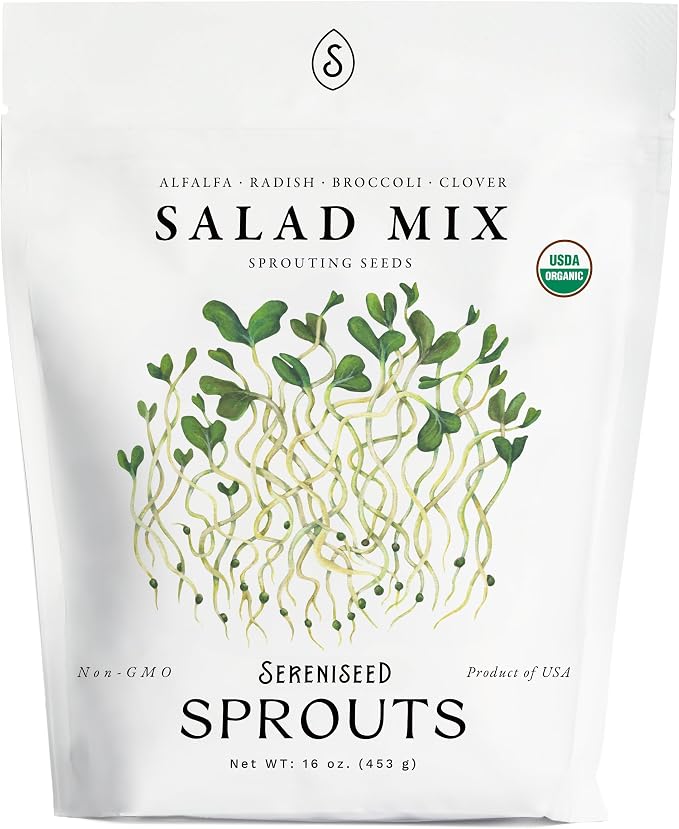
Perfect for anyone wanting a nutritious and reliable sprouting seed blend, this mix offers organic seeds with a high germination rate. Its biggest strength lies in being a tested, pathogen-free mix of alfalfa, radish, broccoli, and clover that suits indoor sprouting enthusiasts.
Using these seeds is simple as they come untreated and ready for regular watering in any indoor setup. Climate-controlled storage ensures freshness and consistent germination every time you open a new batch.
The blend grows fast and remains compact, making it easy to keep on a kitchen counter or in a small indoor garden space.
The sprout mix performs reliably in producing nutrient-dense greens rich in vitamins C and K. It is tested for purity and pathogen safety, which lends confidence in its quality. Most praise highlights its consistent germination and quick growth.
Some users note the expected small 2-inch plant height as a limitation for harvesting larger sprouts.
The seeds reliably sprout with a high germination rate thanks to their careful testing and climate-controlled storage. Reviews mostly highlight their fast growth and nutrient density, while some mention the limited height as a drawback for larger sprout needs.
Those interested in quick, healthy indoor sprouts will appreciate this blend’s consistency and organic quality. People looking for taller or outdoor sprouting options should consider alternatives better suited to those conditions.
Pros
- Non-GMO and certified organic
- High germination and purity guaranteed
- Fast-growing multi-seed blend
- Stored in climate-controlled conditions
Cons
- Plant height limited to around 2 inches
- Suitable only for indoor use
| Specification | Details |
|---|---|
| Indoor Outdoor Usage | Indoor |
| Fast Growing | Yes |
| Germination Rate | High |
| USDA Hardiness Zone | 1 to 13 |
| Expected Plant Height | 2 inches |
| Seed Treatment Method | Untreated |
6. Nature Jims Organic Alfalfa Sprouting Seeds

Organic, non-GMO alfalfa seeds designed specifically for indoor sprouting offer a straightforward way to grow fresh, nutrient-rich sprouts at home. Great for beginners wanting to try their hand at sprouting without additives or fillers getting in the way, it makes homegrown alfalfa easy and accessible all year round.
Getting started is simple with clear, step-by-step instructions included. Just rinse the seeds, soak them, and keep them moist in a sprouting jar or tray. The seeds sprout consistently without much fuss, making daily maintenance easy to manage.
It’s perfect for small indoor setups and doesn’t require special conditions or tools.
Sprouting quality is reliable, producing tasty, crisp alfalfa sprouts that add fiber and nutrition to meals. Seeds come as premium grade, carefully processed for germination success. The biggest plus is the consistent, flavorful results.
One downside mentioned occasionally is that sprouts might require attention to prevent mold if not rinsed properly.
Seeds have a high germination rate and produce fresh sprouted alfalfa with good flavor. Common issue involves mold developing if sprouts are not rinsed often enough.
Those wanting easy home sprouting with organic seeds will appreciate this option. People looking for outdoor or mixed-use seeds might want to consider alternatives better suited to various environments.
Pros
- Non-GMO, organic seeds without additives
- Simple, clear instructions for beginners
- Consistent sprouting results indoors
- Fresh, fiber-rich sprouts every time
Cons
- Requires regular rinsing to avoid mold risk
- Only suitable for indoor use
| Specification | Details |
|---|---|
| Indoor Outdoor Usage | Indoor |
| Expected Blooming Period | Spring |
| Type | Organic Alfalfa Sprouting Seeds |
| Special Features | Premium |
7. The Sprouting Company Organic Protein Mix Seeds

Whole food protein sprout seeds combining lentils, mung beans, and peas offer a mild nutty flavor perfect for anyone wanting easy-to-digest plant protein. It suits those looking to add nutritious sprouts to meals without fuss, delivering a convenient boost of fiber, iron, and folate.
Using these seeds is straightforward with any sprouting jar kit, needing no sunlight to grow. In just three to four days, sprouts ready to toss into bowls, wraps, or salads appear naturally textured and tasty. Their organic and GMO-free qualities make daily nutrition easier by integrating smoothly into a wide range of recipes without adding any extra preparation steps.
Sprouts mature quickly and consistently, providing a solid source of protein with a pleasant mild nutty flavor. Built as a seed blend, it adapts well to different sprouting environments and recipes. The main drawback is that some people may find the flavor a bit subtle or the sprouting time slightly longer than single-seed options.
Sprouts develop with a pleasant mild nutty taste and a good mix of textures, ready in about three to four days. Some find the flavor softer than expected, which can feel less exciting compared to stronger sprouting seeds. The mix performs well in common sprouting setups without needing sunlight.
Those wanting a simple, nutrient-rich sprout to add protein and fiber will find this blend fits well. Anyone seeking bold flavor profiles or very quick sprouting might want to explore other single-seed options instead.
Pros
- Easy to grow with any sprouting jar kit
- Rich in fiber, iron, and folate
- No sunlight required for sprouting
- Organic and GMO-free ingredients
Cons
- Mild flavor may feel too subtle for some
- Slightly longer sprouting time than single-seed options
| Specification | Details |
|---|---|
| Flavor | Mild nutty flavor |
| Ingredients | Lentils, mung beans, peas |
| Ready In | Three to four days |
| GMO Status | Non-GMO |
| Nutrition Highlights | High fiber, protein, source of iron and folate |
| Region of Origin | United States |
8. NOW Foods Broccoli Sprouting Seeds

Broccoli seeds for sprouting stand out because of their superior sulforaphane content, making them a smart pick for health-conscious sprouters. Ideal for anyone wanting fiber-rich sprouts with minimal fuss, these seeds deliver a potent nutritional boost in an easy indoor setup.
Getting sprouts going involves soaking 1/4 cup of seeds overnight, then draining and placing them in a sprouting jar. Sprouts need rinsing and draining daily for about 3 to 5 days, kept mostly in the dark until they start greening with indirect sunlight.
Adding a bit of citric acid to rinse water helps keep mold at bay, keeping maintenance manageable and routine easy.
These seeds sprout reliably within the 3 to 5 day window and produce healthy broccoli greens packed with sulforaphane potential. The seeds’ quality supports steady germination in moderate moisture and partial shade.
Many praise their mold resistance when citric acid is used, though some find the daily rinsing a bit of a commitment. These seeds are sturdy and suited for year-round indoor sprouting.
The highest praise highlights the seeds’ reliable sprouting and significant sulforaphane boost, which many find valuable. The most frequent complaint revolves around the need for daily rinsing and attention, which some see as a minor hassle.
People wanting nutritious sprouts with manageable care will be satisfied here. Those seeking low-effort or outdoor options might prefer different seed types designed for less frequent watering or direct sunlight use.
Pros
- High sulforaphane potential for health benefits
- Low maintenance with simple rinsing routine
- Good mold resistance with citric acid rinses
- Suitable for year-round indoor use
Cons
- Requires daily rinsing and draining
- Needs indirect sunlight for best development
| Specification | Details |
|---|---|
| Sunlight Exposure | Partial Shade |
| Moisture Needs | Moderate Watering |
| Expected Blooming Period | Year Round |
| Indoor/Outdoor Usage | Indoor |
| Soil Type | Sandy Soil |
| USDA Hardiness Zone | 3 |
9. Nature Jims Sprouts 3-Bean Mix Seeds

When you want fresh, nutrient-rich sprouts at home without much fuss, this mix works well. Perfect for people who enjoy growing their own food in small spaces or like adding a healthy crunch to meals.
Its biggest strength lies in providing a quick, simple way to sprout three different beans at once.
Getting started is straightforward, just rinse and soak the seeds, then keep them moist, whether indoors or outdoors. Each type of bean sprouts quickly, so you see results in a few days. The resealable bag keeps the seeds fresh between uses and the mix of green peas, lentils, and adzuki beans offers variety without extra effort or needing separate seed packs.
The seeds sprout reliably and produce crunchy, tasty beans with a mild, rich flavor. They come from organic, non-GMO sources, so there’s confidence in what you’re growing. Most find the sprouts great in salads and sandwiches.
Some users note the bag could be more durable to avoid spills. They do exactly what’s expected with no complicated steps.
Sprouts grow fast, and the blend delivers a good mix of flavors and nutrients. The resealable bag helps store seeds, though it’s sometimes fragile and can tear easily.
Anyone wanting an easy way to sprout multiple bean types at once will appreciate this mix. Those needing more variety or stronger packaging might want to look elsewhere.
Pros
- Includes three types of organic sprouting beans
- Fast-sprouting with quick growth in few days
- Non-GMO and gluten free for clean eating
- Resealable bag keeps seeds fresh
Cons
- Bag can be prone to tearing if mishandled
- Limited to three bean varieties only
| Specification | Details |
|---|---|
| Brand Name | Nature Jims Sprouts |
| Specialty | Organic |
| Item Form | plant seed |
| Coin Variety 1 | Adzuki Beans |
| Unit Count | 16 Ounce |
| Container Type | resealable bag |
10. Organic Non-GMO Sprouting Protein Blend

High germination rate makes the Organic Non-GMO Sprouting Protein Blend a solid choice for growing fresh, crunchy sprouts indoors. Ideal for health-conscious folks living in apartments or busy workspaces, it offers a simple way to add nutrient-rich greens to everyday meals without needing a garden.
Setting up is straightforward by placing the seeds in a jar (sold separately) and rinsing them two to three times a day. The seeds thrive indoors with partial sun exposure and don’t require much space, making it easy to maintain sprout growth regardless of your living situation. The included growing instructions help keep things on track for year-round sprouting.
The seeds grow sprightly and deliver a nice crunch and freshness that lifts salads, sandwiches, and smoothies. Built from USDA Certified Organic seeds grown and packed in the USA, the blend is reliable and consistent.
Frequent rinsing is necessary, which some might find a bit time-consuming during busy days.
Sprouts grown from these seeds are fresh and crunchy, adding great nutrition to meals. The most common drawback is having to rinse the seeds two to three times daily, which can be a bit of a chore. The seeds reliably produce sprouts without needing outdoor space or a garden.
Health enthusiasts in small living spaces will find this blend convenient and effective. Those who prefer a less hands-on sprouting routine or want a complete kit including a jar may want to look elsewhere.
Pros
- High germination rate for consistent sprout growth
- USDA Certified Organic seeds grown in the USA
- Compact for indoor use, perfect for small spaces
- Included growing instructions simplify the process
Cons
- Requires rinsing multiple times daily
- Sprouting jar sold separately
| Specification | Details |
|---|---|
| Indoor Outdoor Usage | Indoor |
| Sunlight Exposure | Partial Sun |
| Moisture Needs | Rinse 2-3× Daily |
| Expected Blooming Period | Year Round |
| Certification | USDA Certified Organic by OTCO |
11. Nature Jims Mung Bean Sprouting Seeds

People interested in growing their own fresh sprouts for healthy meals will find this seed variety ideal. It suits those who want a natural source of nutrients without relying on supplements.
Its biggest strength is providing nutrient-rich mung bean sprouts packed with fiber, vitamins, and minerals in a premium resealable bag to keep seeds fresh longer.
Setting up for sprouting is straightforward. You simply soak the mung beans and rinse them regularly to keep them moist until they sprout. The resealable bag makes storing leftover seeds simple and helps preserve freshness.
These seeds work well for indoor or outdoor gardening, fitting nicely in small sprouting trays or jars, and they cater to vegetarian diets, making daily sprout cultivation easy and practical.
Mung bean seeds deliver reliable sprouting results with consistent growth and good nutritional quality. The non-GMO status is important for natural growers. Seeds come in a sturdy, resealable bag that extends shelf life.
Some found they needed to soak seeds carefully to avoid over- or under-watering, but overall sprouting success was high. The biggest praise focuses on the freshness and nutrient-packed sprouts, while complaints slightly center on the occasional seed batch requiring extra rinsing.
Praise centers on the fresh, nutrient-packed sprouts yielded by these seeds, thanks to their quality and the resealable bag that keeps them fresh. The most common issue is occasional batches needing more attention with rinsing to prevent sprout spoilage.
Anyone focused on vegetarian, health-conscious sprouting will be pleased with these seeds. Those seeking a variety of sprouting seeds should look elsewhere since only mung beans are offered in this package.
Pros
- Non-GMO seeds for natural growing
- Resealable bag ensures longer seed freshness
- Rich in vitamins, minerals, and fiber
- Suitable for indoor and outdoor gardening
Cons
- Some batches require extra rinsing
- Only mung bean seed variety available
| Specification | Details |
|---|---|
| Brand Name | Nature Jims Sprouts |
| Item Form | plant seed |
| Specialty | Non Gmo- |
| Unit Count | 16 Ounce |
| Container Type | bag |
| Diet Type | Vegetarian |
12. Variety Pack Sprouting Seeds

Hand packed and premeasured seeds set these apart for easy sprouting indoors, especially for health-conscious cooks wanting fresh, nutrient-rich sprouts year round. The natural, non-GMO variety pack is all about reliability and simple use without any fuss.
All you need is a jar or an 8-inch tray, water, and these seeds to start growing the sprouts. No soil or light is needed, so setup is quick and straightforward.
Each pack has just the right amount of seeds so you can jump right in without measuring or guesswork.
Sprouts grow fast, with a high germination rate and ready in just 4 to 6 days. The seeds are grown for indoor use in full shade, making them great for kitchens or apartments without sunny windows. Most praise highlights how healthy and tasty the sprouts are.
Some mention it takes a couple of tries to get the timing just right.
These seeds deliver a high yield of healthy, nutritious sprouts consistently, making it easy to grow fresh sprouts indoors without soil or light. The main challenge is figuring out the sprouting schedule as timing can take a few tries to get right.
Anyone wanting a simple, year-round source of sprouts in full shade will appreciate this pack. Those needing outdoor or larger scale growing might want to consider different seed options designed for their conditions.
Pros
- Premeasured for jars or 8 inch trays
- Natural and non-GMO seeds
- High germination rate ensures good yield
- You can enjoy eating sprouts in just 4 to 6 days
Cons
- Requires practice to perfect sprouting timing
- Intended for indoor use only
| Specification | Details |
|---|---|
| Indoor Outdoor Usage | Indoor |
| Sunlight Exposure | Full Shade |
| Expected Blooming Period | Year Round |
| Expected Planting Period | Year Round |
| Expected Plant Height | 65 centimeters |
Best Seeds for Sprouting Comparison Table
| Product | Indoor/Outdoor Usage | Special Features | Germination Rate | Sunlight Exposure |
|---|---|---|---|---|
| Nature Jims Salad Mix | Outdoor | Premium | – | Partial Sun |
| Nature Jims Organic Broccoli | Indoor, Outdoor | Rich in Sulforaphane, Non-GMO | – | Partial Sun |
| Variety Pack Sprouting Seeds 1 | Indoor | Yield | – | – |
| NOW Foods Organic Alfalfa | – | Non-GMO, Chemical Free | – | – |
| Organic Salad Mix Seeds | Indoor | Fast Growing, High Germination | High | – |
| Nature Jims Organic Alfalfa | Indoor | Premium | – | – |
| Sprouting Co Protein Mix | – | GMO Free, High Protein | – | – |
| NOW Foods Broccoli Seeds | Indoor | Low Maintenance | – | Partial Shade |
| Nature Jims 3-Bean Mix | – | Organic, Fast Sprouting | – | – |
| Organic Protein Blend | Indoor | High Germination | High | Partial Sun |
| Nature Jims Mung Bean | – | Non-GMO, Premium Bag | – | – |
| Variety Pack Sprouting Seeds 2 | Indoor | High Germination | High | Full Shade |
- Indoor/Outdoor UsageOutdoor
- Special FeaturesPremium
- Germination Rate–
- Sunlight ExposurePartial Sun
- Indoor/Outdoor UsageIndoor, Outdoor
- Special FeaturesRich in Sulforaphane, Non-GMO
- Germination Rate–
- Sunlight ExposurePartial Sun
- Indoor/Outdoor UsageIndoor
- Special FeaturesYield
- Germination Rate–
- Sunlight Exposure–
- Indoor/Outdoor Usage–
- Special FeaturesNon-GMO, Chemical Free
- Germination Rate–
- Sunlight Exposure–
- Indoor/Outdoor UsageIndoor
- Special FeaturesFast Growing, High Germination
- Germination RateHigh
- Sunlight Exposure–
- Indoor/Outdoor UsageIndoor
- Special FeaturesPremium
- Germination Rate–
- Sunlight Exposure–
- Indoor/Outdoor Usage–
- Special FeaturesGMO Free, High Protein
- Germination Rate–
- Sunlight Exposure–
- Indoor/Outdoor UsageIndoor
- Special FeaturesLow Maintenance
- Germination Rate–
- Sunlight ExposurePartial Shade
- Indoor/Outdoor Usage–
- Special FeaturesOrganic, Fast Sprouting
- Germination Rate–
- Sunlight Exposure–
- Indoor/Outdoor UsageIndoor
- Special FeaturesHigh Germination
- Germination RateHigh
- Sunlight ExposurePartial Sun
- Indoor/Outdoor Usage–
- Special FeaturesNon-GMO, Premium Bag
- Germination Rate–
- Sunlight Exposure–
- Indoor/Outdoor UsageIndoor
- Special FeaturesHigh Germination
- Germination RateHigh
- Sunlight ExposureFull Shade
How to Choose the Best Seeds for Sprouting
Choosing seeds with high germination rates, organic certification, and free from chemicals ensures healthy sprouts and reduces waste. Selecting the right type based on your taste and nutritional needs prevents disappointment, saving money and effort in the long run.
Seed Quality and Viability
Buying seeds with poor germination rates can turn sprouting from a simple task into a frustrating waiting game. Seeds that are past their prime often fail to sprout, leaving you guessing if the problem lies with your technique or the seeds themselves.
Freshness plays a major role here; newly harvested seeds typically show higher sprouting success.
Seeds should be checked for signs of mold or other contaminants as these can spoil entire batches. Opt for seeds labeled as organic or non-GMO to avoid potential chemical residues.
Good-quality packets usually indicate germination rates around 90% or higher, ensuring a reliable yield and less waste in your kitchen routine.
Seed Variety and Nutritional Value
Different types can bring varying flavors and nutrient profiles to your sprouts. For instance, alfalfa sprouts deliver mild, slightly nutty tastes, while radish seeds add a peppery kick. Nutritionally, many seeds are rich in vitamins, minerals, and enzymes that support digestion and overall health.
Choosing the right variety depends on how you plan to use the sprouts, whether raw in salads, blended in smoothies, or lightly cooked. It’s worth having a variety pack or different seed types available to suit diverse recipes and maximize nutritional benefits.
Packaging and Storage
Moisture is the enemy of seed freshness, so packaging that protects against humidity is crucial. Resealable or airtight bags help keep seeds dry, extending their shelf life after opening.
Without this feature, seeds can absorb moisture and reduce germination rates over time.
Clear packaging with printed expiry dates and origin details saves guesswork. Knowing when seeds were packed and where they come from enables better planning, especially if you buy in bulk or store seeds long-term.
Purity and Safety Standards
Seeds treated with chemicals or pesticides defeat the purpose of sprouting for health-conscious individuals. Strict adherence to food safety standards means the seeds haven’t been exposed to harmful substances during processing or storage.
Allergen information is not always prominently displayed but is vital for sensitive users. Look for labels confirming absence of cross-contamination with common allergens like nuts or gluten if this applies to your needs.
This guarantees you can grow and enjoy your sprouts without any worry.
Quantity and Price
The amount of seeds in a package should correspond to the quantity of sprouts you want to grow without leftover waste. Sprouting generally requires small amounts that multiply several times, so even 50 grams can yield a large batch over a few rounds.
Balance price with seed viability. Cheapest options often mean lower germination, leading to buying more frequently.
Packages that mention yield estimates or offer bulk sizes or trial packs provide flexibility depending on how often you sprout and how much space you have.
Tips for Optimal Germination and Sprouting Success
The freshness of seeds plays a crucial role in sprouting success. Use seeds that are specifically labeled for sprouting since they have been tested for viability and are usually untreated. Seeds that have been stored for too long or in improper conditions will have lower germination rates.
Rinse seeds thoroughly before soaking to remove dust and potential microbial contaminants. Soak seeds in clean water for a recommended period, usually 6 to 12 hours, depending on the seed type. After soaking, drain all water completely to prevent mold growth.
Consistent rinsing every 8 to 12 hours during the sprouting process keeps seeds moist but not waterlogged. Providing good airflow around the sprouting container helps reduce the risk of bacterial buildup.
- Maintain room temperature around 68-75°F for most sprouts.
- Avoid direct sunlight; indirect light promotes chlorophyll growth after the initial sprouting stage.
- Select appropriate sprouting containers such as jars with mesh covers or specialized sprouting trays.
Following these practices encourages healthy germination and reduces problems like mold and spoilage.
Common Mistakes to Avoid When Sprouting Seeds
Using garden seeds rather than seeds intended for sprouting can lead to poor results since many garden seeds are treated with chemicals or not tested for sprouting potential. It is a common mistake to skip the rinsing step, which raises the chance of bacterial contamination.
Leaving sprouts sitting in standing water after soaking or rinsing causes seeds to rot instead of sprouting. Overcrowding seeds in a container limits airflow and leads to clumping and mold development.
Many growers forget to drain containers well and keep them tilted to promote drainage. Sprouts kept in environments that are too warm may spoil quickly, while too cold conditions slow germination significantly.
- Do not store sprouting seeds for extended periods before use.
- Rinse sprouts regularly but do not over-soak.
- Replace seeds once sprouting slows or stale odors appear.
Avoiding these common pitfalls helps maintain healthy, crisp sprouts suitable for eating.
Comparing Popular Seed Types for Nutritional Benefits and Flavor
Alfalfa seeds produce mild-flavored sprouts often used in sandwiches and salads. They are versatile and fast to sprout, usually within three to five days.
Broccoli seeds yield sprouts with a peppery taste and are attributed with mild antioxidant properties.
Radish seeds create spicy sprouts adding zest to dishes, but they require careful watering to avoid mold. Mung beans sprout into crunchy, sweet shoots commonly used in Asian cooking. They are known for their firm texture and higher protein content compared to smaller seeds.
Sunflower seeds produce larger sprouts rich in healthy fats and a nutty flavor. These differ from smaller seed sprouts due to their texture and nutritional profile but take longer to grow.
- Choose alfalfa or broccoli for mild flavor and faster growth.
- Use radish seeds for a stronger spice but watch moisture levels carefully.
- Mung beans provide added texture and protein beneficial for meals.
- Sunflower sprouts offer healthy fats and a distinct taste but require more space and time.
Selecting seeds depends on the desired flavor, sprouting time, and nutritional focus for your meals.
People Also Asked
How Do I Properly Care for Seeds Used in Sprouting?
Seeds for sprouting should be rinsed thoroughly and soaked in clean water before sprouting begins. Make sure to rinse them at least twice a day to prevent mold growth and provide good air circulation around your sprouting container.
What Is the Ideal Seed Size for Efficient Sprouting?
Small to medium-sized seeds, like alfalfa or mung beans, sprout efficiently and quickly. Larger seeds may take longer to sprout and require more space, so choosing moderately sized seeds helps keep the process simple and manageable.
Are Sprouting Seeds Safe to Eat Raw?
Sprouting seeds are generally safe to eat raw if they are specifically sold and labeled for sprouting. Washing them well and using fresh water for rinsing is important to minimize the risk of bacteria.
How Long Do Sprouting Seeds Remain Viable for Use?
Sprouting seeds usually stay viable for about one year if stored in a cool, dry place away from light. Older seeds may have a lower germination rate, so check the seed packet for expiration dates.
What Common Problems Occur When Sprouting Seeds Indoors?
Common problems when sprouting seeds indoors include mold growth and seeds failing to sprout. Prevent mold by rinsing seeds regularly, keeping them in a well-ventilated environment, and avoiding excessive moisture.
Conclusion
Choosing seeds for sprouting mainly boils down to freshness, seed type, and ease of sprouting. Fresh seeds ensure better germination, while different seeds offer various flavors and nutritional benefits. Ease of sprouting matters if you want consistent results without too much fuss.
Consider how much space you have and how often you plan to sprout when picking your seeds. Smaller quantities or less frequent use might call for smaller packages or simpler types.
Check the comparison table and the picks above to find what fits your needs and routine best.

I’m Jake Thompson, and I’ve spent over a decade working on lawn mowers, from small push mowers to big riding tractors. I write about starting problems, blade sharpening, carburetor cleaning, oil changes, and seasonal maintenance. My goal is to give you clear, step-by-step advice so you can handle common mower issues yourself and keep your lawn looking sharp all season.


