Top 12 Best Grass Seed to Plant in Spring for Perfect Lawn
Planting the best grass seed to plant in spring is critical for a healthy lawn, but using the wrong seed often leads to patchy, slow-growing grass. Many people end up with bare spots or weak blades because the seed isn’t suited to the local climate or soil type.
Cheap mixes can contain fillers that sprout into weeds or don’t survive the summer heat.
Choosing good spring grass seed depends on seed purity, germination rate, and appropriate grass variety. High-quality seed often has a germination rate above 85 percent, meaning most seeds will sprout quickly.
Opt for seed blends compatible with your region’s temperature and sunlight exposure, like cool-season varieties for northern areas or drought-tolerant types for southern zones. The seed size is also important; smaller seeds like fine fescues establish denser turf faster compared to larger seeds.
Need a Quick Check?
| Image | Product | Price |
|---|---|---|
Our Top Picks 1  | Pennington Kentucky 31 Fescue | Check Price |
Our Top Picks 2  | Pennington Smart Seed Ryegrass | Check Price |
Our Top Picks 3  | Pennington Smart Seed Sun & | Check Price |
Our Selected Top 12 Grass Seed to Plant in Spring for Every Budget
This list features a variety of grass seeds suitable for spring planting, covering different lawn types and budgets. Each review explains how the seed performs, who it’s best for, and highlights its advantages and drawbacks to help you make an informed choice.
1. Pennington Kentucky 31 Tall Fescue Grass Seed
Kentucky 31 Tall Fescue grass seed is built for outdoor lawns that see a mix of sun and shade. Perfect for clay soils and spring planting, it stands out for its hardy nature and adaptability across hardiness zones 1 through 8, making it a reliable seed choice for various climates.
Setting up involves spreading it over an area up to 4,000 sq. ft., which covers a decent lawn size.
Coated seed technology helps improve germination and ease of planting. The grass needs regular watering, and it grows well with 4 to 8 hours of sunlight, including medium shade areas.
It performs best in clay soils and requires care from spring through summer for successful blooming and thick coverage.
Growth reaches around 3 inches, producing a durable lawn that balances sun and shade tolerance effectively. The tall fescue grows well in various soil types, earning plenty of praise, though some mention it needs regular watering to do its best. It’s well-suited for regions with broad climate ranges, but in very low sunlight areas, performance may be limited.
The strongest positive is its versatility with sun and shade, and how it can cover a large area efficiently, which makes lawn care straightforward for many outdoor spaces. The most common downside is the need for regular watering to keep it thriving, which may be a consideration for those in drier climates or with watering restrictions.
This seed will suit gardeners who want a hardy lawn that handles varied sun exposure and clay soils well. Those with very shaded yards or limited watering ability might want to look for grasses specialized for low light or drought tolerance instead.
Pros
- Works well in sun and medium shade
- Coated seed for better germination
- Covers up to 4,000 sq. ft.
- Strong in clay soil environments
Cons
- Needs regular watering to stay healthy
- Limited growth in very low sunlight spots
| Specification | Details |
|---|---|
| Sunlight Exposure | 4-8 Hours of Sun |
| Expected Plant Height | 3 inches |
| Soil Type | Clay Soil |
| Moisture Needs | Regular Watering |
| Coverage Area | Up to 4,000 sq. ft. |
| USDA Hardiness Zone | 1, 2, 3, 4, 5, 6, 7, 8 |
2. Pennington Smart Seed Perennial Rye Grass Seed
Pennington Smart Seed Perennial Rye Grass Seed works great in areas with 4 to 6 hours of sunlight and is best suited for those looking to grow a green, durable lawn that returns year after year. Its biggest strength lies in creating a lush, fine-bladed turf that keeps its color well into winter.
Getting started with this seed is straightforward, especially in spring. It covers up to 750 square feet and requires moderate watering, helping save up to 30% on water compared to other grasses. The seed is coated, making planting evenly easier.
Expect to see grass sprouting quickly, usually within 8 to 14 days. Because it thrives in cool seasons and handles foot traffic well, it’s a solid choice for both permanent and temporary lawns in various climates.
Performance-wise, this ryegrass forms a dense, attractive lawn that withstands daily wear and resists common diseases. It grows to about 3 inches tall, providing a neat appearance without constant trimming. The most praised feature is how consistently it comes back every year, staying green much longer than other types.
On the downside, it requires moderate watering and sunlight limited to 4-6 hours, which might not suit all locations.
Pennington Smart Seed Perennial Ryegrass is praised for its reliable yearly comeback and ability to stay green into the colder months. Common hurdles include its specific need for moderate watering and limited sunlight exposure, which can restrict where it thrives best.
Those with moderately shaded lawns and a willingness to water responsibly will find this seed rewarding. Gardens receiving less than 4 hours of sun or those needing lower water use might want to consider other options better tailored to their conditions.
Pros
- Grows quickly in 8 to 14 days
- Uses up to 30% less water
- Resistant to disease and foot traffic
- Maintains color late into winter
Cons
- Needs moderate watering regularly
- Only suitable for 4-6 hours of sun
| Specification | Details |
|---|---|
| Sunlight Exposure | 4-6 Hours |
| Expected Planting Period | Spring |
| Coverage | Up to 750 sq. ft. |
| Expected Plant Height | 3 inches |
| Moisture Needs | Moderate Watering |
| USDA Hardiness Zone | 1-12 |
3. Pennington Smart Seed Sun & Shade Tall Fescue Mix
Pennington Smart Seed Sun & Shade Tall Fescue Mix is ideal for lawns that get a mix of sun and shade, especially in southern regions. What stands out most is its ability to thrive in hot, humid conditions while conserving water, making it a smart choice for spring planting where moderate sunlight is available.
Setting it up is straightforward since it combines grass seed and fertilizer, streamlining the process. It suits outdoor areas that receive between 4 to 6 hours of sun, handling moderate watering well.
The seed begins to show growth quickly, so maintaining your lawn after planting means consistent watering and watching for early green shoots within about one to three weeks.
The mix performs well in tough conditions, staying green and healthy without needing excessive water. It grows to about 3 inches high and handles southern heat better than typical seeds.
Users appreciate how fast the lawn fills in, though some note it does require steady attention to watering early on. It’s built especially for southern zones, making it a reliable pick for those climates.
The seed starts showing visible growth quickly, often within 8 to 21 days, and handles hot, humid conditions better than many general mixes. Common feedback highlights the need for consistent watering during the first few weeks to help the lawn establish properly.
People with lawns that receive moderate sun and shade in southern regions will find this blend well-suited to their needs. Those outside these temperature zones or who cannot maintain moderate watering may want to look for options tailored to different climates or lower water requirements.
Pros
- Works well in both sun and shade areas
- Includes fertilizer for quicker growth
- Conserves up to 30% water annually
- Starts showing results in under three weeks
Cons
- Requires regular watering initially
- Best suited to certain southern zones only
| Specification | Details |
|---|---|
| Sunlight Exposure | 4-6 Hours |
| Expected Plant Height | 3 inches |
| USDA Hardiness Zone | 12, 5, 8 |
| Moisture Needs | Moderate Watering |
| Indoor/Outdoor Usage | Outdoor |
4. O.M. Scott & Sons Tall Fescue Blend Grass Seed

Growing a thick, healthy lawn in cooler climates can be a challenge, especially in the spring. Perfect for northern and transition regions, this tall fescue blend is designed to create a dense, green lawn that naturally crowds out weeds.
Its biggest strength lies in building a resilient lawn that stands up to regular wear and tear.
Mixing seed, natural grass food, and soil-improving clay makes setup straightforward, just spread it on your prepared soil in spring. Putting it down in a sunny area is key since it thrives in full sun.
Safe for both kids and pets, it lets you enjoy your yard without worrying about any added chemicals. The pet-friendly aspect makes it easier to relax at home while keeping the lawn growing strong.
This grass seed does what it promises by producing a thick turf that can resist many common weed problems. Users commonly praise its durability and density after growth, though some note it takes a bit longer to fully establish compared to other varieties. The blend being made of Oregon-grown seeds paired with soil enhancers leads to a healthy root system and greener grass.
Many appreciate how the grass grows thick and strong, creating a lawn that resists common weed issues. There is a notable belief that it takes longer to get fully established compared to other options, which could require patience during the first season.
People looking for a durable, pet-safe lawn seed suited to cooler, northern climates will find this blend fitting. Those needing quicker lawn coverage or working with shaded spots might look for alternatives better suited for fast results or less sun exposure.
Pros
- Dense grass crowds out weeds naturally
- Includes natural grass food and soil clay
- Safe around children and pets
- Ideal for northern and transition regions
Cons
- Longer time to fully establish grass
- Needs full sun for best results
| Specification | Details |
|---|---|
| Indoor/Outdoor Usage | Outdoor |
| Sunlight Exposure | Full Sun |
| Expected Planting Period | Spring or Fall |
| Seed Type | Tall Fescue Blend |
| Additional Components | Natural Grass Food and soil-improving clay |
| Pet Safety | Safe for use around kids and pets |
5. Scotts Turf Builder Grass Seed Sun & Shade Mix
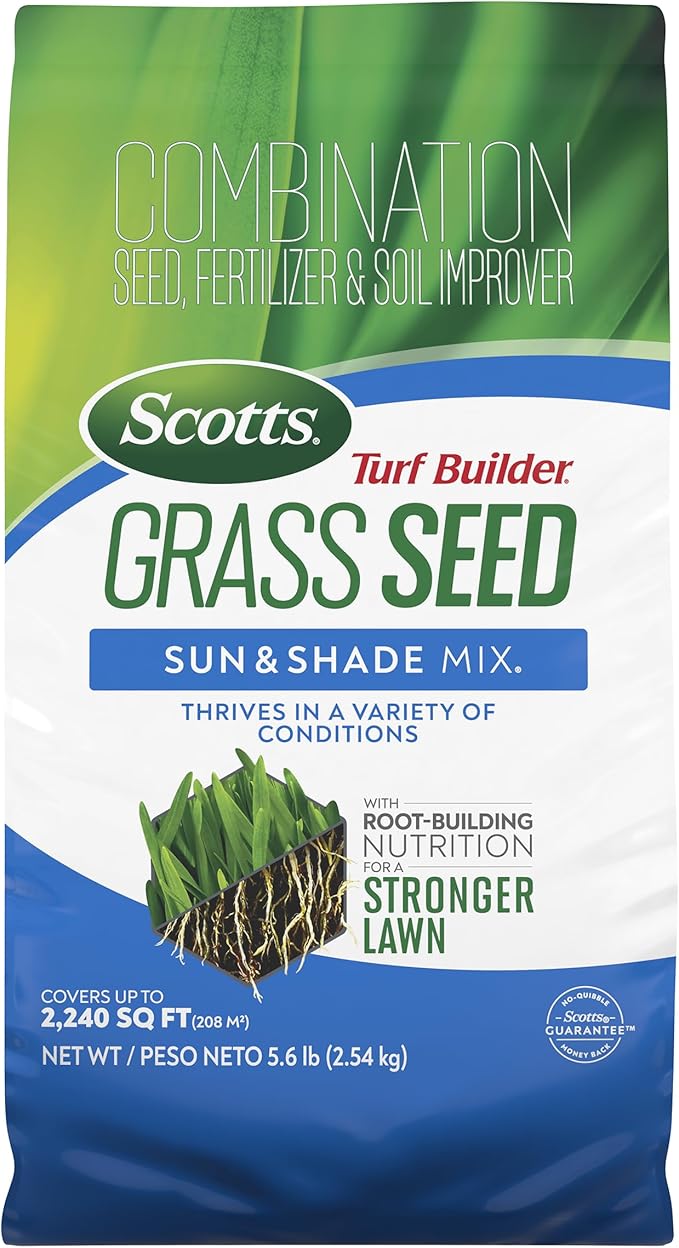
Designed to grow thick, green grass, Scotts Turf Builder Grass Seed Sun & Shade Mix suits homeowners looking for a lawn seed that handles both sunny and shaded areas well. Its key strength lies in promoting deep root growth to create a stronger, healthier lawn.
Preparation involves spreading the seed mix using a Scotts Spreader, ensuring even coverage. It requires regular watering to establish properly, adapting easily to lawns with full sun and moderate shade. The blend of Kentucky bluegrass, ryegrass, and fescues caters to diverse lighting and soil conditions.
Combining seed, fertilizer, and soil improver in one, it simplifies the planting process during spring.
Performance benefits include medium drought tolerance and good durability through changing weather. The seed mix thrives in various conditions common to USDA Hardiness Zone 5. The notable compliment is its ability to create dense, green grass, but some mention the need for consistent watering until fully established as a drawback.
The product is praised for growing a noticeable thick, green lawn with good root strength. Commonly, users note that watering must be kept consistent during the early growth period to avoid patchy areas. It works well when sunlight and moisture conditions are followed as recommended.
Gardeners with lawns that have varied sun exposure and the time to water regularly will find this seed mix fitting. Those facing severe drought conditions or who prefer a low-maintenance lawn might prefer alternative options with higher drought resistance.
Pros
- Works well in both sun and moderate shade
- Includes fertilizer and soil improver with seeds
- Supports medium drought tolerance
- Combines multiple grass types for durability
Cons
- Needs consistent watering to establish
- Limited to medium drought tolerance only
| Specification | Details |
|---|---|
| Sunlight Exposure | Full Sun |
| Expected Planting Period | Spring |
| Soil Type | Outdoor |
| Moisture Needs | Regular Watering |
| USDA Hardiness Zone | 5 |
| Seed Treatment Method | Scotts Spreader |
6. Scotts EZ Seed Patch & Repair

Gardeners looking to fix bare spots quickly and easily will find this seed mix practical. It works well in both sun and shade, making it versatile for different lawn conditions.
Its biggest strength lies in combining seed, fertilizer, and mulch in one step, simplifying the patch and repair process.
Using the patch and repair product involves just three steps: prepping your damaged lawn areas, spreading the seed mix evenly, and watering until the soil stops absorbing water. It covers up to 85 square feet per 3.75-pound jug, which is convenient for small to medium-sized patches. The blend of Kentucky bluegrass, perennial ryegrass, and fine fescue thrives best with daytime temperatures between 60°F and 80°F, so timing your planting for spring makes a big difference.
Performance is strong when used in the right temperature range, with seeds that germinate quickly to fill in bare lawns. The included mulch and fertilizer components support healthy growth without needing extra products.
Reviews highlight how easy it is to get grass growing fast, though some mention the coverage area may not suit larger yards. The packaging is functional, but the weight might feel a bit heavy when spreading by hand over bigger areas.
The seed mix helps grass grow quickly on bare spots with minimal extra effort since it combines seed, fertilizer, and mulch in one. Some users find the coverage area limited and note the jug’s weight makes manual spreading less comfortable over bigger spaces.
This product suits anyone with small to medium lawn patches in need of a straightforward repair. Those with large lawns or who prefer lighter packaging might look for alternatives that cover more ground or offer easier application.
Pros
- Easy 3-step setup for patch repair
- Covers bare spots in sun and shade
- Includes seed, mulch, and fertilizer
- Suitable for 60°F to 80°F daytime temperatures
Cons
- Coverage area may be small for large lawns
- Jug can feel heavy to spread by hand
| Specification | Details |
|---|---|
| Brand | Scotts |
| Model Number | Scotts – 17508 |
| Unit Count | 64 Ounce |
| Coverage | Up to 85 sq. ft. |
| Seed Mix | Kentucky bluegrass, perennial ryegrass, fine fescue |
7. Scotts Turf Builder Thickr Lawn Sun & Shade

Scotts Turf Builder Thick’R Lawn Sun & Shade stands out by combining grass seed, fertilizer, and soil improver in one product. It suits anyone looking to fill in thin patches and achieve a greener, thicker lawn in areas with full sun. Its strongest feature is helping grow up to 50% thicker grass when properly cared for.
Using it involves spreading the mix in late spring and again in late summer or early fall. The three-in-one formula takes care of seeding bare spots while feeding the existing grass and improving soil health.
It covers a decent area with a 10 lb. bag and is designed mainly for lawns receiving full sun, adapting well to common garden care priorities throughout the growing season.
Grass grows noticeably thicker and greener with consistent application, fulfilling its promise for weak and patchy lawns. Most praise the balance between seed and fertilizer, making lawn care simpler. A common complaint is that results heavily depend on current lawn condition, which means it may not work as well on severely damaged or shaded areas.
The product earns high marks for its ability to promote a thicker, greener lawn under full sun and standard care. Users notice visible improvement in thin areas, but some find it less effective where lawns are heavily damaged or receive shade, limiting its overall impact.
Gardeners with existing thin, sunlit lawns who seek a combined seeding and fertilizing approach will find this product useful. Those managing shady or severely sparse lawns might want to look for alternatives better suited to those challenging conditions.
Pros
- Combines seed, fertilizer, and soil improver
- Covers a good area with one 10 lb. bag
- Designed for full sun exposure
- Improves root development
Cons
- Effectiveness varies with existing lawn condition
- Not suitable for shady lawns
| Specification | Details |
|---|---|
| Coverage per Bag | 10 lb. |
| Sunlight Exposure | Full Sun |
| Application Times | Late spring and late summer/early fall |
| Key Ingredients | Grass seed, fertilizer, soil improver |
| Thickening Possible | Up to 50% thicker lawn |
8. Pennington Annual Ryegrass Seed

Pennington Annual Ryegrass Seed is designed for overseeding southern lawns during spring, providing quick green coverage and durable growth. It suits homeowners wanting fast color and reliable grass support, especially on warm-season lawns like Bermuda and Zoysia. Its main strength lies in establishing rapidly, showing results within a week.
Using it requires moderate watering and enough sunlight, around 6 to 8 hours daily. The coated seed helps with easy spreading and better germination rates, seeing new shoots between 3 to 7 days.
It works outdoors across most US climates, thriving in full sun to light shade. Ideal for temporary reinforcement on northern lawns, it holds up well to regular foot traffic.
Performance-wise, the seed grows into tough annual ryegrass about 3 inches tall, with notable disease resistance. It excels at turning patchy or dormant warm-season grasses green quickly. The seed is best for temporary coverage since it won’t establish permanently in northern zones.
Positive feedback appreciates its fast color, while some mention it only lasts one season.
Pennington Annual Ryegrass Seed receives praise for its rapid germination and quick color that livens up yards fast. The most frequent downside is that it functions as a temporary cover, not suited for permanent northern lawn solutions.
Gardeners looking to boost green coverage in warm-season lawns will find it effective. Those needing long-term northern lawn planting should look for an option designed for permanent growth instead.
Pros
- Results visible within 3 to 7 days
- Good for overseeding southern lawns
- Handles foot traffic well
- Disease resistant variety
Cons
- Only temporary support for northern lawns
- Requires moderate watering for best results
| Specification | Details |
|---|---|
| Sunlight Exposure | Full Sun to Light Shade (6-8 hrs sun) |
| Expected Blooming Period | Winter |
| Expected Plant Height | 3 inches |
| Seed Treatment Method | Coated |
| Moisture Needs | Moderate Watering |
9. Pennington Contractors Central Grass Seed Mix

Growing a fresh lawn feels straightforward with this grass seed mix, tailored for spring planting and repair in cooler zones. Its biggest strength lies in tackling large areas efficiently, a solid choice for anyone needing quick coverage over up to 4,000 square feet.
Preparation involves spreading the coated seeds evenly on moderately watered soil and ensuring 4-6 hours of sunlight daily. The mix suits outdoor use across USDA zones 1 through 5, and requires moderate watering to keep the growth steady. Expect to see green shoots developing within about a week to three weeks, making it practical for both new lawns and overseeding projects.
Performance meets expectations with a height of about 3 inches, filling in bare spots steadily. The seed coating helps improve germination rates, which users appreciate.
Some find the 4-6 hours of sun requirement limits options in shadier yards, but most praise the fast visible results. Built for durability in a range of conditions, it serves well in its intended climate.
The grass seed mix reliably produces new growth within 7 to 21 days and covers a large lawn area efficiently, though some users note the limitation of needing consistent sunlight for best results. The coated seeds improve the chance that the grass will take hold quickly in appropriate climates.
Anyone living in USDA zones 1 to 5 with sunny outdoor spaces and a lawn area up to 4,000 square feet will find this seed mix practical. Those with heavily shaded yards or needing grass outside the spring and fall seasons might want to explore alternatives better suited to low light or different climates.
Pros
- Covers large lawn areas up to 4,000 sq. ft.
- Coated seeds for better germination
- Works in cooler USDA zones 1 through 5
- Produces new grass within 7 to 21 days
Cons
- Requires 4-6 hours of direct sunlight daily
- Limited to outdoor spring and fall planting periods
| Specification | Details |
|---|---|
| Expected Planting Period | Spring |
| Coverage Area | Up to 4,000 sq. ft. |
| Sunlight Exposure | 4-6 Hours of Sun |
| USDA Hardiness Zone | 1, 2, 3, 4, 5 |
| Expected Plant Height | 3 inches |
| Moisture Needs | Moderate Watering |
10. Scotts Turf Builder Rapid Grass Sun & Shade Mix

Great for homeowners looking to fix bare spots quickly, the Scotts Turf Builder Rapid Grass Sun & Shade Mix stands out because it promises grass growth twice as fast as seed alone. Ideal for spring planting, it combines seed and fertilizer for a green lawn in just weeks.
Applying the mix is straightforward and best done when temperatures are between 60°F and 80°F, either in spring or fall. One 2.4 lb. bag covers 355 sq.
ft. when starting new grass and 1,200 sq.
ft. for overseeding. It works well in partial shade, making it versatile for lawns with uneven sunlight.
The combination of seed and fertilizer reduces the need for separate feeding schedules.
Grass grows faster thanks to the special seed and fertilizer blend, filling in thin areas efficiently. Build quality is practical, focusing on coverage and nutrient delivery rather than packaging flair. Reviews often say the grass fills in quickly and looks lush.
Some users note that patience is still needed for best results under certain weather or soil conditions.
Most praise highlights how quickly the lawn fills in with green grass when the product is used right at recommended temperatures. The main complaint from reviews points to the need for patience, as it doesn’t instantly fix bare spots under less-than-ideal weather or soil conditions.
Gardens with patches in partial shade and temperatures consistently between 60°F and 80°F will see fast, noticeable results. Anyone dealing with more extreme climates or impatient for an immediate full lawn might consider options that address those specific challenges better.
Pros
- Grows grass up to 2X faster than seed alone
- Seed and fertilizer in one bag
- Covers large area for overseeding
- Works well in partial shade
Cons
- Best results need specific temperature range
- May require patience under certain conditions
| Specification | Details |
|---|---|
| New Lawn Coverage | 355 sq. ft. |
| Overseeding Coverage | 1,200 sq. ft. |
| Temperature Range for Application | 60°F – 80°F |
| Sunlight Exposure | Partial Shade |
| Bag Weight | 2.4 lb. |
11. Pennington Smart Seed Sun & Shade Tall Fescue Mix
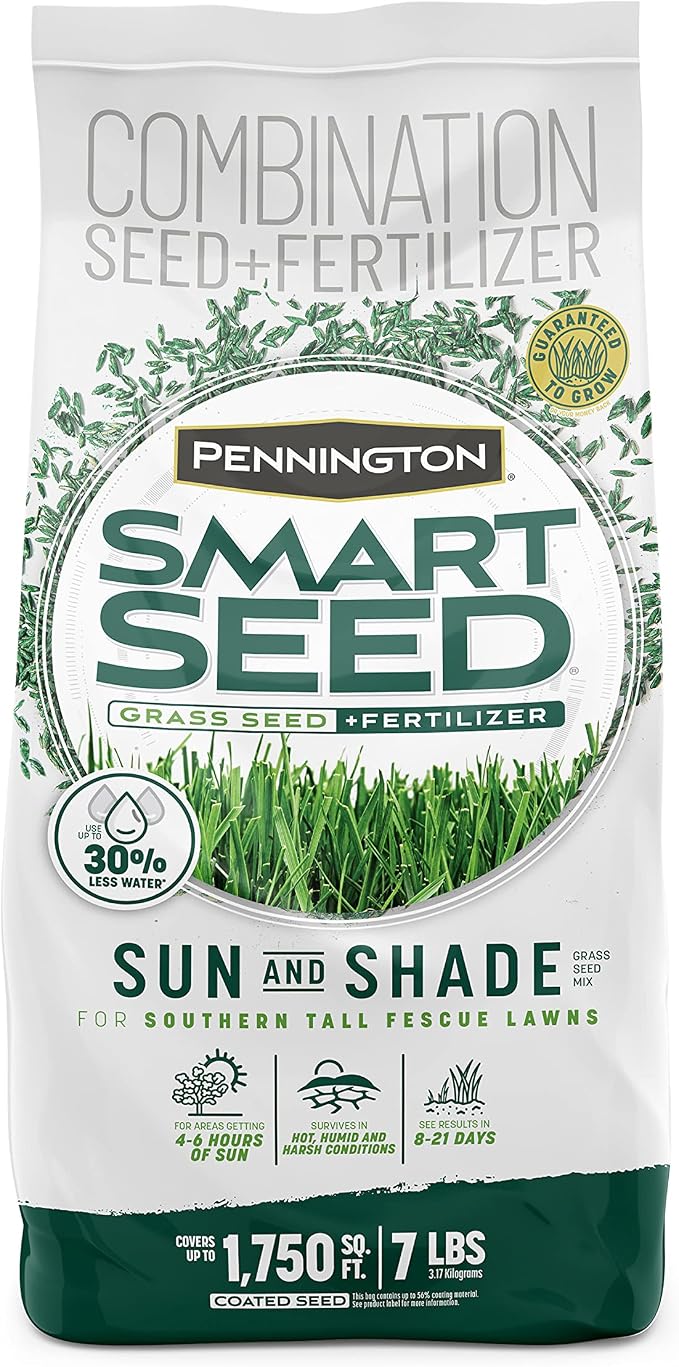
Pennington Smart Seed Sun & Shade Tall Fescue Mix is a grass seed blend mixed with fertilizer, designed specifically for lawns in southern climates that get a mix of sun and shade. It stands out for its ability to thrive in both sunny spots and moderate shade while cutting water use by up to 30% compared to regular seed.
Planting is straightforward in spring, needing moderate watering to get started. It does well with 4 to 6 hours of sunlight each day, making it suitable for yards where light varies across the lawn. The included fertilizer gives the grass a boost without overdoing nutrients, which keeps it healthy through hot, humid conditions.
You can expect to see green grass emerge between 8 to 21 days after planting.
Growth performance is consistent in tough climates, with tall fescue that grows about 3 inches high. The seed mix is built for outdoor use and fits USDA hardiness zones 5, 8, and 12. Many people appreciate how quickly the grass fills in and how much water it saves from one year to the next.
Some mention that areas with heavier shade might still challenge the lawn’s coverage.
Many find the quick germination and water-saving benefits impressive, making it reliable for southern lawns exposed to varying sunlight. Some note that its performance in dense shade might not meet expectations, which is a common point of caution. The fertilizer in the mix helps give early growth a boost, but watering remains important during the first weeks.
Anyone with a yard that receives a fair balance of sun and moderate shade will enjoy good coverage and easy maintenance. Lawns heavily shaded or with extreme moisture needs might be better off choosing a seed mix designed specifically for those conditions instead.
Pros
- Works well in mixed sun and shade areas
- Includes fertilizer for initial growth support
- Reduces water consumption up to 30%
- Germination in 8 to 21 days
Cons
- Not ideal for heavy shade zones
- Requires moderate watering during establishment
| Specification | Details |
|---|---|
| Sunlight Exposure | 4-6 Hours |
| Moisture Needs | Moderate Watering |
| Expected Plant Height | 3 inches |
| Expected Blooming Period | Spring |
| USDA Hardiness Zone | 5, 8, 12 |
| Indoor/Outdoor Usage | Outdoor |
12. Pennington Smart Seed Sun & Shade Tall Fescue Mix

Pennington Smart Seed Sun & Shade Tall Fescue Mix is designed for southern lawns that get both sun and moderate shade. It stands out because it includes fertilizer, making it a simple all-in-one solution for growing healthy grass in spring.
To use, spread the seed on outdoor areas receiving 4 to 6 hours of sunlight. The built-in fertilizer supports growth right from the start, so watering can be moderate without stressing the lawn.
This mix suits lawns that experience hot, humid conditions common in southern zones.
The tall fescue in this mix grows well in challenging environments and shows visible green shoots within 8 to 21 days. The seed mix is tailored to handle heat and humidity, but the grass typically reaches around 3 inches in height, meaning it might need regular mowing. Most reviews praise the quick germination, though some mention it requires consistent watering to establish fully.
Quick germination is a definite strength thanks to the fertilizer mix, showing results within a few weeks. Some find regular watering necessary for the grass to take root, especially in very dry spells. The 3-inch height means lawn care involves mowing sooner than some might expect.
Lawns receiving 4 to 6 hours of sun and moderate shade will benefit the most from this seed mix. Gardens in hot, humid southern regions can rely on it, while those without enough consistent moisture might want a seed variety needing less watering.
Pros
- Seed mix includes fertilizer for easy growth
- Works well in sun and moderate shade
- Survives hot and humid southern climates
- Visible results in 8 to 21 days
Cons
- Needs consistent watering to establish fully
- Grass height requires regular mowing
| Specification | Details |
|---|---|
| Sunlight Exposure | 4-6 Hours |
| Expected Blooming Period | Spring |
| Expected Plant Height | 3 inches |
| Moisture Needs | Moderate Watering |
| USDA Hardiness Zone | 12, 5, 8 |
Best Grass Seeds for Spring Planting Compared
| Product | Usage | Sunlight Exposure | Planting Period | USDA Hardiness Zone |
|---|---|---|---|---|
| Pennington Kentucky 31 Fescue | Outdoor | 4-8 Hours Sun | Spring | Zones 1-8 |
| Pennington Smart Seed Ryegrass | Outdoor | 4-6 Hours | Spring | Zones 1-12 |
| Pennington Smart Seed Sun & | Outdoor | 4-6 Hours | Spring | Zones 5,8,12 |
| O.M. Scott Tall Fescue Blend | Outdoor | Full Sun | Spring or Fall | – |
| Scotts Turf Builder Sun & | Outdoor | Full Sun | Spring | – |
| Scotts EZ Seed Patch & | Outdoor | – | – | – |
| Scotts Thickr Lawn Sun & | Outdoor | Full Sun | – | – |
| Pennington Annual Ryegrass | Outdoor | 6-8 Hours Sun | Spring | Zones 1-12 |
| Pennington Contractors Grass Mix | Outdoor | 4-6 Hours Sun | Spring | Zones 1-5 |
| Scotts Rapid Grass Sun & | Outdoor | Partial Shade | – | – |
| Pennington Smart Seed Tall Fescue | Outdoor | 4-6 Hours | Spring | Zones 5,8,12 |
| Pennington Smart Seed Tall Fescue | Outdoor | 4-6 Hours | Spring | Zones 5,8,12 |
- UsageOutdoor
- Sunlight Exposure4-8 Hours Sun
- Planting PeriodSpring
- USDA Hardiness ZoneZones 1-8
- UsageOutdoor
- Sunlight Exposure4-6 Hours
- Planting PeriodSpring
- USDA Hardiness ZoneZones 1-12
- UsageOutdoor
- Sunlight Exposure4-6 Hours
- Planting PeriodSpring
- USDA Hardiness ZoneZones 5,8,12
- UsageOutdoor
- Sunlight ExposureFull Sun
- Planting PeriodSpring or Fall
- USDA Hardiness Zone–
- UsageOutdoor
- Sunlight ExposureFull Sun
- Planting PeriodSpring
- USDA Hardiness Zone–
- UsageOutdoor
- Sunlight Exposure–
- Planting Period–
- USDA Hardiness Zone–
- UsageOutdoor
- Sunlight ExposureFull Sun
- Planting Period–
- USDA Hardiness Zone–
- UsageOutdoor
- Sunlight Exposure6-8 Hours Sun
- Planting PeriodSpring
- USDA Hardiness ZoneZones 1-12
- UsageOutdoor
- Sunlight Exposure4-6 Hours Sun
- Planting PeriodSpring
- USDA Hardiness ZoneZones 1-5
- UsageOutdoor
- Sunlight ExposurePartial Shade
- Planting Period–
- USDA Hardiness Zone–
- UsageOutdoor
- Sunlight Exposure4-6 Hours
- Planting PeriodSpring
- USDA Hardiness ZoneZones 5,8,12
- UsageOutdoor
- Sunlight Exposure4-6 Hours
- Planting PeriodSpring
- USDA Hardiness ZoneZones 5,8,12
How to Choose the Right Grass Seed for Spring
Choosing the right grass seed depends on factors like climate, soil type, and sunlight exposure to ensure healthy growth. Picking the appropriate seed helps avoid wasted effort and extra costs from reseeding or lawn damage, making your lawn care more efficient and durable.
Seed Type and Grass Variety
Spring planting demands seed varieties that cope well with local climates and soil types. Selecting a grass that thrives in your region’s temperature and rainfall patterns prevents slow growth and patchy lawns. For example, cool-season grasses suit northern areas with mild summers, whereas warm-season types perform better in southern regions.
Soil compatibility plays a role too; sandy soils drain quickly and need grasses adapted to drier conditions, while clay soils hold moisture and benefit from varieties tolerant of heavier textures.
Strong shade tolerance or high durability depends on lawn use. Lawns with children or pets need tougher grass types, while ornamental areas may prioritize fine texture and color. Matching seed type to these conditions means less maintenance and fewer reseeding jobs later.
Check seed labels for specific climate zones and soil compatibility to avoid surprises.
Germination Speed and Growth Rate
The daily look of your lawn hinges on how fast the seeds start sprouting after planting. Seeds that germinate quickly let you see results in under two weeks, reducing the chance of weeds filling empty spots.
Fast growth also enables quicker grounding of roots, creating a dense turf that resists foot traffic earlier in the season.
Slower seeds extend the timeline between planting and a finished lawn, complicating scheduling for multiple rounds of seeding or patch repairs in spring. Consider the typical germination speed, usually listed on seed packaging, to plan your work. A faster rate decreases the window where soil is bare and vulnerable.
Seed Purity and Quality
Experience shows that bags with a high percentage of pure, viable seeds translate directly into better lawn success. Seed mixes often include fillers or even weed seeds, which reduce the quality and can cause problems with unwanted plants taking over.
Choosing seed with at least 90% purity ensures most planted seeds will grow healthy grass.
Freshness is another subtle factor that matters. Older seed loses its ability to sprout, which isn’t obvious until after lots of time and effort are wasted.
Proper packaging and storage details on the label can help avoid low germination rates. Look for information on lot dates and storage recommendations.
Coverage and Seeding Rate
Figuring out how much seed to spread for your lawn area prevents cost overruns and patchy results. Most garden stores recommend seeding rates between 2 to 4 pounds per 1,000 square feet for established lawns, but new lawns often require a heavier rate. Knowing the coverage each package offers helps you buy the right amount without leftovers or shortages.
Spreading technique influences how evenly the grass grows. Applying seed too thick in spots causes crowding, while thin coverage invites weeds and bare patches. A broadcast spreader or hand-spread with follow-up raking usually produces the best results.
Check specific instructions on the seed label for the ideal seeding rate and method.
Resistance to Pests and Environmental Stress
Lawns in spring face common challenges like sudden temperature swings and increased disease pressure. Selecting grass seed resistant to fungal diseases typical of wet, cool springs reduces the need for chemical treatments and lowers the risk of thin or brown patches. Pest resistance helps maintain green coverage longer.
Environmental stresses such as drought or heavy foot traffic also wear down grass. Blends with strong drought tolerance and capacity for quick recovery after wear extend lawn life.
For frequent use areas, look for seed types labeled as wear-resistant and drought-tolerant to avoid repeated renovations.
Optimal Soil Preparation Techniques for Spring Grass Seed Planting
Preparing soil correctly sets the stage for healthy grass growth. Begin by clearing the area of debris, rocks, and old grass to create an even surface. Loosen the top 2 to 3 inches of soil with a rake or tiller; this makes it easier for seeds to take root.
Testing soil pH is helpful since grass thrives best between pH 6.0 and 7.0. Adjust the soil with lime or sulfur accordingly when it is too acidic or alkaline.
Good soil preparation steps include:
- Raking out dead material for better seed-to-soil contact
- Applying a starter fertilizer high in phosphorus to promote root development
- Ensuring the soil is moist but not waterlogged before sowing seeds
- Rolling the soil lightly after seeding to press seeds into the surface
These steps improve germination rates and help seeds establish quickly during spring when temperatures become favorable.
Common Mistakes to Avoid When Planting Grass Seed in Spring
Planting grass seed in spring requires attention to detail to avoid common pitfalls that slow down lawn development. One frequent error is overseeding into dry or compacted soil, which hinders seed germination and root growth.
Applying too much fertilizer or using the wrong type can burn young seedlings. Only use starter fertilizers formulated for new grass and follow package instructions carefully.
Other mistakes to steer clear of include:
- Seeding when the ground is too cold, delaying sprouting
- Ignoring proper watering schedules, new seeds usually need daily light watering to stay moist
- Failing to protect new seedlings from heavy foot traffic or pets
- Planting too deeply or unevenly, which causes patchy growth
Proper timing, watering, and seed-soil contact are key factors behind a smooth spring planting process.
Comparing Cool-Season vs Warm-Season Grass Seeds for Spring Lawns
Cool-season and warm-season grasses respond differently to spring temperatures, affecting their success after planting. Cool-season varieties like Kentucky bluegrass and fescue start growing actively once soil temperatures reach about 50°F, making early spring suitable for them.
These grasses stay green longer into fall.
Warm-season grasses such as Bermuda and zoysia typically remain dormant through early spring. They begin vigorous growth later, when soil temperatures reach around 65°F, often in late spring or early summer.
Planting these too early can waste seed and slow lawn establishment.
Key differences between these grass types:
- Cool-season grasses prefer cooler, wetter climates and need more frequent watering in summer
- Warm-season grasses are more drought-tolerant but require more heat to germinate
- Seeding timing greatly influences germination success depending on species
Choosing the right seed based on your local climate and planting schedule improves overall lawn health.
People Also Asked
How Do I Prepare Soil Before Planting Grass Seed in Spring?
Loosen the soil by tilling or raking to create a fine, even seedbed. Removing rocks and debris helps the seeds make good contact with the earth, which promotes germination. Adding a layer of compost can improve soil fertility and moisture retention.
What Is the Ideal Grass Seed Amount for a Small Backyard?
For a small backyard, about 5 to 10 pounds of grass seed usually covers 1,000 square feet, depending on seed type. It’s better to buy slightly more to ensure full coverage and patch any thin areas after planting.
Are There Safety Precautions When Applying Grass Seed Around Pets?
Use grass seed that’s free of chemical coatings or harmful additives around pets. Keep pets off the lawn until the seeds have germinated and the grass is established to avoid disturbing the soil or ingesting seeds.
How Long Does Grass Seed Usually Take to Germinate in Spring?
Grass seed generally takes 7 to 21 days to germinate in spring, depending on the type of grass. Consistent moisture during this period is crucial, so watering lightly but frequently helps keep the seeds from drying out.
What Common Problems Affect New Grass Seedlings After Planting?
Common problems include bird feeding on seeds, poor germination due to dry soil, and fungal issues from overwatering. Using a light mulch can protect seeds and keeping watering balanced prevents fungal growth.
Conclusion
Choosing the right grass seed for spring mostly depends on your climate, how much sun your lawn gets, and how durable you need the grass to be. Seeds formulated for the local weather will grow better, and some types handle shade or heavy foot traffic more effectively than others. Pay attention to these details before making a decision.
Consider the size of your lawn and how much maintenance you want to put in, as some seeds need more care or more frequent watering. Matching the seed to your budget and usage will save time and money. Check the comparison table and detailed picks above to find the best fit for your yard.

I’m Jake Thompson, and I’ve spent over a decade working on lawn mowers, from small push mowers to big riding tractors. I write about starting problems, blade sharpening, carburetor cleaning, oil changes, and seasonal maintenance. My goal is to give you clear, step-by-step advice so you can handle common mower issues yourself and keep your lawn looking sharp all season.