How Does a Lawn Mower Work?
When you use a lawn mower, its engine powers sharp blades that spin fast to cut grass cleanly and evenly. The blades are designed to lift and slice the grass precisely without tearing. This efficient cutting process is what makes a lawn mower essential for maintaining a neat and healthy lawn.
You guide the mower with the handle while the drive system transfers power from the engine to the wheels, moving the mower smoothly across your yard.
To keep it running well, regular maintenance is key. You can find out more about how each part works and how to care for it.
Key Takeaways
- The engine powers the mower by igniting fuel to move pistons that turn the blade shaft.
- Sharp blades spin rapidly to lift and precisely cut grass for a smooth trim.
- The drive system transfers engine power to the wheels for controlled movement.
- The handle guides the mower while safety features ensure secure operation.
- Routine maintenance like oil changes and blade sharpening keeps the mower efficient.
What Are the Main Parts of a Lawn Mower?
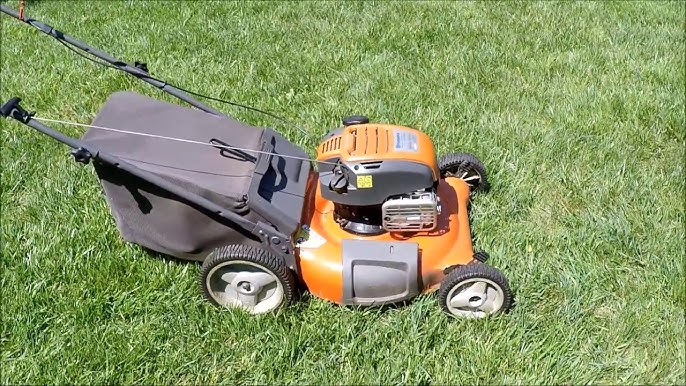
Before you start mowing, it helps to know the main parts of a lawn mower so you can use it safely and effectively. The key components include the engine, which powers the mower, and the wheels that let you move it around your yard. You’ll also find the handle, which you hold to guide the mower while cutting.
The fuel tank stores gasoline if it’s a gas mower—or a battery compartment for electric models. There’s a throttle or speed control to adjust how fast the engine runs. The deck covers the blade and helps direct the cut grass.
Finally, safety features like a blade brake or engine stop lever are essential—they stop the blade when you release the handle, keeping you safe as you mow.
How Do Lawn Mower Blades Cut Grass?
Although you might not see them clearly while mowing, the blades are the essential part that actually cuts the grass. When you start your lawn mower, the blades spin rapidly, slicing through grass with precision. Here’s how they do it:
The blades are the key, spinning fast to slice grass with precision while you mow.
- Sharp Edges: The blades have sharpened edges that act like knives, cutting grass cleanly rather than tearing it.
- High Speed Rotation: The blades spin quickly, creating enough force to cut through the grass evenly.
- Angle and Design: Blades are angled to lift grass slightly before cutting, ensuring a smooth and uniform trim.
How Your Lawn Mower Engine Powers the Machine
The sharp blades do the cutting, but they need power to spin fast enough to slice through grass. That power comes from your lawn mower’s engine, usually a small gasoline-powered motor. When you start the engine, it ignites fuel in the cylinder, creating controlled explosions that push a piston up and down.
This movement turns the crankshaft, converting the piston’s motion into rotational energy. The crankshaft then drives the blade shaft directly or through a belt system, making the blades spin rapidly. Your engine’s speed control, often a throttle, lets you adjust how fast the blades turn.
Without this engine power, the blades wouldn’t have the force required to cut grass efficiently and keep your lawn looking neat.
How the Lawn Mower Drive System Moves the Mower
When you push or engage your lawn mower’s drive system, it transfers power from the engine to the wheels, allowing the mower to move forward without much effort on your part. This system uses a series of components working together to make movement smooth and controlled.
Engaging your lawn mower’s drive system effortlessly powers the wheels for smooth, controlled movement.
Here’s how it works:
- Transmission: It adjusts the power output from the engine to the wheels, controlling speed and torque.
- Drive Belt: This flexible belt connects the engine’s pulley to the transmission, transferring rotational energy seamlessly.
- Wheels and Axle: The wheels receive power through the axle, converting engine energy into forward motion.
Essential Lawn Mower Maintenance Tips
Keeping your lawn mower running smoothly involves more than just understanding how its drive system works. You need to perform regular maintenance to guarantee it stays efficient and safe. Start by checking and changing the oil as recommended—this prevents engine damage.
Clean or replace the air filter to maintain proper airflow. Don’t forget to sharpen the blades regularly; dull blades tear grass instead of cutting it cleanly. Inspect and replace the spark plug annually to keep the engine firing well.
Also, clean the mower deck after each use to avoid grass buildup, which can cause rust and affect cutting performance. Finally, check the drive belts and tires for wear, replacing them when needed. Following these tips will extend your mower’s life and keep your lawn looking great.
Frequently Asked Questions
Can Electric Lawn Mowers Replace Gas-Powered Ones?
Yes, electric lawn mowers can replace gas-powered ones for many users. They’re quieter, easier to maintain, and eco-friendly.
However, you might need gas for larger yards or tougher grass, depending on your mowing needs.
How Do Robotic Lawn Mowers Navigate Your Yard?
Imagine your robotic mower as a tiny explorer using boundary wires and sensors to map your yard. It navigates like a GPS, avoiding obstacles and ensuring every blade of grass gets trimmed efficiently without you lifting a finger.
What Safety Features Should a Lawn Mower Have?
You should look for safety features like a blade brake clutch, automatic shutoff if you release the handle, a sturdy guard to protect from debris, and child lock controls. These help keep you safe while mowing.
How Often Should You Sharpen Lawn Mower Blades?
You should sharpen your lawn mower blades about every 20-25 hours of use, which often coincides with the start of the mowing season or after hitting debris.
Dull blades tear grass, so keeping them sharp helps your lawn stay healthy and neat.
Are Push Mowers Better for Small Lawns?
Yes, push mowers are great for small lawns because they’re lightweight, easy to maneuver, and don’t require gas or electricity.
You’ll save money and get a good workout while keeping your grass neatly trimmed.
Conclusion
Now that you know how a lawn mower’s blades, engine, and drive system work together, keeping your grass neat is easier than ever. Regular maintenance guarantees your mower runs smoothly and lasts longer.
So, why not give your mower a little TLC before your next cut? With just a bit of care, you’ll keep your lawn looking great season after season.
Proper lawn mower care ensures efficient cutting, extends the engine’s life, and maintains the sharpness of the blades. Making every mowing session a breeze starts with understanding how your lawn mower works.