Top 12 Best Organic Grass Seed That WILL Transform Your Lawn!
Seed that looks promising but fails to grow leaves a patchy lawn, wasting both time and money. The best organic grass seed avoids these problems by using high-quality, untreated seeds that are adapted to local climates.
These seeds usually show a higher germination rate, providing thicker, healthier grass without the chemicals found in conventional options.
What separates good organic grass seed from poor types is primarily the purity and germination rate. Pure seed means fewer weeds and unwanted plants mixed in, often above 95 percent purity.
Germination rates typically need to exceed 80 percent for reliable coverage. Choosing seed with a size suitable for the soil type and a mix of grass varieties also helps it establish faster and resist pests naturally.
Need a Quick Check?
| Image | Product | Price |
|---|---|---|
Our Top Picks 1  | The Cat Ladies Cat Grass | Check Price |
Our Top Picks 2  | PowerGrow Wheatgrass Seed | Check Price |
Our Top Picks 3  | Eco Seed Low Grow Fescue | Check Price |
Our Selected Top 12 Organic Grass Seed for Different Needs
This list features a variety of organic grass seeds chosen for different climates and lawn types. Each review explains how the seed performs, which conditions it suits best, and highlights its advantages and disadvantages to help you make an informed decision for your yard.
1. The Cat Ladies Organic Cat Grass Seed
People who want a quick-growing organic grass seed for their pets will appreciate this blend. Suited for both indoor and outdoor use, it stands out because of its diverse mix of wheat, oats, rye, and barley, providing a natural, nutrient-rich treat that sprouts fast.
Setting it up is simple and suited for loam soil. The seeds start showing growth in just 4 to 7 days with moderate watering and plenty of full sun exposure. It’s easy to keep alive with regular watering and offers a healthy snack for pets throughout the year, making daily care pretty fuss-free.
It performs well by growing healthy grass that reaches about 4 inches tall, packed with essential vitamins and minerals. Construction-wise, everything is natural and organic, with no GMOs involved.
Praises often note its quick growth and pet-friendly nature, while some mention that it needs consistent watering to stay healthy.
Growth happens fast with this seed blend, producing a healthy, tasty grass for pets. The most frequent downside involves the need for steady watering and suitable sunlight to maintain vibrant growth.
Anyone wanting a reliable, organic grass seed for their indoor or outdoor pets will find this a great choice. Those unable to provide enough sunlight or consistent care might want to look for alternatives that demand less attention.
Pros
- Grows quickly in 4-7 days
- Rich mix of wheat, oats, rye, and barley
- Organic and non-GMO
- Pet safe and nutritious
Cons
- Needs moderate watering to thrive
- Requires full sun exposure
| Specification | Details |
|---|---|
| Indoor Outdoor Usage | Indoor, Outdoor |
| Expected Blooming Period | Year Round |
| Sunlight Exposure | Full Sun |
| Expected Plant Height | 4 inches |
| Soil Type | Loam Soil |
| Moisture Needs | Moderate Watering |
2. PowerGrow Organic Wheatgrass Seed
PowerGrow Organic Wheatgrass Seed stands out for being a bulk organic option that guarantees growth, ideal for anyone wanting to grow wheatgrass for juicing, baking, or sprouting. Its single biggest strength is the premium USA-grown quality packed in a large 5-pound bag suitable for extended use.
Setting up is straightforward since these seeds come ready for sprouting or planting. Day-to-day use involves soaking and germinating the hard red wheat variety, which typically produces fresh wheatgrass quickly. The large bag ensures you have plenty of seed on hand for multiple planting cycles without frequent repurchasing.
Performance is consistent with seeds that sprout reliably, providing healthy wheatgrass suitable for various food uses. The bag’s durable packaging keeps the seeds fresh throughout the 900-day shelf life.
Positive comments highlight the guaranteed growth and volume, while some mention the heavy bulk as a bit cumbersome to store.
The seed’s guaranteed growth and large bulk size receive strong praise, providing plenty of organic wheatgrass for repeated harvests. A common downside is the sizable bag, which some find difficult to store easily in limited spaces. The seeds themselves maintain freshness well over time and sprout reliably.
Anyone looking to grow wheatgrass regularly or in large amounts will appreciate the volume and organic quality. Those with limited storage space or who want a smaller seed pack might prefer a more compact option instead of such a large bag.
Pros
- Bulk quantity suitable for extended growing
- Certified organic and USA-grown
- Guaranteed to grow healthy wheatgrass
- Versatile for sprouting, baking, or food storage
Cons
- Large 5-pound bag can be bulky to store
- Requires space for sprouting and growing wheatgrass
| Specification | Details |
|---|---|
| Brand Name | PowerGrow Systems |
| Product Shelf Life | 900 days |
| Serving Range | 100-200 |
| Coin Variety 1 | Hard Red Wheat |
| Container Type | Bag |
| Included Components | Organic Wheatgrass Seeds (5 Pounds) |
3. Eco Seed Low Grow Fescue Lawn Grass Seed
Eco Seed Low Grow Fescue Lawn Grass Seed is perfect for those wanting a lawn that requires minimal mowing and maintenance. It suits people dealing with shady or difficult areas, offering slow-growing, drought-tolerant grass that remains attractive whether regularly cut or left alone.
Planting can be done in fall or spring, and the seed adapts to almost any soil type from sandy to clay. It grows well in full sun or shade and needs little fertilizer or watering. Mowing is only necessary occasionally between 2-4 inches; leaving it unmown is fine too, though yearly clipping removal helps keep it fresh.
This grass excels in creating a fine-textured, resilient turf. It resists drought and many diseases and stays healthy with low upkeep. Most users praise how little they have to mow, while some note the slow growth means it takes time to fully establish.
The tall, lush appearance when unmown is a definite highlight.
Users value the low mowing needs and the grass’s ability to stay healthy in varied sunlight and soil conditions. Some mention it takes a while to fully fill in, which can be frustrating if quicker coverage is wanted. The tall growth remains attractive but needs yearly upkeep if not cut.
Gardeners seeking a low-maintenance lawn in shady or tough spots will appreciate the easy care. Those wanting a fast-growing, quick cover might want a faster-developing seed option instead, especially if close mowing is preferred regularly.
Pros
- Slow growing, mow less often
- Thrives in full sun to heavy shade
- Drought tolerant and disease resistant
- Adapts to sandy and clay soils
Cons
- Slow establishment can take time
- Annual clipping removal required if unmown
| Specification | Details |
|---|---|
| Sunlight Exposure | Full sun to dense shade |
| Expected Plant Height | 12 inches |
| Soil Type | Variable |
| Moisture Needs | Low |
| USDA Hardiness Zone | 3-7 |
4. Jonathan Green Full Sun Grass Seed

Growing grass in full sun can be tough, but this seed mix handles it well, making it suitable for sunny yards with heat and drought challenges. Its ability to resist these conditions stands out as the biggest benefit, saving effort on constant watering and protection.
Each order gives you two 1-pound bags, covering a fair amount of area, up to 850 sq. ft. per bag for overseeding, or 425 sq.
ft. for starting new lawns.
Spread the seed outdoors in spring, where it thrives under direct sunlight. The natural resistance to insects also cuts down on pest issues, making daily lawn care simpler and less intrusive.
The seed establishes a strong lawn that handles heat and dry spells better than many alternatives. It is straightforward to use outside without extra fuss. The main praise from users is how well it stands up to tough conditions.
Some found the coverage area smaller than expected when starting brand new lawns, which requires buying more bags to seed larger spaces fully.
The seed receives strong praise for thriving in heat and dry conditions while resisting insects naturally. Common complaints involve the smaller coverage area for starting new lawns, meaning more seed is needed for big projects.
Ideal for anyone with a sunny yard facing drought or heat challenges who needs durable grass. Those with shady lawns or larger new lawn areas may want to consider other options for better coverage or shade tolerance.
Pros
- Good heat and drought resistance
- Two 1-pound bags per order
- Covers large areas when overseeding
- Insect resistance reduces pest problems
Cons
- Smaller coverage area for new lawns
- Only designed for full sun locations
| Specification | Details |
|---|---|
| Indoor Outdoor Usage | Outdoor |
| Sunlight Exposure | Full Sun |
| Expected Blooming Period | Spring |
| Seed Coverage for Overseeding | Up to 850 sq. ft. per bag |
| Seed Coverage for New Lawns | Up to 425 sq. ft. per bag |
| Special Features | Heat and drought tolerance, naturally insect resistant |
5. Pennington Annual Ryegrass Seed

Perfect for southern lawns needing green winter coverage, Pennington Annual Ryegrass Seed stands out for its fast growth and vibrant color. It works best in full sun areas and suits those wanting a quick overseeding option during colder months.
Getting it started requires planting in spring with moderate watering, and it establishes quickly within a week. It thrives in 6 to 8 hours of sunlight, fitting well over Bermuda, Zoysia, and other warm-season grasses. Coated seed treatment helps in easy handling and consistent spreading, making daily lawn maintenance straightforward.
The seed delivers rapid germination with noticeable green patches in 3 to 7 days, offering reliable winter grass support. It holds up well against foot traffic and resists common diseases, maintaining a healthy lawn look. A common downside is that since it’s annual ryegrass, the coverage only lasts for the winter season, requiring replanting the next year.
Many appreciate the quick germination and rich winter color that appears within a week of planting. A frequent complaint is the need to reseed annually since it only grows as an annual grass, so it doesn’t provide year-round lawn coverage.
People looking to maintain a green lawn during winter months will find this seed useful, especially in southern regions with warm-season grasses. Those seeking a permanent grass solution or year-round coverage should consider other options better suited for long-term growth.
Pros
- Fast germination, visible in 3 to 7 days
- Good for overseeding warm-season grasses
- Handles foot traffic and resists diseases
- Coated seeds for easy spreading
Cons
- Only provides temporary winter grass coverage
- Requires replanting each year for continuous green
| Specification | Details |
|---|---|
| Sunlight Exposure | Full Sun to Light Shade (6-8 hrs sun) |
| Expected Planting Period | Spring |
| Expected Blooming Period | Winter |
| USDA Hardiness Zone | 1-12 |
| Expected Plant Height | 3 inches |
| Moisture Needs | Moderate Watering |
6. Pennington Kentucky 31 Tall Fescue Grass Seed

Kentucky 31 Tall Fescue is a grass seed designed to thrive in both sunny and medium-shaded spots. It suits homeowners looking for a lawn that holds up to tough conditions like hot summers and heavy rains. Its biggest strength lies in growing thick, durable blades that can handle foot traffic well.
Planting in spring makes the most sense for this seed. It covers a large area up to 4,000 square feet, so it works for medium-sized yards without needing constant re-seeding.
Keeping the soil moderately watered helps the grass show results quickly, usually between 8 and 21 days. It can grow in sandy soil, which makes it adaptable for different garden environments. This seed fits into both sunny spots with 4-8 hours of sun and parts of the yard with some shade.
Once established, the grass stands about 3 inches tall and remains tough under wear. It offers good resilience against foot traffic, making it suitable for families or pets that spend time outdoors. The strongest praise mentions its thick growth and lasting toughness.
The most common complaint is that it requires regular watering for best results, which might not suit some lifestyles.
Thick, durable blades that resist wear are the seed’s main highlight, ensuring a lush lawn under varying conditions. However, it requires moderate watering and care to establish well, which can be a drawback for low-maintenance gardening.
Homeowners wanting a tough lawn that stands up to activity and can handle sun or shade will find this suitable. Those seeking a grass seed for fall planting or minimal watering should consider other options.
Pros
- Grows thick grass blades for a full lawn look
- Tolerates heavy foot traffic well
- Works in sun or medium shade
- Covers large areas up to 4,000 sq. ft.
Cons
- Needs regular watering to keep healthy
- Best planted only in spring
| Specification | Details |
|---|---|
| Sunlight Exposure | 4-8 Hours of Sun |
| Soil Type | Sandy Soil |
| Moisture Needs | Moderate Watering |
| Expected Planting Period | Spring |
| Expected Plant Height | 3 inches |
| Coverage | Up to 4,000 sq. ft. |
7. Scotts EZ Seed Patch & Repair

Easy patching of bare spots is what really stands out about Scotts EZ Seed Patch & Repair. It’s ideal for homeowners dealing with lawn damage who want a straightforward, all-in-one solution that works in both sun and shade areas.
The combination of grass seed, mulch, and fertilizer simplifies the repair process.
Setting it up is simple: prepare the bare patch, spread the seed evenly, and water until the soil won’t absorb more. The mix contains Kentucky bluegrass, perennial ryegrass, and fine fescue, which thrive between 60°F and 80°F. Covering around 85 square feet per 3.75 lb jug lets you handle small to moderate areas without multiple products.
It performs well at germinating under suitable temperatures with careful watering. The blend is designed to repair patches effectively, although patience is required for full results.
The product is built to combine seed with mulch and fertilizer for easy application, with praise noting how convenient the 3-step process is. Some users wish coverage area was larger for bigger lawns.
The most common praise is for how simple it is to repair bare spots without multiple products, thanks to the combined seed, mulch, and fertilizer. A typical complaint highlights the limited coverage, which can be frustrating for extensive lawn damage.
Those with small to medium patches in temperatures between 60°F and 80°F will find this product user-friendly and effective. Homeowners with larger lawns or those expecting fast, extensive coverage might want to consider alternatives that cover more ground per application.
Pros
- Combines seed, mulch, and fertilizer
- Covers bare spots up to 85 sq. ft.
- Works in sun and shade
- Easy 3-step application process
Cons
- Coverage area may be insufficient for larger lawns
- Needs precise watering to avoid poor germination
| Specification | Details |
|---|---|
| Brand | Scotts |
| Model Number | Scotts – 17508 |
| Coverage | Up to 85 sq. ft. |
| Unit Count | 64 Ounce |
| Seed Mix | Kentucky bluegrass, perennial ryegrass, fine fescue |
| Application Temperature | 60°F to 80°F, frost-free |
8. Scotts Turf Builder Sun & Shade Grass Seed
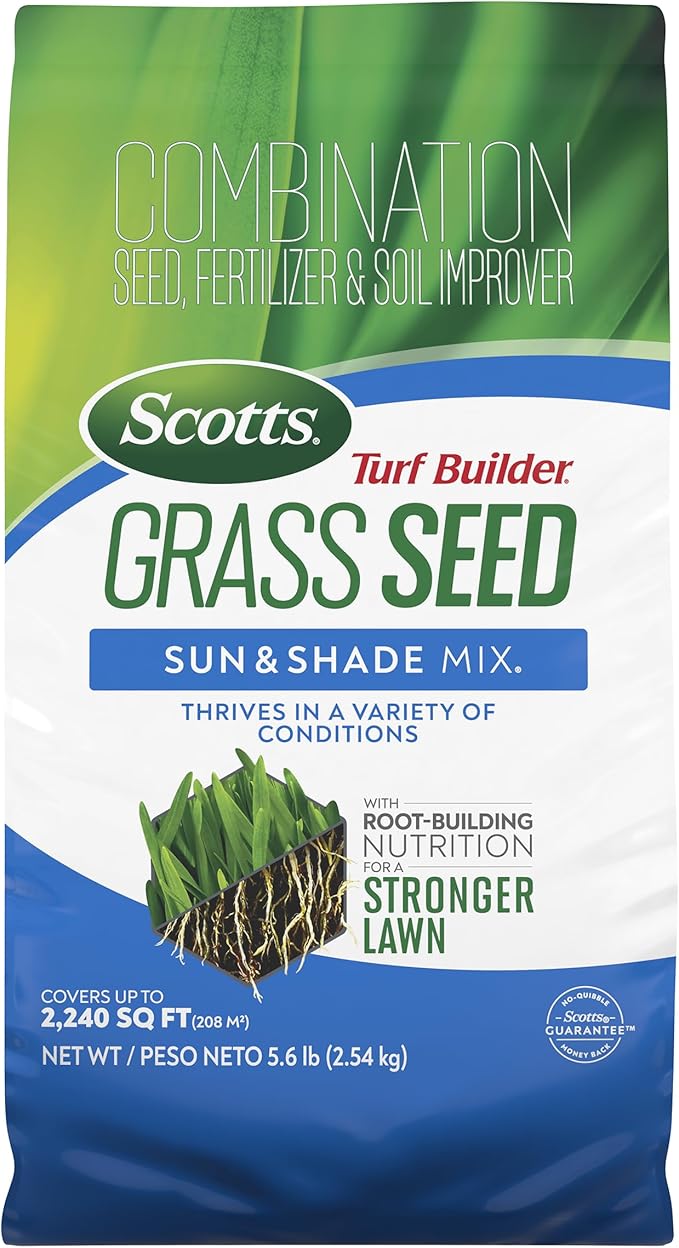
Thick, green grass that can handle both sun and shade is the main selling point here. Perfect for homeowners wanting a versatile seed mix that adapts well across different lawn areas. Its biggest strength lies in the combination of grass types and built-in fertilizer to help roots develop deeply and create a stronger lawn.
Setting it up involves sowing in spring, during regular watering schedules. The product works both as seed and soil improver with a mix of Kentucky bluegrass, perennial ryegrass, creeping red fescue, chewings fescue, and hard fescue. The built-in fertilizer simplifies care routines since it feeds the roots for better growth.
It suits lawns with medium drought tolerance and handles full sun to moderate shade.
Performance is solid, delivering a thick turf that fills in well over time. The root-building nutrition shows a noticeable difference in lawn durability.
Most praise focuses on how well it adapts to various light conditions. The main complaint is that it still needs regular watering, so it’s not ideal for very dry environments without irrigation support.
The root-building nutrition helps build a thick lawn that stands up well to sun and shade. Regular watering is necessary, which limits its use in drought conditions. Many find the mix effective for diverse lawn areas but note it won’t thrive without proper moisture.
Gardeners with mixed light lawns and moderate watering routines will appreciate the adaptability. Those in arid zones or seeking low-water options should look elsewhere to avoid extra irrigation demands.
Pros
- Mix works well in both sun and shade
- Built-in fertilizer for root development
- Medium drought tolerance
- Good for variety of lawn conditions
Cons
- Requires regular watering to perform well
- Not suitable for extremely dry climates
| Specification | Details |
|---|---|
| Sunlight Exposure | Full Sun |
| Expected Planting Period | Spring |
| Moisture Needs | Regular Watering |
| USDA Hardiness Zone | 5 |
| Seed Treatment Method | Scotts Spreader |
9. Cat Grass Seeds Mix Non-GMO Heirloom

Indoor cats often benefit from having fresh green grass to nibble on, and this cat grass seed mix makes growing it simple. Suitable for anyone wanting a natural way to support their cat’s digestion, it excels at producing healthy, indoor grass with a high germination rate.
Starting the seeds is easy with the resealable, waterproof packaging that keeps them fresh until planting. You only need moderate watering and some partial sun to keep the grass growing well.
It works in various seasons and fits nicely in small pots or loam soil, making daily maintenance straightforward and manageable.
The mix grows grass up to 6 inches tall with consistent results thanks to a 90%+ germination rate. The blend of barley, oats, wheat, and rye provides a variety of textures for cats to enjoy.
Praise often highlights how fresh and healthy the grass looks; the main drawback is the opportunity for overwatering since moderate watering is needed to keep it alive.
The grass seeds reliably produce fresh, healthy cat grass with a strong germination rate, something cat parents appreciate for keeping their pets satisfied. Overwatering is a frequent concern cited due to the moderate moisture needs the seeds have, so attention is needed during care.
Those wanting a steady supply of indoor cat grass year-round will find this seed mix well suited to their needs. Anyone looking for an outdoor option should consider alternatives, as this mix is designed specifically for indoor use with partial sunlight exposure.
Pros
- High germination rate ensures plentiful growth
- Non-GMO heirloom seeds for natural health benefits
- Waterproof resealable bag keeps seeds fresh
- Works well indoors throughout the year
Cons
- Requires careful watering to avoid overwatering
- Limited to indoor use only
| Specification | Details |
|---|---|
| Expected Plant Height | 6 inches |
| Germination Rate | 90%+ |
| Sunlight Exposure | Partial Sun |
| Moisture Needs | Moderate Watering |
| Planting Period | Year Round |
| Soil Type | Loam Soil, Potting Mix |
10. Scotts Turf Builder Thickr Lawn Seed

Up to a 50% thicker lawn makes Scotts Turf Builder Thick’R Lawn Sun & Shade a strong choice for anyone wanting to fill in thin, weak patches. It’s designed for lawns that get a mix of sun and shade and combines seed, fertilizer, and soil improver all in one.
Application happens twice a year, once in late spring and once in late summer or early fall, which fits nicely into most lawn care schedules. The combination of seed and fertilizer simplifies the process since you aren’t spreading separate products.
Spreading the 10 lb bag feels manageable for midsize yards, and the soil improver helps roots get better established over time.
Performance focuses on thicker, greener turf visible when the routine is followed. The seed mixture supports sun and shade areas alike, which helps with uneven light conditions.
The build-in fertilizer and soil improver support strong root growth. Most praise notes a noticeable thickening of the lawn. The main complaint involves varied results depending on how thin or damaged the lawn starts out.
Many find the lawn becomes visibly thicker with regular use, while some notice less impact when the lawn starts very weak or thin. The product relies on proper timing and existing lawn health for best outcomes.
Gardeners with partly shaded lawns and reasonably healthy turf will appreciate this all-in-one solution. Those with heavily damaged or fully shaded lawns might want to consider specialized options aimed at more extreme conditions.
Pros
- Combines seed, fertilizer, and soil improver
- Suitable for sun and shade areas
- Helps achieve up to 50% thicker lawn
- Easy 2-times-a-year application
Cons
- Results vary with lawn’s initial condition
- Best for lawns exposed to full sun
| Specification | Details |
|---|---|
| Coverage | One 10 lb. |
| Sunlight Exposure | Full Sun |
| Application Frequency | Late spring and late summer/early fall |
| Product Type | 3-in-1 grass seed, fertilizer, soil improver |
11. Nature Jims Organic Wheat Grass Seeds

People looking to grow fresh wheatgrass or cat grass indoors will appreciate organic seeds that are USDA-certified and free from additives. Ideal for anyone wanting a natural, nutritious sprout for smoothies, salads, or pet diets, these seeds stand out with their consistent quality and ease of growing year-round.
Planting these seeds indoors is straightforward since they require moderate watering and thrive with full sun exposure. They work well in small planters or trays, making them perfect for home gardeners or people with pets. You can grow them any time of year, and their organic, non-GMO nature means you don’t have to worry about harmful chemicals.
Seeds sprout reliably and produce fresh wheatgrass that grows steadily under the right light and watering conditions. Reviews frequently praise the seeds’ organic quality and reliable germination.
Some note that growth speed can vary depending on light intensity and care but appreciate that once established, the grass stays healthy. The seeds are known for purity since they contain no fillers or additives.
These seeds consistently produce healthy wheatgrass thanks to their organic and additive-free makeup. Most find the germination reliable, though some note needing to pay close attention to watering and sunlight to ensure the best growth speed.
Anyone wanting a natural, organic wheatgrass for indoor use will find these seeds easy and effective. Those who lack sufficient sunlight or prefer very fast-growing options might want to consider alternatives better suited to low-light or quick harvest needs.
Pros
- 100% USDA-certified organic and non-GMO
- Suitable for indoor growth throughout the year
- Free from fillers or additives
- Works great for cats and human consumption
Cons
- Requires moderate watering to avoid drying out
- Growth speed depends heavily on sunlight exposure
| Specification | Details |
|---|---|
| Indoor Outdoor Usage | Indoor |
| Sunlight Exposure | Full Sun |
| Expected Planting Period | Year Round |
| Moisture Needs | Moderate Watering |
| Expected Blooming Period | Year Round |
12. O.M. Scott & Sons Tall Fescue Blend

O.M. Scott & Sons Tall Fescue Blend is a grass seed mix designed for northern and transition regions, ideal for anyone wanting a naturally thick lawn that resists weed invasion. Its biggest strength lies in combining hand-selected tall fescue seeds with natural grass food and soil-improving clay, making it stand out among organic options.
Planting works best in spring or fall, and the seed thrives in full sun areas. The blend’s pet-friendly nature and lack of artificial ingredients mean it’s safe around kids and animals. It’s easy to sow outdoors, and the added natural food supports steady growth without needing synthetic fertilizers, making daily lawn care simpler.
Growth tends to be dense and resilient, helping to crowd out weeds naturally. The mix holds up well to heavy yard activity thanks to tall fescue’s tough roots.
While praise often highlights how green and thick the lawn becomes, some note that germination can take longer compared to other grasses. The build of seed, food, and clay creates a solid foundation for lasting turf.
Praise often points out the thick green lawn and ability to fight off weeds naturally. The common complaint is the longer germination time, which may require patience compared to faster sprouting grasses. It’s a balance between quality growth and waiting a bit longer for results.
Gardeners looking for a safe, dense lawn in northern or transition climate zones will appreciate this blend. Those needing quicker germination or shade-tolerant grass types might want to explore other seed options better suited for their conditions.
Pros
- Dense grass growth helps naturally crowd out weeds
- Contains natural grass food and soil-improving clay
- Safe around kids and pets, no artificial chemicals
- Hand-selected tall fescue varieties suited for cold regions
Cons
- Germination period can be slower than some other seeds
- Requires full sun exposure to perform best
| Specification | Details |
|---|---|
| Indoor Outdoor Usage | Outdoor |
| Sunlight Exposure | Full Sun |
| Expected Planting Period | Spring or Fall |
| Special Features | Pet Friendly |
Best Organic Grass Seed Comparison Table
| Product | Usage | Sunlight Exposure | Special Features | Planting Period |
|---|---|---|---|---|
| The Cat Ladies Cat Grass | Indoor, Outdoor | Full Sun | Pet Friendly | – |
| PowerGrow Wheatgrass Seed | – | – | Organic Wheatgrass Seeds | – |
| Eco Seed Low Grow Fescue | – | Full sun to shade | Disease Resistant, Drought Tolerant | Fall, Late fall, Spring |
| Jonathan Green Full Sun | Outdoor | Full Sun | Heat and drought tolerance | – |
| Pennington Annual Ryegrass | Outdoor | Full Sun to Shade | Annual Ryegrass | Spring |
| Pennington Kentucky 31 | Outdoor | 4-8 Hours of Sun | Kentucky 31 Tall Fescue | Spring |
| Scotts EZ Seed Repair | – | Sun and Shade | Combination Seed & Fertilizer | – |
| Scotts Turf Builder Sun & | Outdoor | Full Sun | Medium Drought Tolerant | Spring |
| Cat Grass Non-GMO Mix | Indoor | Partial Sun | High Germination Rate | Year Round |
| Scotts Turf Builder Thick’r | – | Full Sun | – | – |
| Nature Jims Wheat Grass | Indoor | Full Sun | Premium | Year Round |
| O.M. Scott Tall Fescue | Outdoor | Full Sun | Pet Friendly | Spring or Fall |
- UsageIndoor, Outdoor
- Sunlight ExposureFull Sun
- Special FeaturesPet Friendly
- Planting Period–
- Usage–
- Sunlight Exposure–
- Special FeaturesOrganic Wheatgrass Seeds
- Planting Period–
- Usage–
- Sunlight ExposureFull sun to shade
- Special FeaturesDisease Resistant, Drought Tolerant
- Planting PeriodFall, Late fall, Spring
- UsageOutdoor
- Sunlight ExposureFull Sun
- Special FeaturesHeat and drought tolerance
- Planting Period–
- UsageOutdoor
- Sunlight ExposureFull Sun to Shade
- Special FeaturesAnnual Ryegrass
- Planting PeriodSpring
- UsageOutdoor
- Sunlight Exposure4-8 Hours of Sun
- Special FeaturesKentucky 31 Tall Fescue
- Planting PeriodSpring
- Usage–
- Sunlight ExposureSun and Shade
- Special FeaturesCombination Seed & Fertilizer
- Planting Period–
- UsageOutdoor
- Sunlight ExposureFull Sun
- Special FeaturesMedium Drought Tolerant
- Planting PeriodSpring
- UsageIndoor
- Sunlight ExposurePartial Sun
- Special FeaturesHigh Germination Rate
- Planting PeriodYear Round
- Usage–
- Sunlight ExposureFull Sun
- Special Features–
- Planting Period–
- UsageIndoor
- Sunlight ExposureFull Sun
- Special FeaturesPremium
- Planting PeriodYear Round
- UsageOutdoor
- Sunlight ExposureFull Sun
- Special FeaturesPet Friendly
- Planting PeriodSpring or Fall
How to Choose the Best Organic Grass Seed
Consider factors like climate compatibility, soil type, and seed purity to ensure healthy growth and reduce the need for extra maintenance. Choosing the right seed prevents wasted time and resources, making your lawn care simpler and more cost-effective in the long run.
Seed Blend and Grass Type
Lawn performance varies greatly depending on the compatibility between seed and local growing conditions. Grass that thrives in one region may struggle in another due to differences in temperature, moisture, and soil type. Choosing a blend of varieties suited to your specific climate zone makes a significant difference.
For instance, a mix containing drought-resistant types is essential for dry areas, while shade-tolerant species work better under trees or in partly shaded spots.
The lawn’s purpose also matters greatly. A blend designed for high-traffic areas will withstand wear and tear better but might sacrifice some visual appeal compared to ornamental varieties. Seeds that establish quickly and firmly hold soil should be prioritized when erosion control is the goal.
Matching seed components to your location and usage ensures a healthier lawn and less frustration down the line.
Germination Rate and Purity
Grass seed packages often list germination rates, which indicate the percentage of seeds likely to sprout. A low germination rate means more time and money spent reseeding bare patches. In practical terms, look for a rate above 80% to promote a dense, even lawn.
Purity percentages are just as critical. Seeds contaminated with weed seeds or inert materials like sand reduce the overall quality and compete with grass for nutrients.
Buyers should look for third-party certifications that verify organic standards. These certifications confirm that the seeds are free from synthetic chemicals and that purity claims are accurate.
Choosing seed with high viability and minimal contaminants leads to steady growth and fewer unexpected problems with weeds or patchy grass.
Seed Quantity and Coverage
Calculating the correct seed quantity is crucial to avoiding waste or poor coverage. Seed needs vary, generally falling between 2 to 5 pounds per 1,000 square feet depending on the grass type and intended lawn density.
Packaging options often range from small 1-pound bags for patch repairs to bulk 10-pound or larger bags for full lawns.
Buying the right size for your project scale not only saves money but also reduces storage issues if leftover seed is kept too long. A large bag might look like a better deal, but it won’t be cost-effective if you only have a small area to cover.
Check the coverage rate indicated on the label and plan accordingly.
Organic Certification and Safety
Organic certification provides assurance about the absence of synthetic chemicals, fertilizers, or pesticides in the seed. Recognition from organizations such as the Organic Materials Review Institute (OMRI) or USDA Organic ensures products have passed independent verification.
This matters most for gardeners concerned about the ecosystem and long-term soil health.
Seeds without organic certification might contain treatments harmful to pets, children, and local wildlife. Using organic verified products reduces the risk of exposure to harmful substances, allowing safe use around family and animals.
Confirm the certification label or documentation before purchasing to be certain.
Ease of Application and Establishment
Preparation and care directly affect how quickly grass establishes. Properly loosening soil and removing debris before seeding improves seed-to-soil contact, increasing germination success. Applying seed evenly with a spreader rather than by hand helps avoid uneven patches.
Maintaining consistent moisture in the first few weeks is essential, requiring frequent light watering until shoots are strong enough for less frequent irrigation. Early mowing after about 3 to 4 weeks encourages thicker growth without stressing young plants. Expect turf to establish enough for regular use typically within 2 to 3 months, depending on conditions and grass types.
Optimal Soil Preparation for Organic Grass Seed Planting
Preparing soil properly before planting organic grass seed is crucial for good germination. Start by removing any existing weeds, rocks, or debris that might compete with your new grass. Loosen the soil with a rake or tiller to at least two to three inches deep, which helps roots establish quickly.
When the soil is compacted, consider aerating to improve air circulation and drainage. Testing soil pH can provide valuable information; most grass types prefer a pH between 6.0 and 7.5. Amending soil with organic matter like compost not only improves structure but also adds nutrients without chemicals.
Spread the compost evenly and mix it into the top few inches of soil. Creating a smooth, level surface ensures even seed distribution and prevents water pooling that can drown seeds.
Taking these steps helps create a strong foundation for organic grass to thrive.
Essential Watering and Maintenance Practices for Organic Lawns
Consistent watering is key during the first few weeks after planting organic grass seed. Water lightly but frequently to keep the top inch of soil moist, usually two to three times a day depending on weather. Using a fine mist setting on your sprinkler prevents seeds from washing away or becoming too saturated.
After the grass sprouts, reduce watering frequency but increase the depth to encourage deeper root growth. Most established lawns only need about an inch of water per week.
Mowing should begin when grass reaches around three inches tall, trimming only the top third to avoid stressing the plants. Organic lawns also benefit from occasional top-dressing with compost to supply nutrients naturally.
Avoid synthetic fertilizers or herbicides to maintain the organic integrity of your lawn.
Comparing Organic Grass Seeds with Synthetic Alternatives for Eco-Friendly Lawns
Organic grass seeds often provide a more natural option compared to synthetic alternatives. They typically come untreated with chemicals like pesticides or synthetic growth promoters, reducing environmental impact and the risk of soil contamination.
Although synthetic seeds sometimes advertise faster germination or growth, organic seeds help build healthier soil ecosystems over time thanks to their compatibility with organic fertilizers and compost. Choosing organic seed varieties developed for local growing conditions can also increase disease resistance and drought tolerance. On the downside, organic seeds may require more care in initial establishment since they lack chemical enhancements.
However, this trade-off supports long-term sustainability and reduces exposure to potentially harmful substances in lawn care.
People Also Asked
How Long Does Organic Grass Seed Take to Fully Germinate?
Organic grass seed usually takes about 7 to 21 days to germinate. Keeping the soil consistently moist during this period is important to avoid drying out the young seedlings.
Can I Use Organic Grass Seed on Shady Lawn Areas Safely?
Organic grass seed varieties suitable for shade can be used safely on shady lawn areas. Choose shade-tolerant species like fine fescues, and ensure the area has some indirect light for better growth.
What Is the Proper Way to Prepare Soil for Organic Grass Seed?
Soil should be loosened to a depth of at least 2 to 3 inches, removing debris and rocks before seeding. Adding organic compost helps improve soil texture and nutrient content, which supports healthy grass establishment.
How Much Organic Grass Seed Do I Need per Square Foot?
About 1 to 2 pounds of organic grass seed per 1,000 square feet is usually sufficient. Adjust the rate based on seed size and the desired lawn density; heavier seeding won’t always produce better results.
Are There Common Pests or Diseases Affecting Organic Grass Seed Lawns?
Common lawn pests and diseases can still affect organic grass seed lawns. Proper watering and mowing, along with keeping the lawn healthy, reduce problems like fungal infections and grub infestations.
Conclusion
Choosing the right organic grass seed mostly comes down to how well it suits your climate, soil type, and intended use. Make sure the seed mix matches the sunlight and foot traffic your lawn will get.
Look for a blend that balances durability with ease of growth, so you get good coverage without excessive maintenance.
Think about how much area you need to cover and your budget before making a final choice. Larger spaces may require bulk options, while smaller yards can work with sample sizes. Review the comparison table and the detailed picks above to find a product that fits your specific needs and conditions.

I’m Jake Thompson, and I’ve spent over a decade working on lawn mowers, from small push mowers to big riding tractors. I write about starting problems, blade sharpening, carburetor cleaning, oil changes, and seasonal maintenance. My goal is to give you clear, step-by-step advice so you can handle common mower issues yourself and keep your lawn looking sharp all season.