
Top 12 Best Soil Test Kit That Gardeners Swear By
Gardeners often face frustrating surprises after planting, like poor growth or unexpected soil acidity, problems that crop up because the soil test kit used was inaccurate or too basic. Choosing the best soil test kit matters, especially when you want reliable readings on pH, nitrogen, phosphorus, and potassium levels. A cheap or improperly designed kit can give misleading results, leading to wasted effort and expense on the wrong fertilizers or treatments.
A quality soil test kit typically includes clear, easy-to-handle testing tubes or capsules made from durable plastic to avoid contamination or breakage. Accuracy depends on chemical reagents that deliver results within the standard pH range of 3 to 9, since most garden soils fall here.
Kits that provide detailed nutrient breakdowns rather than just pH readings save time and guesswork. Also, look for kits with straightforward instructions and reusable components to keep the process efficient and less messy over multiple tests.
Need a Quick Check?
| Image | Product | Price |
|---|---|---|
Our Top Picks 1  | Rapitest Soil Kit Basic | Check Price |
Our Top Picks 2  | MySoil Soil Test | Check Price |
Our Top Picks 3  | 140-Test Soil Kit | Check Price |
Our Selected Top 12 Soil Test Kit You Can Trust
This list features a variety of soil test kits that help assess soil quality and nutrient levels. Each review covers how well the kit works, which users it’s best suited for, and highlights its main advantages and limitations for easy comparison.
1. Rapitest Soil Test Kit
Rapitest Soil Test Kit stands out for its easy-to-use capsule system that delivers quick and clear results on soil pH, Nitrogen, Phosphorous, and Potash. Perfect for gardeners who want a practical way to test multiple areas in their garden without spending much.
It’s particularly good for both beginners and experienced users looking to check essential soil nutrients at home.
Using the test kit is straightforward, thanks to the detailed instructions included, making setup simple even for first-time users. The kit includes 20 tests, enough to cover different spots in the yard or garden, which helps get a broader view of soil health. All necessary components come in one pack, so there’s no need to find extra tools.
Matching colors to the chart takes a minute and gives immediate feedback.
Performance-wise, the kit provides quick, reliable readings for soil pH and nutrient levels, supporting better gardening decisions. Built with a patented color comparator system and capsules, it’s compact and practical. Reviews highlight ease of use and clear instructions as strong points, while some mention that the color matching can be a little tricky in low light or for color-blind users.
Users note the straightforward instructions and quick results are most helpful when handling soil testing at home. The most frequent complaint points to challenges in reading color results accurately in some lighting conditions or with color vision issues.
This kit fits gardeners who want a practical, affordable way to check key soil nutrients across various garden areas. Those needing more precision or longer testing capacity might prefer more specialized options.
Pros
- Easy capsule system for quick testing
- Includes tests for pH, Nitrogen, Phosphorus, Potash
- Enough tests for multiple garden spots
- Simple, detailed instructions included
Cons
- Color matching difficult under low light
- Limited to 20 total tests per kit
| Specification | Details |
|---|---|
| Brand Name | Luster Leaf |
| Number of Packs | 5 |
| Unit Count | 20 Count |
| Model Number | 1602 |
| Manufacturer Part Number | 1602 |
| Item Type Name | Soil Test Kit |
2. MySoil Soil Test Kit
MySoil Soil Test Kit offers professional lab analysis that quickly measures 13 key nutrients in your soil. Ideal for gardeners wanting precise soil insights, it stands out by providing reliable results you can trust over basic home testing methods.
Getting started involves collecting a soil sample and sending it off to their lab. The process is straightforward, and within about a week, you get a detailed report covering nitrogen, pH, and other vital nutrients.
Suitable for everything from lawns and vegetable patches to houseplants and even hydroponics, it fits various gardening needs without extra guessing or unneeded product use.
Accuracy is where this kit truly shines, clearly reporting nutrient levels that guide smarter gardening decisions. The single-pack design keeps things simple, though waiting 6-8 days for results can test patience.
The sturdy instructions and sample bag ensure no confusion during collection. Most praise revolves around the precise data, while some mention the mail-in delay as a drawback.
The most praised feature is the kit’s accurate nutrient reporting from a professional lab, giving gardeners clear guidance for their soil needs. Commonly noted downsides include the wait time for results and that the kit only provides one test per package.
Those looking for precise, comprehensive soil analysis and able to plan their testing ahead will appreciate this kit. Gardeners needing immediate feedback or more frequent testing might want to consider alternatives with quicker or multiple test options.
Pros
- Accurately measures 13 key plant nutrients
- Suitable for all soil types and growing conditions
- Easy sample submission with clear instructions
- Helps avoid unnecessary soil treatments
Cons
- Results take 6-8 days to arrive
- Single test per kit might limit ongoing use
| Specification | Details |
|---|---|
| Brand Name | My Soil |
| Number of Packs | 1 |
| Unit Count | 1 Count |
| Manufacturer | Predictive Nutrient Solutions, Inc |
3. Soil Test Kit 140 Tests
Handling soil tests at home feels straightforward and informative with this kit. Ideal for gardeners who want a clear snapshot of their soil’s health, it focuses on giving detailed measurements that help with proper fertilizing.
Its biggest strength is delivering multiple nutrient readings from one compact set.
Setup involves a simple process of mixing soil samples with the liquid reagents included in the kit. Daily use means checking pH along with ammonia, nitrogen, phosphorus, and potassium levels in a single go. This combined approach saves time and avoids juggling different kits or tests.
The kit’s small size makes it easy to store and carry around the garden.
Performance-wise, the kit provides thorough analyses that are key to understanding soil fertility. It effectively points out nutrient deficiencies or excesses, letting users tailor fertilizer application better.
The build is compact and lightweight, making it convenient but requiring careful handling since it’s not especially rugged. Many praise its comprehensive testing, though a few mention that the liquid tests need careful measuring to avoid errors.
The kit is praised for covering essential soil parameters thoroughly in one package, providing a useful range of nutrient and pH results. Users often note that the liquid test components require precise measuring to ensure accuracy, which can be a little tricky at first.
Gardeners seeking detailed, multi-factor soil data in a simple kit will find this useful. Those needing rugged equipment or extremely precise lab-grade testing may want to consider professional lab services or more specialized kits.
Pros
- Checks multiple nutrients in one test
- Compact and lightweight for easy handling
- Includes pH and key nutrient measurements
- Helps avoid over-fertilizing plants
Cons
- Liquid measuring requires careful attention
- Not designed for heavy-duty use
| Specification | Details |
|---|---|
| Product Dimensions | 3 x 1 x 4 inches |
| Item Weight | 3.52 ounces |
| Manufacturer | Dewilde Trading Co |
| Item Model Number | DTC-00037 |
4. Rapitest Soil Test Kit

Rapitest Soil Test Kit offers quick and affordable soil testing ideal for gardeners wanting to check pH and nutrient levels at home. It suits both beginners and experienced gardeners who need simple, clear results without complicated equipment.
Its most valuable feature is the easy capsule system paired with color comparators for fast visual readings.
Setting up the kit requires no batteries and minimal preparation. The capsule system makes taking samples straightforward; you just mix soil with reagents and match colors against the included chart. The kit contains enough supplies for 40 tests, 10 each for pH, nitrogen, phosphorus, and potash, making it convenient for recurring garden checks.
The instructions cover everything clearly, so using it day to day is not confusing.
It performs well for basic soil analysis, delivering clear color results to guide feeding and planting decisions. The build focuses on simplicity with all necessary components included in the box, no extra tools or power needed.
Most praise highlights its value and ease of use, while the biggest complaint points to occasional difficulty in distinguishing colors clearly under certain lighting conditions.
The kit is praised for its straightforward design and clear instructions, allowing relatively quick soil testing at home. A common issue is the difficulty in reading color comparators accurately when lighting isn’t ideal, which might affect result interpretation for some users.
Gardeners looking for an affordable, simple soil test setup with enough tests for ongoing use will find this kit useful. Those needing more precise or lab-level analysis might want a different product better suited to advanced needs.
Pros
- Easy-to-use capsule system for testing
- Includes all components for 40 tests
- No batteries needed for operation
- Clear, detailed instructions for all levels
Cons
- Color matching can be tricky in dim light
- Only 10 tests per nutrient type
| Specification | Details |
|---|---|
| Test Types | Soil pH, Nitrogen, Phosphorus, Potash |
| Number of Tests | 40 tests (10 for each pH, N, P, K) |
| Battery Description | No batteries required |
| Mounting Type | Tabletop |
| Included Guide | Soil pH preference for over 450 plants |
5. Digital Moisture Meter for Plants

A lightweight plastic body shapes a compact digital moisture meter suited for plant hobbyists wanting quick soil readings. Its biggest strength lies in measuring seven key soil factors, from moisture to pH, offering a broader picture for plant care in one device.
Setup requires inserting four 1.5V AAA batteries (not included) and the large LCD screen with white backlight makes readings easy any time of day. Measuring soil moisture, temperature, light intensity, pH, EC, and TDS happens by simply placing the probe in the soil, which helps monitor when to water and adjust conditions without guessing.
Performance matches its multi-function design by delivering clear numerical data on all seven parameters, with a clear display making it practical. The device is relatively light at 5.6 ounces, making it pleasant to handle. High marks come from its all-in-one convenience, while some users mention the lack of included batteries as a minor annoyance.
Clear digital readings and multiple soil measurements stand out as the device’s strongest features, making soil care straightforward. Many find battery exclusion inconvenient but manageable since it uses common AAA cells. The backlit screen makes the device easier to use, especially indoors or in low-light conditions.
Gardeners seeking a simple, all-in-one soil test tool will appreciate its capabilities and size. Those needing industrial-grade accuracy or a more durable design should consider other specialized meters better suited for heavy duty environments.
Pros
- Measures 7 different soil parameters
- Large LCD screen with backlight
- Lightweight at just 5.6 ounces
- Easy to read day or night
Cons
- Requires batteries not included in package
- May not suit heavy or professional use
| Specification | Details |
|---|---|
| Package Dimensions | 11.61 x 2.68 x 1.85 inches |
| Item Weight | 5.6 ounces |
| Power Source | Four 1.5V AAA batteries (not included) |
| Manufacturer | Buladeke |
6. SONKIR 3-in-1 Soil Tester

Small and handy, it measures soil moisture, pH, and light all in one device, perfect for gardeners wanting quick readings without fuss. Its biggest strength lies in combining three essential tests into a single gadget, simplifying plant care for anyone growing indoors or out.
Setup takes just seconds by inserting the meter into moist soil; dry soil needs watering first for accurate pH results. Switching between moisture, pH, and sunlight measurements happens with a simple button, and no batteries are required, making it ready whenever you need it.
The clear readout panel shows results in just a few minutes, so monitoring your garden feels straightforward and direct.
Accuracy depends on good contact with moist soil; results update quickly and help adjust watering and care. It feels sturdy and is made from reliable materials meant to last through regular use.
Common praise notes the ease of reading and usefulness for basic soil testing, while a typical complaint points out the pH test doesn’t move if soil is too dry or testing liquids other than soil.
Ease of use is praised with fast, readable soil moisture and sunlight levels. However, the pH indicator stays still unless soil is damp, which requires pre-watering for meaningful pH testing. It avoids battery hassles but limits its scope to soil only, not liquids.
Anyone wanting quick, straightforward soil data in the garden will find it helpful. Those needing detailed chemical analyses or pH tests on water should look for professional-grade equipment instead.
Pros
- Three functions in one compact device
- No batteries required for operation
- Simple button switch for test mode
- Clear and quick result display
Cons
- Needs moist soil to register accurate pH
- Cannot test pH of liquids other than soil
| Specification | Details |
|---|---|
| Product Dimensions | 11.5 x 2 x 1.5 inches |
| Item Weight | 2.89 ounces |
| Model Number | MS02 |
| Manufacturer | Sonkir |
| Functions | Soil moisture, soil pH, sunlight level |
7. HSLGOVE 7-in-1 Soil Tester

Ideal for gardeners looking for detailed soil information, this 7-in-1 soil tester suits beginners and hobbyists. Its biggest strength is the ability to measure multiple soil and environmental factors with just one device, offering more insight than basic testers without being complicated to use.
Setting up involves replacing all three batteries and using the button dial to turn it on and off. Switching between soil moisture, pH, fertility, temperature, light, and indoor humidity modes is straightforward.
Results appear on a clear LCD screen within 3 to 5 minutes, giving easy access to important data during regular garden checks.
Accuracy across seven measurements makes it valuable for detailed monitoring. The build is lightweight at 4.8 ounces and slim enough to handle comfortably.
Most praise the easy-to-read display and variety of functions. The main complaint is that it is not designed for testing liquid moisture directly, so care is needed to only test soil.
Most users appreciate the comprehensive readings and clear LCD results within minutes. Common issues arise when attempting to test liquid moisture, which the device is not designed for, so proper usage strictly involves soil testing.
People wanting a detailed soil analysis at home will find it reliable and easy to handle. Those needing to measure water moisture or looking for a simpler, single-function tester might want to explore other options.
Pros
- Measures seven soil and environmental factors
- Easy switching between modes with one button
- Clear LCD display for quick reading
- Lightweight and comfortable to handle
Cons
- Not suitable for testing water moisture directly
- Requires all three batteries to be replaced together
| Specification | Details |
|---|---|
| Product Dimensions | 11.5 x 2.9 x 1.5 inches |
| Item Weight | 4.8 ounces |
| Battery Requirement | 3 batteries (replace/install all each time) |
| Display | 1.6″ LCD Screen |
| Model Number | 001 |
8. Premium Soil Test Kit

Gardening success often depends on knowing what’s really in your soil. This kit suits anyone wanting clear info on pH and nutrient levels like Nitrogen, Phosphorus, and Potassium.
Its biggest strength lies in providing a complete set of tests that cover the basics crucial for plant growth.
Setting up involves no guesswork. The kit includes everything needed: test strips, tubes, tablets, a dropper, a stick, and a color card. The instructions are straightforward, making it easy to measure soil qualities even for those new to gardening.
You just prepare your soil sample and follow the steps for each test type.
The testing results come through reliably over multiple uses since the kit supports 40 total tests. The build feels solid enough for regular use without parts breaking or fading quickly.
Most users find the instructions clear and the range of tests comprehensive. A common complaint is that it requires careful handling of small parts to avoid mess.
Many find the kit reliable for frequent soil checks and like the broad test range at a good value. Handling the small components can cause minor frustration during testing. Careful following of the guide makes testing smoother.
People gardening at home or those learning soil testing will appreciate this kit’s simplicity and coverage. Someone needing more advanced or digital analysis should explore other options tailored to professional use.
Pros
- Includes 40 total tests for long-term use
- Tests pH plus key nutrients N, P, and K
- Clear instructions suit beginners and experts
- All necessary tools included in one kit
Cons
- Instructions require careful reading to avoid mistakes
- Small test parts need cautious handling
| Specification | Details |
|---|---|
| Product Dimensions | 7 x 2 x 5 inches |
| Item Weight | 6.4 ounces |
| Manufacturer | Dewilde Trading Co |
| Item model number | DTC-00057 |
9. Soil Test Kit 4 Parameters
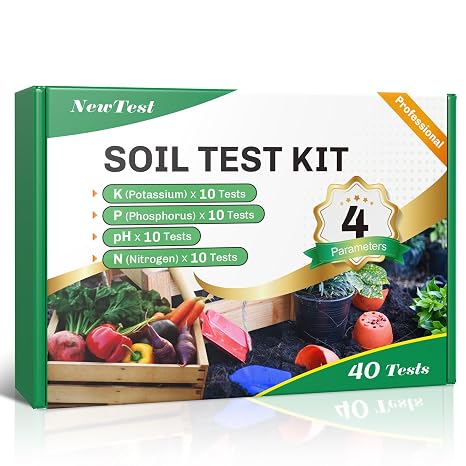
Includes 40 tests for four key soil nutrients, pH, nitrogen, phosphorus, and potassium, all measured separately up to ten times each. Well-suited for gardeners wanting detailed chemical insights without sending soil to a lab.
Its biggest advantage is precise nutrient detection that even beginners can manage confidently.
Setup is straightforward with clear instructions, making the process simple for anyone new to soil testing. Testing each parameter in separate batches keeps the results organized. Handling ten tests per nutrient allows tracking changes over time easily.
The kit is compact and everything needed is in one place, so no extra trips to buy supplies.
Accuracy is its strong suit, delivering reliable readings close to those from professional labs. The build feels solid with reusable components for repeated testing. The clearest compliment from users is the detailed data it provides, helping grow healthier plants.
A frequent critique mentions the time taken to perform all tests separately as somewhat tedious.
It provides detailed, precise soil chemistry insights close to lab results, which users appreciate for raising healthy plants. However, testing all four parameters separately can feel slow and requires careful handling.
Gardeners who want accurate, repeatable nutrient analysis will find it valuable. Those seeking quick, simple soil checks might prefer faster, less detailed options.
Pros
- Accurately measures four vital soil nutrients
- Enough tests for multiple uses and monitoring
- Clear instructions suitable for beginners
- Compact and includes all necessary components
Cons
- Testing process can be time-consuming
- Separate batches require patience and care
| Specification | Details |
|---|---|
| Brand Name | NewTest |
| Number of Tests | 40 (10 each for pH, Nitrogen, Phosphorus, Potassium) |
| Test Parameters | pH, Nitrogen, Phosphorus, Potassium |
| Model Number | Soil Test Kit 4 Parameters |
| Manufacturer | NewTest |
10. Rapitest Digital Soil Test Kit

Gardeners who want detailed soil information without sending samples away appreciate this kit. Ideal for those growing a variety of plants, it offers a wide range of tests with quick digital results. Its biggest strength lies in testing soil pH along with nitrogen, phosphorus, and potassium levels all in one device.
Using the kit involves no complicated setup beyond having a soil sample ready. It measures 25 different aspects with a digital reader that uses LED color sensing to provide quick results.
A handy pH preference list for more than 450 plants and gardening tips aid in interpreting the data and making adjustments in your soil care routine.
It handles its job of testing soil nutrients and pH smoothly and provides results without waiting or mailing samples. The unit feels solid and user-friendly.
Common praise centers on the fast and clear digital readings, while the most frequent complaint is about some difficulties matching colors perfectly with the sensor.
The unit delivers quick digital readings widely praised for ease and accuracy, but matching colors perfectly with the sensor can be challenging. Most find the provided plant guides and gardening tips very helpful alongside the test results.
Someone growing a variety of plants who wants immediate detailed soil data will appreciate this kit. Those needing more than 25 tests or extremely precise color matching might look for other options.
Pros
- Tests soil pH plus nitrogen, phosphorus, potassium
- Advanced LED color sensing for quick readings
- Includes plant pH preferences for over 450 types
- Gardening guidelines based on your soil tests
Cons
- Some users find color matching tricky sometimes
- Limited to 25 specific tests per kit
| Specification | Details |
|---|---|
| Brand Name | Luster Leaf |
| Unit Count | 25 Ounce |
| Included Components | Digital Soil Kit |
| Item Type Name | Digital Soil Test Kit for pH, N, P and K |
| Model Number | 1605 |
11. 4-in-1 Soil Test Kit

Perfect for gardeners wanting a clear picture of their soil’s health, the 4-in-1 Soil Test Kit measures pH, nitrogen, phosphorus, and potassium all in one pack. What stands out most is the 80-test capacity, allowing for repeated checks without quickly running out.
Setup involves gathering soil samples and mixing with provided reagents for each nutrient test. The kit organizes 20 tests per element, making it straightforward to track changes in your garden over time. Its compact design fits easily in a drawer, ready whenever you need to check soil conditions.
The test readings are reliable, helping to make smarter fertilizing decisions. The kit feels solid and well put together, though some find the instructions less detailed than they’d like. It covers all four key nutrients expected for healthy plant growth, which is the main reason it’s recommended.
Most appreciate how the kit provides dependable nutrient measurements for pH, nitrogen, phosphorus, and potassium all together. The main drawback noted is that the instructions don’t always explain the process in detail, which can cause minor confusion at first.
This soil test kit suits someone who wants a thorough look at four key soil nutrients and values a larger number of tests. Those needing more detailed guidance or faster reagent replacement might consider other options.
Pros
- Measures four essential nutrients in one kit
- Includes enough tests for repeated use
- Compact and easy to store design
- Provides reliable, accurate readings
Cons
- Instructions can be a bit unclear
- Testing reagents may run out faster for frequent use
| Specification | Details |
|---|---|
| Product Dimensions | 6.69 x 3.94 x 2.76 inches |
| Item Weight | 7.4 ounces |
| Number of Tests | 80 total (20 each for pH, Nitrogen, Phosphorus, Potassium) |
| Manufacturer | SaySummer |
| Model Number | STK80001 |
12. Luster Leaf Soil Test Kit

Luster Leaf Soil Test Kit is perfect for gardeners wanting to check soil pH and nutrient levels at home. Its biggest strength lies in offering 80 tests to cover essential soil needs like pH, nitrogen, phosphorus, and potassium, making it a thorough option for detail-oriented plant care.
Opening the sturdy plastic case gets you everything to start testing soil quickly and easily. Clear and detailed instructions help guide you through the process, while a pH preference list simplifies figuring out what your plants need. No batteries are required, so it’s all about using the components included for up to 80 tests, which keeps day-to-day use straightforward and reliable.
Accuracy in measuring pH and nutrient levels is solid for a home kit, and the box keeps everything organized well. The plastic case feels durable and protects the tools nicely. One common downside mentioned is that the instructions could use more clarity in spots, though it still works well.
It does what it promises in a practical, manageable way.
Many appreciate the comprehensive testing components and the included pH preference list, making soil care easier to understand. However, some find the instructions a bit confusing, which can slow down the testing process at times. The sturdy case helps keep everything compact and protected, which adds practical value to the kit.
Gardeners wanting detailed soil nutrient and pH testing without complicated electronics will be satisfied with this set. Those needing more than 80 tests or clearer instruction guidance might want to consider other products for longer-term or larger-scale soil monitoring needs.
Pros
- Includes tests for four key soil components
- Clear, detailed instructions and useful pH list
- Sturdy case keeps everything organized
- No batteries needed for testing
Cons
- Instructions sometimes lack clarity
- Limited to 80 tests total
| Specification | Details |
|---|---|
| Tests Included | 80 tests (20 each for Soil pH, N, P and K) |
| Battery Description | No batteries required |
| Mounting Type | Freestanding |
| Case Type | Sturdy plastic case |
Best Soil Test Kits Compared Side by Side
| Product | Brand | Unit Count | Weight | Battery |
|---|---|---|---|---|
| Rapitest Soil Kit Basic | Luster Leaf | 20 Count | – | – |
| MySoil Soil Test | My Soil | 1 Count | – | – |
| 140-Test Soil Kit | Dewilde Trading Co | – | 3.52 ounces | – |
| Rapitest Soil Kit Pro | Luster Leaf | – | – | No batteries required |
| Digital Plant Moisture Meter | Buladeke | – | 5.6 ounces | – |
| SONKIR 3-in-1 Tester | Sonkir | – | 2.89 ounces | – |
| HSLGOVE 7-in-1 Tester | HSLGOVE | – | 4.8 ounces | – |
| Premium Soil Test Kit | Dewilde Trading Co | – | 6.4 ounces | – |
| 4-Parameter Soil Kit | NewTest | – | – | – |
| Rapitest Digital Tester | Luster Leaf | 25 Ounce | – | – |
| 4-in-1 Soil Kit | SaySummer | – | 7.4 ounces | – |
| Luster Leaf Soil Kit | Luster Leaf | – | – | No batteries required |
- BrandLuster Leaf
- Unit Count20 Count
- Weight–
- Battery–
- BrandMy Soil
- Unit Count1 Count
- Weight–
- Battery–
- BrandDewilde Trading Co
- Unit Count–
- Weight3.52 ounces
- Battery–
- BrandLuster Leaf
- Unit Count–
- Weight–
- BatteryNo batteries required
- BrandBuladeke
- Unit Count–
- Weight5.6 ounces
- Battery–
- BrandSonkir
- Unit Count–
- Weight2.89 ounces
- Battery–
- BrandHSLGOVE
- Unit Count–
- Weight4.8 ounces
- Battery–
- BrandDewilde Trading Co
- Unit Count–
- Weight6.4 ounces
- Battery–
- BrandNewTest
- Unit Count–
- Weight–
- Battery–
- BrandLuster Leaf
- Unit Count25 Ounce
- Weight–
- Battery–
- BrandSaySummer
- Unit Count–
- Weight7.4 ounces
- Battery–
- BrandLuster Leaf
- Unit Count–
- Weight–
- BatteryNo batteries required
How to Choose the Best Soil Test Kit
Choosing a good soil test kit depends on accuracy, ease of use, and the range of nutrients it can analyze. Picking the right one helps avoid spending on unnecessary fertilizers and ensures healthier plant growth, saving both money and effort in the long run.
Testing Accuracy and Range
Common soil concerns go beyond just knowing if the ground is acidic or alkaline. A good kit measures multiple parameters like pH and NPK levels, nitrogen, phosphorus, and potassium, in addition to moisture content. These elements dictate how plants grow and respond to fertilizers.
A test that only covers one or two might miss important deficiencies or imbalances.
A reliable kit gives consistent readings across repeated tests, which becomes essential when making decisions on soil amendments. Calibration or control samples included with some kits help check the accuracy regularly.
Accuracy within a narrow range of pH (around 0.1 unit) or nutrient concentrations (within 5-10%) can make a difference in how you treat your soil. Poor precision leads to wasted fertilizer or weak crops because of guesswork instead of measurement.
Ease of Use
Some kits come with vague instructions and require multiple steps that are easy to mix up. Simple, straightforward guides save a lot of time and reduce errors.
Collecting a soil sample often trips people up; soil needs to be dry or moist depending on the test. A good kit clarifies these details and offers sample containers or scoops that make this step less messy.
The time from sample to result varies widely. Waiting 30 minutes for readings is frustrating if you want quick action, while kits that provide results within minutes fit better into routine garden care. Clarity here reduces the chance of invalid results due to misreading colors or mishandling reagents.
Kit Components and Quality
A complete kit has all the necessary tools like measuring spoons, test tubes, and mixing containers, plus chemical reagents in proper quantities. Missing items or flimsy materials mean you’ll waste time improvising or buying extras. Look for sturdy plastic or glass components that can withstand repeated use without cracking or staining.
Packaging that seals well protects reagents from moisture and light, keeping them effective on the shelf. Kits in resealable boxes or cases last longer and reduce waste. A kit missing these practical touches often ends up being a one-time use or causes degraded chemical tests.
Data Interpretation and Support
Interpreting test results accurately depends on clear charts or guides included in the kit. Some provide color-coded scales, but these can be tricky without reference points showing what values mean for different crops.
Access to digital apps or online resources that explain results or recommend fertilizers adds value.
Help from responsive customer support can turn confusing readings into actionable steps. Without this, users might abandon testing or misinterpret values leading to poor soil management.
Companies providing advice lines or email support make the whole process less stressful.
Portability and Convenience
Field testing benefits from compact, lightweight kits that are easy to carry in a backpack or garden bag. Bulky kits slow down sample collection and discourage frequent testing.
For kits with electronic meters, battery life and power source type impact usability. Rechargeable options avoid extra costs on disposables.
Kits with reusable components bring cost savings over time, especially if you test regularly. Having consumables like reagents that can be replenished separately also cuts down waste. Balancing portability with a full set of tools ensures the kit stays practical for repeat use outdoors or at home.
How to Properly Collect and Prepare Soil Samples for Accurate Testing
Collecting soil samples correctly is crucial for reliable test results. Begin by removing any surface debris, like leaves or mulch, to avoid contamination.
Use a clean trowel or soil probe to dig 6 to 8 inches deep, which reflects the typical root zone for most plants. Take several subsamples from different spots within the test area to get an averaged representation rather than relying on a single spot. Mix these subsamples together in a clean container, then let the soil dry in the air if it’s wet.
Avoid using heated drying methods, as they can change the soil chemistry. Ensure samples are free from fertilizers or lime residues from tools or containers to prevent skewed results. Clearly label the sample bags with the location and date before sending them for analysis or using the test strips.
Maintaining and Storing Your Soil Test Kit for Long-Term Reliability
Keeping a soil test kit in good condition extends its accuracy over time. Store the kit components in a dry place away from direct sunlight and extreme temperatures to prevent chemical degradation. Closed containers or resealable bags help protect test reagents from moisture and air exposure.
After each use, rinse tools and containers with distilled water to remove residual soil that could interfere with future tests. Check expiration dates on test strips or reagents; expired materials often produce unreliable readings.
Avoid mixing test components from different brands or batches, as formulations may differ. Organizing the kit in a dedicated box or case reduces the chance of losing parts and contamination, ensuring the kit is ready when you need it again.
Common Mistakes to Avoid When Using Soil Test Kits for Garden Management
Mistakes with soil test kits often lead to misleading results and poor garden decisions. Using soil samples that are too wet or too dry can distort pH and nutrient readings. Overlooking the need for a composite sample causes unrepresentative data that ignores variability in soil conditions.
Not cleaning tools between sampling sites may spread contaminants between samples. Rushing through test procedures or not following timing instructions for reagent reactions can produce false values.
Forgetting to calibrate digital pH meters or using expired reagents also reduces test accuracy. Reading color charts under poor lighting leads to misinterpretation of results.
Taking notes of test conditions and matching samples with test results helps track any inconsistencies for future reference.
People Also Asked
How Do I Use a Soil Test Kit Correctly at Home?
Collect soil from several spots in your garden, mix them, and then use the combined sample as directed by the kit instructions. Avoid digging too deep; the top 4-6 inches of soil is usually what plants use most.
What Safety Precautions Should I Take When Using a Soil Test Kit?
Wear gloves during sampling and testing to avoid contact with potentially harmful substances in the soil. Always wash your hands after handling soil or testing chemicals.
How Long Do Soil Test Kit Results Typically Last After Testing?
Soil test results provide a snapshot of current soil conditions and are best used within a few months to plan fertilization. Nutrient levels can change with weather, plants, or additional amendments.
Can a Soil Test Kit Measure All Types of Soil Nutrients Accurately?
Most home soil test kits measure key nutrients like nitrogen, phosphorus, and potassium but may not detect micronutrients or soil pH with high accuracy. For detailed analysis, professional labs are more reliable.
What Size Soil Sample Is Needed for Accurate Soil Testing Results?
Typically, about one cup of well-mixed soil is sufficient for a home test kit. Collecting a sample from multiple areas ensures the test represents the entire garden area.
Conclusion
Accuracy, ease of use, and the type of nutrients tested are important when choosing a soil test kit. Knowing what you want to measure, such as pH or specific minerals, will help focus your choice. A kit that provides clear instructions and reliable results saves time and guesswork.
Think about how often you’ll test your soil and the size of the area you care for. A simple kit might be enough for small gardens, while larger spaces could need more detailed analysis.
Refer back to the comparison table and earlier picks to find a kit that fits your needs and budget.

I’m Jake Thompson, and I’ve spent over a decade working on lawn mowers, from small push mowers to big riding tractors. I write about starting problems, blade sharpening, carburetor cleaning, oil changes, and seasonal maintenance. My goal is to give you clear, step-by-step advice so you can handle common mower issues yourself and keep your lawn looking sharp all season.