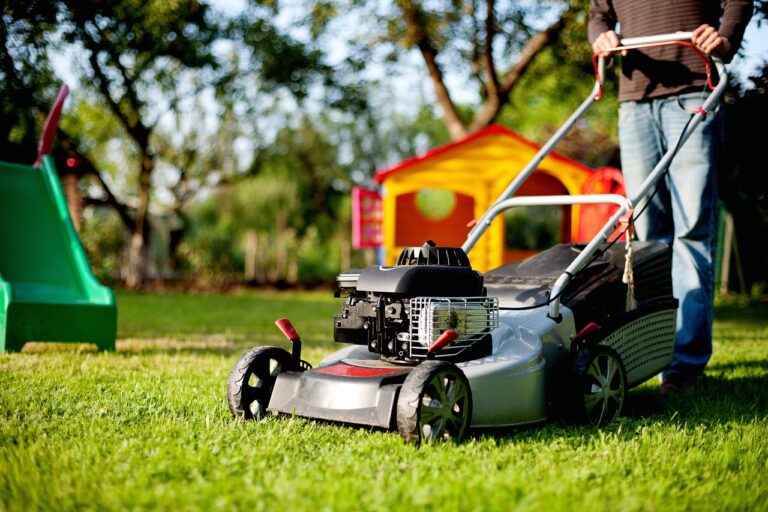
How to Start a Ryobi Lawn Mower in 10 Easy Steps
To start your Ryobi lawn mower, begin by checking the fuel or battery levels to ensure it has enough power. Inspect the mower for any damage or blockages that could affect performance. Securely connect the battery before proceeding.
Position yourself behind the mower and engage all safety features to prevent accidental starts. Adjust the cutting height to your preferred setting for optimal mowing.
For gas models, prime the engine if necessary, then pull the starter cord to ignite it.
For electric models, press the ignition button while holding the safety lever. Allow the mower to warm up briefly before use.
If you encounter any startup issues, troubleshoot accordingly.
Keep reading to discover helpful maintenance tips that will keep your Ryobi lawn mower running smoothly and efficiently.
Key Takeaways
- Check the battery charge, secure its connection, and ensure the mower is on a flat, level surface.
- Engage the blade control lever (bail handle) fully before starting.
- Insert and activate the safety key or switch as per Ryobi mower instructions.
- Press the ignition button while holding the safety lever to start the electric mower.
- Let the mower warm up for a few minutes and verify the blade spins freely without obstructions.
Check Your Ryobi Mower’s Fuel and Battery Levels
Before you start your Ryobi lawn mower, make sure to check both the fuel and battery levels. If your mower is gas-powered, open the fuel cap and look inside to see if there’s enough gasoline. Avoid overfilling to prevent spills.
Use fresh fuel, as stale gas can cause starting issues. For electric models, examine the battery’s charge indicator or use a compatible charger to verify it’s fully charged. A low battery won’t provide enough power to start the mower.
Also, double-check that the battery is securely connected in its compartment; a loose connection can prevent startup. Taking these steps helps you avoid interruptions during mowing and keeps your mower running smoothly from the get-go. Proper fuel and battery checks save you time and frustration later.
Inspect the Mower for Damage or Blockages
Before you start your Ryobi mower, take a moment to check the blade for any damage or dullness. Make certain there are no grass clumps blocking the underside or discharge chute.
Also, inspect all safety features to ensure they’re working properly.
Check Blade Condition
How can you be certain your Ryobi lawn mower is ready for the job? Start by checking the blade condition. Before you begin, make sure the mower is off and the battery is removed to avoid any accidents.
Flip the mower carefully to access the blade. Look closely for any signs of damage like cracks, bends, or excessive wear. A dull or damaged blade won’t cut efficiently and can strain the mower’s motor.
If the blade is dull, you’ll want to sharpen it or replace it altogether. Also, confirm the blade is securely attached and not loose. Taking a few moments to inspect and maintain the blade ensures a clean cut and extends your mower’s lifespan.
Clear Grass Blockages
Once you’ve verified the blade is in good shape, the next step is to check for any grass blockages or damage around the mower. Turn off the mower and disconnect the spark plug or power source for safety.
Inspect under the deck and around the blade area for tangled grass or debris. Removing these blockages guarantees smooth operation and prevents damage.
| Area to Check | What to Look For | Action Needed |
|---|---|---|
| Under the Deck | Grass clumps or buildup | Clear with a stick or brush |
| Around the Blade | Twisted grass or debris | Carefully remove debris |
| Wheels and Vents | Grass stuck in vents | Clean vents for airflow |
Regularly clearing blockages keeps your mower running efficiently.
Inspect Safety Features
Why is it important to inspect the safety features of your Ryobi lawn mower before starting it? Making sure everything’s in proper working order helps prevent accidents and keeps your mower running smoothly.
Before you start, take a moment to check for any damage or blockages that could cause problems.
Here’s what to look for:
- Confirm the blade guard is securely attached and undamaged
- Check the safety lever or handle is functioning correctly
- Ensure there’s no debris caught around the blade or under the deck
- Inspect the mower body for cracks, loose parts, or wear
Connect and Secure the Battery Properly
Make certain you align the battery terminals correctly before connecting.
You’ll know it’s secure when you hear a click as the battery locks into place.
This guarantees a proper connection and safe operation.
Align Battery Terminals Correctly
Before you power up your Ryobi lawn mower, you need to make certain the battery terminals are aligned correctly. Misaligned terminals can prevent your mower from starting or cause damage. Here’s how to get it right:
- Identify the positive (+) and negative (-) terminals on both the battery and mower.
- Match the battery’s positive terminal with the mower’s positive connection, and do the same for the negative terminals.
- Hold the battery steady to avoid shifting while connecting.
- Avoid forcing the battery into place; terminals should fit smoothly without resistance.
Taking a moment to align the terminals properly ensures a secure and efficient connection, helping your Ryobi mower start without any issues.
Ensure Battery Clicks Securely
Once the battery terminals are properly aligned, the next step is to guarantee the battery clicks securely into place. Gently press the battery down onto the mower’s battery slot until you hear a distinct click. This sound confirms that the battery is locked in and won’t come loose during operation.
Don’t rush this step; a loose connection might prevent the mower from starting or cause intermittent power issues. If you don’t hear a click, lift the battery and try again, ensuring the terminals remain aligned. After securing the battery, give it a slight tug to confirm it’s firmly attached.
A properly clicked-in battery ensures a reliable power connection, making your Ryobi lawn mower ready to start without any hiccups.
Position Yourself and Engage Safety Features Before Starting
Although it may seem simple, positioning yourself correctly and engaging all safety features is essential before starting your Ryobi lawn mower. Doing this guarantees your safety and prevents accidental starts or injuries.
Proper positioning and activating all safety features are crucial before starting your Ryobi lawn mower to ensure safety.
First, stand firmly behind the mower with your feet shoulder-width apart for balance. Next, check that the blade control handle (also called the bail lever) is fully engaged; this is a critical safety feature that stops the blade if you release it. Make sure the mower is on a flat surface to avoid unexpected movement.
Ultimately, confirm the safety key or switch is inserted and activated, depending on your model. Follow these steps to keep yourself safe and ready:
- Stand securely behind the mower
- Engage the blade control handle fully
- Position mower on level ground
- Insert and activate safety key or switch
Adjust the Cutting Height to Your Preference
Before you start mowing, set the cutting height to match your lawn’s needs. Ryobi mowers have an easy-to-use height adjustment lever or knob that lets you pick the perfect length.
Adjusting it properly helps keep your grass healthy and your yard looking sharp.
Choosing Ideal Cutting Height
When you’re setting up your Ryobi lawn mower, adjusting the cutting height is key to achieving a healthy, well-manicured lawn. Choosing the right height helps your grass thrive, prevents scalping, and keeps your yard looking its best.
You’ll want to take into account the type of grass, the season, and the current lawn condition when deciding. Here are some tips to help you pick the ideal cutting height:
- For cool-season grasses, aim for 2.5 to 3.5 inches.
- Warm-season grasses do well at 1.5 to 2.5 inches.
- Raise the height during hot, dry periods to reduce stress.
- Avoid cutting more than one-third of the grass blade at once.
Adjusting Height Mechanism
Adjusting the cutting height to your preference is a simple step that directly impacts how your lawn looks and feels. To adjust your Ryobi lawn mower’s height, locate the height adjustment lever, usually near the wheel or deck. Move the lever to select the desired cutting height, which suits your grass type and season.
Lower settings give a neat look, while higher settings protect your lawn during dry periods.
Here’s a quick guide:
| Height Setting | Grass Condition |
|---|---|
| 1 (Lowest) | Short, neat lawn |
| 2 | Regular mowing |
| 3 | Taller grass, summer |
| 4 | Dry or shaded areas |
| 5 (Highest) | Protects roots in drought |
Adjust the lever gently to avoid damage and enjoy a perfectly trimmed lawn.
Prime Your Ryobi Mower if Required
If your Ryobi mower has a primer bulb, you’ll want to press it a few times to guarantee the carburetor is filled with fuel. This step is essential, especially if the mower hasn’t been used for a while or is cold. Priming ensures a smooth start by providing the right fuel-air mixture.
Press the primer bulb several times to fill the carburetor and ensure a smooth, easy start.
Here’s how to prime your Ryobi mower effectively:
- Locate the primer bulb, usually near the carburetor.
- Press the bulb firmly 3-5 times until you see fuel inside it.
- Avoid over-priming, which can flood the engine.
- If unsure, check your mower’s manual for specific primer instructions.
Taking these steps will help your mower start easily and run efficiently.
Start Your Ryobi Mower
Before you pull the starter cord or press the ignition button, make sure your Ryobi mower is on a flat surface and that the blade control lever is engaged. If your model has a safety key, insert it into the designated slot. For gas-powered models, hold the handle firmly and pull the starter cord briskly until the engine fires up.
If it doesn’t start immediately, don’t force it; wait a moment before trying again. For electric or battery-powered Ryobi mowers, simply press the ignition button or switch while holding the safety lever. Confirm your battery is fully charged for a smooth start.
Always keep your hands clear of the blade area as you start the mower to avoid accidents. Once it’s running, you’re ready to move on to the next step.
Warm Up the Mower Before Mowing
Once your Ryobi mower is running smoothly, it’s a good idea to let it warm up for a few minutes. This helps the engine reach its ideal operating temperature, ensuring better performance and longevity.
Let your Ryobi mower warm up briefly for optimal engine performance and longer-lasting use.
During this time, you’ll want to:
- Check for any unusual sounds or vibrations.
- Make sure the oil and fuel levels remain steady.
- Observe that the blade is spinning freely without obstruction.
- Confirm all safety features are functioning properly.
Warming up the mower prevents strain on the engine and reduces wear. It also helps the fuel mix and lubricants circulate effectively.
Taking these few minutes before mowing will make your cutting experience smoother and safer, giving you cleaner results without unnecessary mechanical issues.
Troubleshoot Ryobi Mower Startup Problems
Though Ryobi mowers are designed for reliability, you might occasionally face startup issues that prevent the engine from turning over. First, check the battery charge—if it’s low or dead, the mower won’t start. Make sure the battery is properly seated and the contacts are clean.
Next, inspect the safety features: your mower won’t start unless the safety lever or switch is engaged. Also, examine the spark plug for dirt or damage, as a faulty spark plug can stop ignition. Don’t forget to verify there’s enough fuel, especially if your model uses gasoline.
If the engine still won’t start, try resetting the mower by turning it off and on again. These steps usually resolve common startup problems quickly.
Tips for Maintaining Your Ryobi Mower for Easy Starts
To keep your Ryobi mower starting smoothly, regular maintenance is key. Neglecting simple upkeep can lead to hard starts or even engine damage. You’ll want to focus on these essential tasks to guarantee your mower runs reliably every time:
Regular maintenance is essential to ensure your Ryobi mower starts easily and runs reliably every time.
- Clean or replace the air filter regularly to prevent dirt from clogging the engine.
- Check and change the spark plug as needed to maintain efficient ignition.
- Keep the battery charged and terminals clean to avoid electrical issues.
- Inspect fuel lines and replace old fuel to prevent clogs and maintain proper fuel flow.
Frequently Asked Questions
What Type of Oil Is Best for My Ryobi Lawn Mower?
You’ll want to use SAE 30 oil for your Ryobi lawn mower, especially in warmer weather. If it’s colder, 10W-30 works well.
Always check your manual to confirm the best oil type for your model.
How Often Should I Replace the Mower’s Air Filter?
Think of your mower’s air filter like a pair of sunglasses—replace it every 25 hours of use or once a season to keep things clear and running smoothly.
Dirty filters choke performance, so don’t let that happen!
Can I Use a Ryobi Lawn Mower on Wet Grass?
You shouldn’t use your Ryobi lawn mower on wet grass because it can clog the blades and cause uneven cutting. Plus, wet conditions increase slipping risks, so it’s safer and more effective to wait until the grass dries.
Wet grass can also strain the mower’s motor and reduce its efficiency. Waiting ensures a cleaner cut and helps maintain your mower’s longevity. Always prioritize safety and optimal performance when mowing.
What Is the Warranty Period for Ryobi Lawn Mowers?
Ryobi lawn mowers typically come with a 3-year limited warranty. You’ll get coverage for defects in materials and workmanship, but make sure to register your mower and keep your receipt for any warranty claims.
Registration is important to activate the warranty. Keep your purchase receipt safe as proof of purchase. This will help speed up any future warranty claims.
Are Ryobi Lawn Mower Blades Reversible or Replaceable?
Imagine sharp blades slicing through grass effortlessly. Ryobi lawn mower blades aren’t reversible, but you can easily replace them when they get dull.
Just swap them out to keep your mower cutting clean and smooth every time.
Conclusion
Starting your Ryobi lawn mower is as easy as pie when you follow these simple steps. Just like tuning a guitar before a song, checking your mower’s fuel, battery, and safety features guarantees a smooth start every time. With a little care and attention, your mower will be ready to tackle your yard without hassle.
Keep up with regular maintenance, and you’ll have a reliable mower that’s ready to go whenever you are. Following these 10 easy steps ensures your Ryobi lawn mower starts quickly and operates efficiently. By doing so, you can enjoy a well-maintained lawn with minimal effort each season.