How to Drive a Zero Turn Mower in 5 Easy Steps
To drive a zero turn mower effectively and safely, it’s important to first get familiar with the steering levers, throttle, and blade controls. Understanding these key components will help you maneuver the mower with precision and confidence.
Whether you’re a beginner or looking to improve your skills, mastering these controls is essential for smooth operation.
Start the mower on a flat surface with the blades disengaged and controls in neutral. Use both levers pushed forward to move straight ahead, pull both back to reverse, and push one forward while pulling the other back to make sharp turns.
Adjust your speed based on the terrain to ensure safety and control.
Don sturdy gear and clear your mowing area before starting.
Keep practicing to discover tips that’ll boost your confidence and safety while using a zero turn mower.
Key Takeaways
- Locate and understand the steering levers, throttle, blade switch, and parking brake controls before starting.
- Start the mower on a flat surface with blades disengaged, controls in neutral, and parking brake engaged.
- Push both levers forward to move straight, pull back to reverse, and push one forward while pulling the other back to turn sharply.
- Adjust your speed based on terrain, slowing on slopes and rough areas, and increasing speed on flat, clear ground.
- Always wear safety gear, check for obstacles, keep hands on controls, and never carry passengers during operation.
Learn Your Zero Turn Mower’s Controls
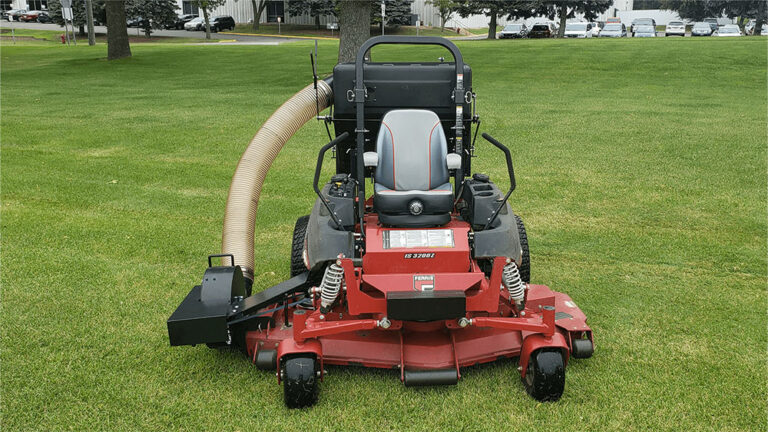
Before you start mowing, you need to get familiar with your zero turn mower’s controls. First, locate the steering levers—these control your direction and speed. Pushing both levers forward moves you straight ahead, pulling them back reverses, and pushing one forward while pulling the other back lets you turn sharply.
Next, find the throttle to adjust engine speed and the blade engagement switch to start or stop the blades. Don’t forget the parking brake—it keeps your mower stationary when needed. Also, identify the deck height adjustment to set how low or high you cut your grass.
Understanding these controls before you begin guarantees you operate your mower safely and efficiently without surprises. Take a moment to review your mower’s manual for specific details.
Start and Stop Your Mower Safely
How do you guarantee your zero turn mower starts and stops safely every time? First, always ensure the mower is on a flat surface and the parking brake is engaged before starting. This prevents any unexpected movement.
Next, before ignition, make sure the blades are disengaged to avoid sudden blade activation. Finally, when stopping, disengage the blades, shift to neutral, and then turn off the engine. Here’s a quick checklist:
- Engage parking brake and check blade disengagement before starting.
- Start the engine only when seated and controls are in neutral.
- When finished, disengage blades, shift to neutral, apply parking brake, and turn off the mower.
Following these steps keeps you and your equipment safe every time you operate your zero turn mower.
Master Steering and Turning Techniques
Since zero turn mowers respond differently than traditional mowers, you’ll need to get comfortable with their unique steering and turning methods. Instead of a steering wheel, you control direction with two levers. Push both levers forward to move straight, and pull them back to reverse.
To turn, push one lever forward while pulling the other back, allowing the mower to pivot sharply or even spin in place. Practice gentle turns first to get a feel for the mower’s responsiveness. Remember, small lever movements cause significant directional changes, so start slow until you build confidence.
Mastering these controls lets you maneuver easily around obstacles, ensuring efficient and precise mowing every time. With steady practice, steering and turning will soon feel natural.
Adjust Speed on Different Terrains
When mowing on uneven or sloped terrain, you’ll need to adjust your speed to maintain control and safety. Going too fast can cause you to lose traction or tip over, while moving too slowly might damage your mower or grass.
Here’s how to handle speed adjustments:
- Slow Down on Slopes: Reduce your speed to prevent slipping or tipping, especially when going uphill or downhill.
- Moderate Speed on Rough Ground: On rocky or bumpy areas, keep a steady, moderate pace to avoid jolting the mower and maintain a smooth cut.
- Increase Speed on Flat, Clear Areas: When on even terrain with no obstacles, you can safely increase your speed for efficiency.
Essential Zero Turn Mower Safety Tips
Adjusting your speed based on terrain is just one part of operating a zero turn mower safely. Always wear sturdy shoes and protective gear like gloves, goggles, and ear protection before you start. Avoid loose clothing that could get caught in moving parts.
Before mowing, check the area for debris, rocks, or toys that could cause accidents. Never mow on steep slopes; zero turn mowers can tip over easily. Keep both hands on the controls and avoid sudden turns.
If you need to reverse, look behind you carefully. Always disengage the blades and shut off the engine before crossing gravel paths or roads. In conclusion, never allow passengers—these mowers are designed for one person only.
Staying alert and cautious helps prevent injuries and ensures a smooth mowing experience.
Frequently Asked Questions
How Do I Maintain and Clean My Zero Turn Mower?
You should regularly clean the deck, check and change the oil, sharpen the blades, inspect belts, and grease fittings.
Also, keep tires properly inflated and store the mower in a dry place to guarantee it runs smoothly.
What Are Common Troubleshooting Tips for Zero Turn Mowers?
You’ll want to check the fuel and oil levels first, tighten loose belts, clean clogged air filters.
Inspect spark plugs, and verify tire pressure is correct. If it won’t start, test the battery and safety switches.
Can I Use a Zero Turn Mower on Wet Grass?
You shouldn’t mow wet grass with a zero turn mower because 70% of lawn mower accidents happen on slippery surfaces.
Wet grass clogs blades and reduces traction, increasing your risk of slipping and damaging your mower.
How Do I Transport a Zero Turn Mower Safely?
You’ll want to secure your zero turn mower on a trailer using strong straps, locking the steering levers in neutral, and checking tire pressure.
Always drive slowly and avoid sudden stops to keep it stable during transport.
What Are the Best Brands for Zero Turn Mowers?
If you want a zero turn mower that feels like you’re riding a rocket, you’ve got to check out John Deere, Husqvarna, and Cub Cadet. They’re built tough, super reliable, and make mowing almost fun!
Conclusion
Now that you’ve got the basics down, imagine smoothly gliding through your yard, mastering every turn with ease. But here’s the secret: the more you practice, the sharper your skills become, revealing the true power of your zero turn mower.
Ready to transform your mowing experience? Don’t rush—take your time, stay safe, and soon you’ll wonder how you ever managed without it.
Your perfectly trimmed lawn is just a few rides away. With consistent practice, driving a zero turn mower will feel natural, making lawn care faster and more efficient. Embrace these tips, and enjoy the benefits of your zero turn mower every time you cut the grass.