How to Dispose of a Lawn Mower Step by Step
To dispose of your lawn mower safely and responsibly, it’s important to follow a step-by-step process that ensures environmental care and compliance with local regulations. Proper lawn mower disposal involves removing hazardous materials, recycling components, and considering options like donation or resale when the mower is still in good condition.
By handling each part carefully, you can minimize waste and contribute to eco-friendly practices.
First, make sure the mower is cool and remove any debris. Drain fuel and oil into approved containers and store them properly.
Disconnect and recycle the battery and hazardous parts like spark plugs. Separate metal and plastic components for recycling, following local guidelines.
Clean the mower thoroughly and check its condition. You can also consider donating or selling if it’s still usable.
Keep going to discover how to handle each step and stay eco-friendly throughout the process.
Key Takeaways
- Cool the lawn mower, clean off debris, and disconnect the spark plug wire to prevent accidental starts.
- Drain fuel and oil using approved containers, and store fluids safely for proper hazardous waste disposal.
- Remove battery, spark plugs, and fuel filters, recycling hazardous parts according to local regulations.
- Separate metal and plastic components, and take recyclable parts to designated recycling centers.
- Donate, sell, or dispose of the mower responsibly by following local guidelines and using professional services if needed.
Steps to Prepare Your Lawn Mower for Safe Disposal
Before you dispose of your lawn mower, you’ll need to prepare it properly to guarantee safety and environmental responsibility. First, make sure the mower is completely cool to avoid burns or fire hazards. Remove any grass clippings, dirt, or debris from the mower’s exterior and underside.
Check for any loose or damaged parts and secure or remove them to prevent injury during handling. Disconnect the spark plug wire to prevent accidental starting. If your mower has a removable battery, take it out and set it aside for separate recycling.
Keep in mind, you shouldn’t discard batteries or hazardous fluids with the mower. By taking these steps, you’re ensuring the mower is safe to transport and ready for environmentally conscious disposal methods.
How to Drain Lawn Mower Fuel and Oil Before Disposal
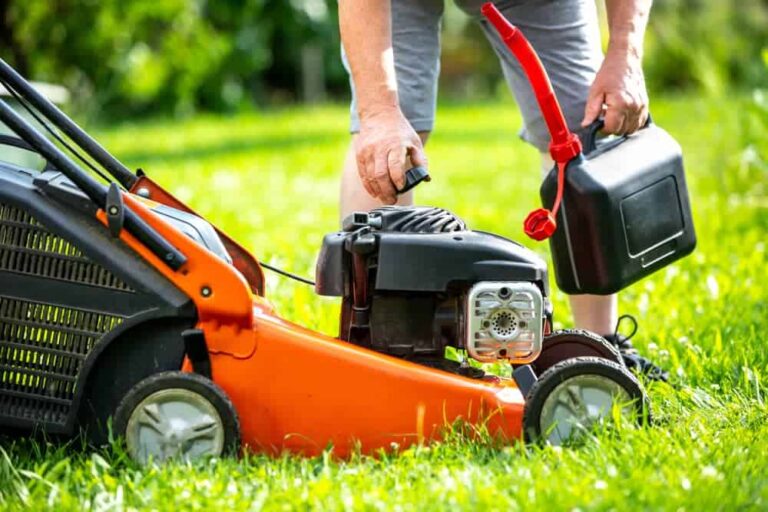
Once you’ve prepared your lawn mower by cleaning it and disconnecting the battery, the next step is to safely remove the fuel and oil. Draining these fluids prevents leaks and environmental hazards during disposal.
Start by emptying the fuel tank into an approved container using a siphon pump or fuel transfer tool. Then, drain the oil by locating the drain plug or tipping the mower on its side, letting the oil flow into an oil pan.
| Step | Action |
|---|---|
| 1. Fuel removal | Use a siphon pump to drain fuel |
| 2. Fuel storage | Store fuel in an approved container |
| 3. Oil draining | Remove drain plug or tip mower |
| 4. Oil disposal | Collect oil in pan for recycling |
Handle all fluids responsibly to stay safe and eco-friendly.
How to Remove the Battery and Other Hazardous Parts
Why is removing the battery and other hazardous parts essential when disposing of your lawn mower? Batteries contain harmful chemicals that can leak and pollute the environment if not handled properly. To remove the battery, first, disconnect the negative terminal to prevent any electrical shorts.
Then, carefully detach the positive terminal and lift the battery out. Store it in a safe, dry place until you can take it to a recycling center. Besides the battery, check for other hazardous parts like spark plugs or fuel filters that might contain toxic substances.
Remove these parts carefully and dispose of them according to your local hazardous waste guidelines. Handling these components responsibly helps protect the environment and complies with disposal regulations.
How to Clean and Remove Debris From Your Lawn Mower
Although you’ve removed hazardous parts, your lawn mower still needs a thorough cleaning to guarantee safe disposal. Start by disconnecting the spark plug wire to avoid accidental starts. Use a brush or cloth to clear grass clippings, dirt, and debris from the mower’s deck, blades, and undercarriage.
For stubborn buildup, a plastic scraper helps without damaging surfaces. Avoid using water directly on the engine; instead, wipe it gently with a damp cloth. Check the air filter and clean or replace it if necessary.
Don’t forget to drain any remaining fuel to prevent leaks or fires. Once cleaned, your mower will be safer to handle and more environmentally friendly when disposed of properly. This step ensures no residual materials cause problems later.
How to Donate or Sell a Used Lawn Mower Safely
Before you donate or sell your lawn mower, make certain to check its condition and fix any issues. You’ll also want to clean it and remove any fuel for a safe handoff.
Finally, look for trustworthy places or buyers to guarantee your mower goes to a good home.
Assess Mower Condition
When you’re ready to donate or sell your lawn mower, start by carefully evaluating its condition to guarantee it’s safe and functional. Check the engine for any leaks, strange noises, or difficulty starting. Inspect the blades for sharpness and damage—dull or bent blades should be repaired or replaced.
Examine the wheels and handle for stability and ease of use. Don’t forget to look at the fuel tank and oil levels, ensuring there are no spills or contamination. If your mower has a battery, test its charge and connections.
Taking these steps helps you provide accurate information to the buyer or recipient, and assures the mower won’t pose safety risks. A well-assessed mower increases the chances of a smooth, successful donation or sale.
Prepare For Safe Transfer
To guarantee a smooth and safe transfer, you’ll want to thoroughly clean your lawn mower and drain any remaining fuel or oil. This prevents spills and helps the new owner start fresh.
Before handing it over, check for any loose parts or sharp edges that could cause injury. Also, gather any manuals or accessories to include with the mower.
Make sure to:
- Remove grass clippings and dirt to improve appearance and function
- Empty the fuel tank and oil reservoir to avoid leaks
- Secure or remove blades and sharp components for safety
Taking these steps shows responsibility and respect for the next user, making the donation or sale process easier and safer for everyone involved.
Find Reliable Donation Options
Wondering where you can donate or sell your used lawn mower without hassle? Start by checking local charities, community centers, or non-profits that accept lawn equipment. Organizations like Habitat for Humanity often welcome working tools.
You can also list your mower on online marketplaces such as Craigslist, Facebook Marketplace, or OfferUp to reach buyers nearby. Make sure to provide clear photos and an honest description of its condition.
Before donating or selling, verify that the organization or buyer is reputable to avoid scams. If donating, confirm whether they accept lawn mowers and if they offer pickup services. Taking these steps guarantees your mower finds a new home safely and helps you dispose of it responsibly.
Where to Find Local Lawn Mower Recycling Programs
Looking for local lawn mower recycling programs can be easier than you think. Many communities offer convenient options to help you responsibly dispose of your old mower. Start by checking with your city or county’s waste management website—they often list scheduled recycling events or designated drop-off centers.
You can also contact local scrap yards; they frequently accept metal parts from lawn mowers for recycling. Ultimately, some hardware stores or garden centers run take-back programs for small engines and equipment.
Here are three places to explore for recycling:
- Municipal recycling centers or hazardous waste facilities
- Local scrap metal dealers or salvage yards
- Retailers with equipment trade-in or recycling initiatives
Using Professional Lawn Mower Disposal Services
Although you might be able to recycle your lawn mower on your own, using professional disposal services can save you time and hassle. These experts handle the entire process, from collection to proper recycling or disposal, guaranteeing everything is done safely and according to local regulations. You won’t have to worry about draining fluids or dismantling parts, as professionals take care of that for you.
Plus, many services offer convenient pickup options, so you don’t need to transport the mower yourself. If your mower contains hazardous materials, professional disposal is especially important to avoid environmental harm. Before hiring, check for licensed companies with good reviews, and don’t hesitate to ask about their disposal methods.
This way, you’ll ensure your mower is disposed of responsibly and efficiently.
Getting Rid of Lawn Mower Parts the Right Way
If you decide to handle parts of your lawn mower yourself, knowing how to dispose of each component properly will help protect the environment and comply with local regulations. Different parts require different disposal methods. For example:
- Metal parts: These can usually be recycled at scrap metal facilities or local recycling centers.
- Plastic components: Check if your local recycling program accepts these; otherwise, consider specialized plastic recycling services.
- Hazardous materials (oil, fuel, batteries): Never pour them down drains or on the ground. Take them to hazardous waste collection sites or automotive stores that accept used fluids and batteries.
Frequently Asked Questions
What Are the Environmental Impacts of Improperly Disposing of Lawn Mowers?
If you don’t dispose of your lawn mower properly, you’ll risk leaking harmful oils and fuels into the soil and water, polluting the environment and harming wildlife.
It’s essential you handle disposal responsibly to avoid this.
Can Electric and Gas Lawn Mowers Be Disposed of the Same Way?
You can’t treat electric and gas lawn mowers like Romeo and Juliet destined to share the same fate. Electric ones need battery recycling, while gas mowers require draining fuel and oil before proper disposal.
How Often Should I Replace Parts to Extend My Lawn Mower’s Life?
You should replace parts like the air filter, spark plug, and oil every season or after 25 hours of use.
Regularly sharpening blades and cleaning also helps extend your mower’s life and keeps it running smoothly.
What Are the Safety Risks of Handling Old Lawn Mowers?
You risk cuts from sharp blades, fuel leaks causing fires, and exposure to harmful chemicals when handling old lawn mowers. Always wear gloves, work in a ventilated area, and disconnect the spark plug before touching any parts.
Are There Any Legal Regulations for Lawn Mower Disposal in My Area?
About 80% of localities have specific rules for lawn mower disposal. You’ll want to check with your city’s waste management or environmental agency—they’ll let you know if you must recycle parts or follow special drop-off procedures.
Conclusion
By following these steps, you’ll watch your old lawn mower transform from clutter into a clean, eco-friendly solution. Imagine the relief as you drain the last drop of fuel, safely remove the battery, and see it ready for recycling or donation.
With a little care and effort, you’re not just disposing of a machine—you’re giving it a second chance and keeping your yard and planet greener, one step at a time. Proper lawn mower disposal is essential for environmental safety.
Taking the time to responsibly recycle or donate your lawn mower helps reduce waste and conserve resources. Embrace eco-friendly lawn mower disposal today and contribute to a sustainable future.